Psychology
Self-Empowerment
Dimensions and development of self-empowerment, women's empowerment, professional etiquette, personal grooming and role of nurses.
Open quizzes and study tools Download PDF
CHAPTER 10: SELF-EMPOWERMENT
Subject: Applied Psychology
Course: B.Sc. Nursing
1. Introduction
Self-empowerment is the process through which individuals develop knowledge, confidence, skills, autonomy and access to resources that enable them to make informed decisions and exercise greater control over their lives.
Self-empowerment is important in nursing because it promotes professional competence, independence, leadership, patient advocacy and personal development.
2. Definition
Self-empowerment refers to developing the personal abilities, confidence, opportunities and decision-making capacity necessary to influence one's circumstances and achieve meaningful goals.
3. Objectives of Self-Empowerment
- Develop self-awareness.
- Improve self-confidence.
- Strengthen decision-making abilities.
- Promote independence.
- Develop professional competence.
- Improve problem-solving abilities.
- Encourage personal responsibility.
- Promote leadership.
- Improve quality of life.
- Support personal and professional growth.
4. Characteristics of an Empowered Individual
- Healthy self-esteem
- Self-awareness
- Assertiveness
- Responsible decision-making
- Effective communication
- Emotional regulation
- Independence
- Willingness to learn
- Ability to seek support
- Respect for personal and others' rights
Empowerment also depends on social opportunities, resources and supportive environments, not simply personal confidence.
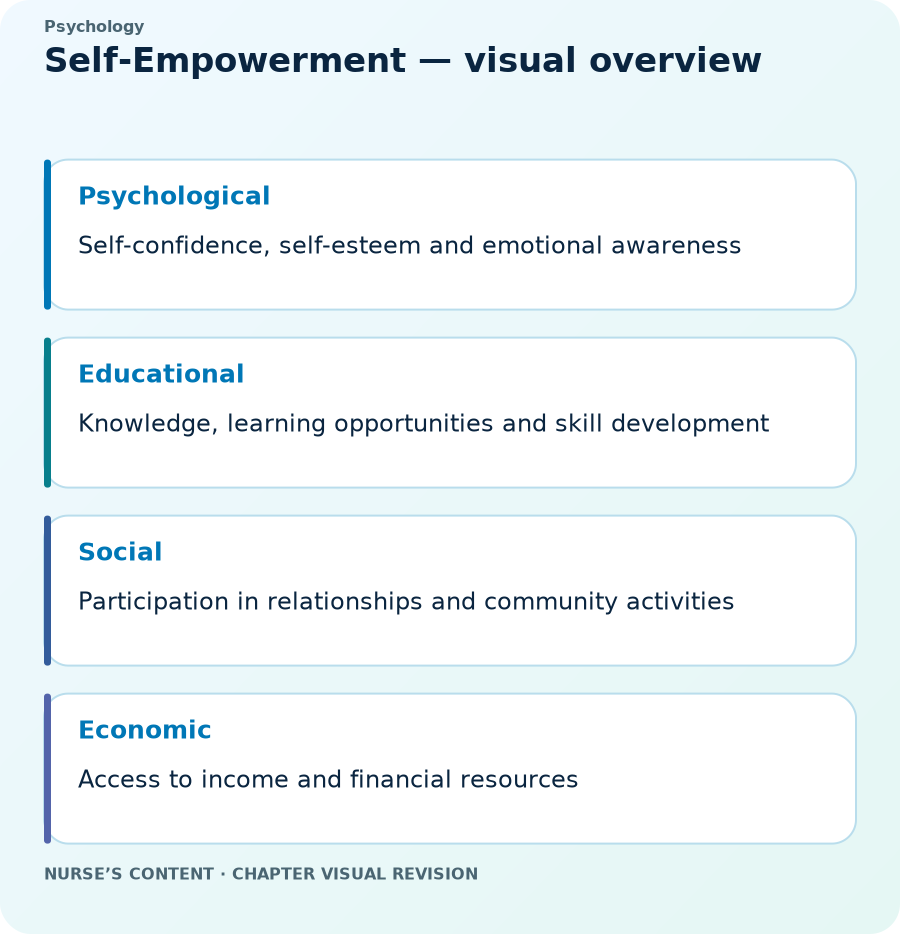
5. Dimensions of Self-Empowerment
| Dimension | Description |
|---|---|
| Psychological | Self-confidence, self-esteem and emotional awareness |
| Educational | Knowledge, learning opportunities and skill development |
| Social | Participation in relationships and community activities |
| Economic | Access to income and financial resources |
| Physical | Ability to maintain health and participate in activities |
| Professional | Competence, autonomy and career development |
| Political and legal | Awareness of rights and participation in decision-making |
| Spiritual | Personal values, meaning and purpose |
Psychological Empowerment
Common dimensions of psychological empowerment in professional settings include:
- Meaning
- Competence
- Self-determination
- Impact
6. Important Concepts Related to Self-Empowerment
Self-Awareness
Understanding one's emotions, thoughts, strengths, limitations and behaviour.
Self-Concept
An individual's overall perception of themselves.
Self-Esteem
An individual's evaluation of their personal worth.
Self-Confidence
Belief in one's abilities and capacity to manage situations.
Self-Efficacy
Albert Bandura described self-efficacy as belief in one's ability to perform particular actions or achieve specific outcomes.
Self-Determination
Capacity and opportunity to make autonomous decisions according to personal values and goals.
Assertiveness
Ability to express needs, opinions and rights clearly while respecting others.
Self-Regulation
Ability to manage emotions, thoughts and behaviour in accordance with goals.
7. Development of Self-Empowerment
Steps
- Assess personal strengths and limitations.
- Identify personal and professional goals.
- Develop relevant knowledge.
- Acquire practical skills.
- Strengthen self-confidence.
- Develop assertive communication.
- Improve decision-making.
- Identify available resources.
- Build supportive relationships.
- Evaluate progress and revise goals.
8. Factors Promoting Self-Empowerment
- Education
- Knowledge of rights
- Financial independence
- Supportive relationships
- Access to healthcare
- Professional mentorship
- Opportunities for skill development
- Leadership opportunities
- Supportive organizational policies
- Equal access to resources
9. Barriers to Self-Empowerment
- Limited access to education
- Financial dependence
- Discrimination
- Social restrictions
- Low self-esteem
- Fear of failure
- Lack of opportunities
- Workplace harassment
- Inadequate social support
- Restricted decision-making autonomy
10. Women's Empowerment
Definition
Women's empowerment is the process of expanding women's rights, opportunities, resources, independence and participation in decisions affecting their personal, social, economic and professional lives.
11. Dimensions of Women's Empowerment
Educational Empowerment
- Equal access to education.
- Literacy development.
- Professional training.
- Career opportunities.
Economic Empowerment
- Equal employment opportunities.
- Fair remuneration.
- Financial independence.
- Access to financial resources.
Social Empowerment
- Respect and dignity.
- Equal participation in society.
- Freedom from discrimination.
- Supportive social relationships.
Political Empowerment
- Participation in decision-making.
- Leadership opportunities.
- Political representation.
Legal Empowerment
- Awareness of legal rights.
- Access to justice.
- Protection from violence and exploitation.
- Equal treatment under applicable laws.
Health Empowerment
- Access to healthcare.
- Reproductive autonomy.
- Informed health decisions.
- Sexual and reproductive health education.
- Access to mental health support.
12. Importance of Women's Empowerment
- Promotes gender equality.
- Improves access to education.
- Supports economic independence.
- Improves healthcare access.
- Promotes informed reproductive decisions.
- Reduces vulnerability to exploitation.
- Supports maternal and child health.
- Encourages leadership and social development.
- Promotes participation in family and community decisions.
13. Barriers to Women's Empowerment
- Gender discrimination
- Unequal educational opportunities
- Gender-based violence
- Financial dependence
- Restricted mobility
- Workplace discrimination
- Unequal access to healthcare
- Social and cultural restrictions
- Lack of representation in leadership
14. Strategies for Women's Empowerment
- Promote equal educational opportunities.
- Encourage skill development and employment.
- Support financial literacy.
- Improve access to healthcare.
- Promote awareness of legal rights.
- Prevent gender-based discrimination.
- Provide safe workplaces.
- Support women's leadership.
- Facilitate appropriate services for survivors of violence.
15. Professional Empowerment in Nursing
Professional empowerment enables nurses to exercise appropriate professional judgment, develop competence and participate in decisions affecting nursing practice.
Characteristics of an Empowered Nurse
- Clinical competence
- Professional accountability
- Evidence-based decision-making
- Effective communication
- Ethical conduct
- Leadership ability
- Patient advocacy
- Commitment to continuous learning
- Ability to escalate safety concerns
Methods of Professional Empowerment
- Continuing nursing education.
- Skill-development programmes.
- Supportive supervision.
- Professional mentorship.
- Leadership training.
- Access to evidence-based resources.
- Participation in organizational decisions.
- Safe working conditions.
- Recognition of professional contributions.
16. Patient Empowerment
Patient empowerment involves supporting individuals to understand their health, participate in decisions and manage their healthcare according to their informed preferences.
Principles
- Respect autonomy.
- Provide accurate information.
- Promote shared decision-making.
- Recognize individual preferences.
- Support informed consent.
- Provide accessible education.
- Encourage appropriate self-care.
- Facilitate access to resources.
Examples
- Teaching a patient diabetes self-management.
- Educating a pregnant woman about antenatal care.
- Helping patients understand prescribed treatment.
- Supporting rehabilitation after neurological illness.
- Providing information about available healthcare services.
Empowerment does not mean transferring unreasonable treatment responsibilities to patients or forcing them to make decisions independently.
17. Professional Etiquette
Professional etiquette refers to accepted standards of respectful, ethical and appropriate professional behaviour.
Principles of Nursing Etiquette
- Punctuality
- Responsibility
- Respect
- Honesty
- Confidentiality
- Professional boundaries
- Accountability
- Appropriate communication
- Compassion
- Non-discrimination
Professional Behaviour in Clinical Settings
- Introduce yourself appropriately.
- Verify patient identity.
- Explain nursing procedures.
- Respect privacy and consent.
- Follow infection-prevention measures.
- Communicate accurate clinical information.
- Maintain appropriate documentation.
- Report errors and safety concerns through established procedures.
- Work within professional competence.
18. Personal Grooming
Definition
Personal grooming refers to maintaining cleanliness, hygiene and appropriate personal appearance according to professional requirements.
Personal Grooming Standards in Nursing
| Area | Recommended practice |
|---|---|
| Uniform | Clean and consistent with institutional policy |
| Hair | Clean, neat and secured when required |
| Nails | Clean and maintained according to infection-control policy |
| Hands | Follow appropriate hand hygiene |
| Footwear | Clean, protective and suitable for clinical work |
| Jewellery | Follow safety and infection-control requirements |
| Identification | Wear authorized identification as required |
| Oral hygiene | Maintain appropriate oral hygiene |
| Personal cleanliness | Maintain regular hygienic practices |
| Fragrance | Avoid strong fragrances in clinical settings |
Grooming requirements should emphasize hygiene, safety and professional conduct rather than physical attractiveness.
19. Importance of Personal Grooming
- Supports infection prevention.
- Promotes professional appearance.
- Encourages patient confidence.
- Supports workplace safety.
- Reflects adherence to organizational standards.
- Promotes personal hygiene.
20. Role of Nurses in Empowering Others
A. Health Education
- Provide accurate health information.
- Use accessible language.
- Teach preventive healthcare.
- Explain treatment and self-care requirements.
B. Promoting Patient Autonomy
- Respect patient preferences.
- Encourage participation in decisions.
- Support informed consent.
- Avoid unnecessary paternalism.
C. Psychological Support
- Encourage self-confidence.
- Provide emotional support.
- Promote constructive coping.
- Support realistic goals.
D. Patient Advocacy
- Protect patient dignity.
- Identify unmet healthcare needs.
- Promote equitable access to services.
- Escalate safety concerns appropriately.
E. Empowering Women
- Provide reproductive health education.
- Promote informed healthcare decisions.
- Identify possible signs of abuse.
- Provide supportive and confidential communication.
- Facilitate appropriate safeguarding and support services.
F. Community Empowerment
- Promote health awareness.
- Encourage community participation.
- Support preventive healthcare programmes.
- Provide information about available resources.
- Identify barriers to accessing care.
G. Empowering Nursing Students and Colleagues
- Provide mentorship.
- Encourage constructive feedback.
- Support clinical skill development.
- Promote teamwork.
- Encourage continuing education.
- Maintain a respectful working environment.
21. Important Examination Questions
Long Answer Questions
- Define self-empowerment and explain its dimensions.
- Discuss the process of developing self-empowerment.
- Explain the importance of women's empowerment in society.
- Describe professional etiquette and personal grooming in nursing.
- Discuss the role of nurses in empowering patients and communities.
Short Answer Questions
- Self-efficacy
- Self-awareness
- Psychological empowerment
- Women's economic empowerment
- Professional empowerment
- Patient empowerment
- Personal grooming
- Professional etiquette
- Patient advocacy
- Barriers to empowerment
22. Quick Revision
- Self-empowerment involves autonomy, confidence, competence and access to resources.
- Self-efficacy is belief in one's ability to perform specific tasks.
- Women's empowerment includes social, educational, economic, political, legal and health dimensions.
- Professional empowerment supports clinical competence and nursing autonomy.
- Patient empowerment promotes informed participation in healthcare.
- Professional etiquette involves ethical and respectful conduct.
- Personal grooming supports hygiene and workplace safety.
- Nurses empower others through education, advocacy, communication and accessible care.
Conclusion
Self-empowerment promotes personal independence, decision-making, confidence and professional development. Women's empowerment supports gender equality, health equity and social progress. Nurses contribute to empowerment through patient education, advocacy, ethical practice, mentorship and respect for individual autonomy.
Chapter reference images