Psychology
Biological Basis of Behaviour
Body–mind relationship, genetics, inheritance, brain and behaviour, sensation and sensory processes.
Open quizzes and study tools Download PDF
CHAPTER 02: BIOLOGICAL BASIS OF BEHAVIOUR
1. Introduction
The biological basis of behaviour explains how biological structures and processes influence human thoughts, emotions, learning, memory, motivation and actions.
Human behaviour is influenced by the interaction of several factors:
- Brain and nervous system
- Genetic inheritance
- Hormonal activity
- Sensory organs
- Physical health
- Environmental experiences
- Psychological and social conditions
Definition: The biological basis of behaviour refers to the study of how the nervous system, genetics, hormones and other physiological mechanisms influence human behaviour and mental processes.
Importance
Understanding the biological basis of behaviour helps nurses recognise how illness, brain injuries, hormonal changes, hereditary factors and sensory disturbances can affect patients’ emotions, cognition and behaviour.
2. Body–Mind Relationship
Meaning
The body–mind relationship refers to the continuous interaction between physical processes and psychological experiences.
Physical conditions can influence thoughts, emotions and behaviour. Similarly, psychological states can affect physiological functions.
Examples
- Anxiety may increase heart rate and respiratory rate.
- Fear can cause sweating and trembling.
- Chronic stress may disturb sleep and appetite.
- Physical pain can affect mood and concentration.
- Depression can influence energy, appetite and sleep.
- Relaxation may reduce muscle tension and perceived stress.
Major Concepts of the Body–Mind Relationship
1. Mind–Body Dualism
Historically associated with René Descartes, dualism considers the mind and body as distinct entities.
This is a philosophical position rather than an established scientific explanation of how psychological processes occur.
2. Biological Perspective
This perspective explains mental processes and behaviour through brain activity, neural signalling, hormones and other biological mechanisms.
3. Biopsychosocial Perspective
The biopsychosocial model explains health and behaviour through the interaction of:
- Biological factors: Genetics, physical health, brain function and hormones.
- Psychological factors: Thoughts, emotions, beliefs and coping.
- Social factors: Family, culture, relationships and socioeconomic conditions.
Nursing example: A patient with chronic pain may experience physical discomfort, anxiety and reduced social participation. Effective nursing care considers all three dimensions.
Effects of Mind on Body
Psychological stress activates physiological stress-response systems.
Possible effects include:
- Increased heart rate
- Increased blood pressure
- Increased respiratory rate
- Muscle tension
- Gastrointestinal discomfort
- Changes in sleep
- Changes in appetite
Effects of Body on Mind
Physical changes and diseases can influence psychological functioning.
Examples:
- Hypoglycaemia may cause confusion, irritability and altered consciousness.
- Hypothyroidism may contribute to fatigue and depressive symptoms.
- Brain injury may affect personality, memory or behaviour.
- Chronic pain can impair sleep and emotional well-being.
- Sleep deprivation can reduce attention and decision-making ability.
Importance in Nursing
Nurses should:
- 1. Consider both physical and psychological factors during assessment.
- 2. Recognise the physiological effects of stress.
- 3. Provide emotional support during illness.
- 4. Assess changes in mood, sleep and cognition.
- 5. Use therapeutic communication.
- 6. Support appropriate relaxation and coping strategies.
- 7. Refer patients for further evaluation when indicated.
3. Genetics and Behaviour
Meaning of Genetics
Genetics is the branch of biology concerned with genes, heredity and variation among living organisms.
Genes influence human growth, development, physiological characteristics and susceptibility to certain behavioural and mental health conditions.
However, genes do not determine most complex human behaviours on their own.
Behaviour develops through interactions between genetic predispositions and environmental experiences.
Basic Genetic Terms
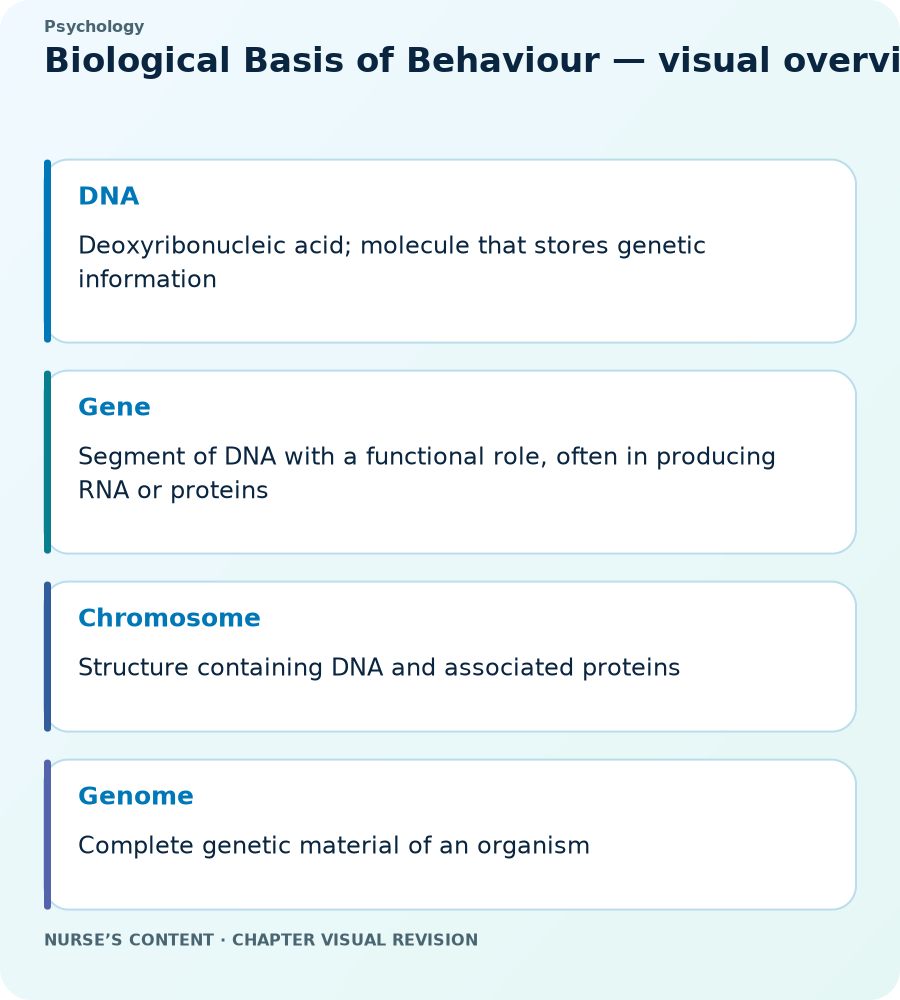
| Term | Meaning |
|---|---|
| DNA | Deoxyribonucleic acid; molecule that stores genetic information |
| Gene | Segment of DNA with a functional role, often in producing RNA or proteins |
| Chromosome | Structure containing DNA and associated proteins |
| Genome | Complete genetic material of an organism |
| Genotype | An individual’s genetic constitution |
| Phenotype | Observable characteristics resulting from genes, environment and their interactions |
| Allele | Alternative form of a gene |
| Heredity | Transmission of genetic information from parents to offspring |
| Mutation | Change in a DNA sequence |
| Epigenetics | Study of changes in gene regulation that do not alter the DNA sequence itself |
Chromosomes in Humans
A typical human somatic cell contains 46 chromosomes arranged in 23 pairs.
- 22 pairs of autosomes.
- 1 pair of sex chromosomes.
Most individuals receive one chromosome from each pair from each biological parent.
Sex chromosomes are commonly XX or XY, although variations occur.
Role of Genes in Behaviour
Genetic differences can influence:
- Temperament
- Cognitive abilities
- Personality traits
- Sensory functioning
- Sleep patterns
- Stress responses
- Vulnerability to certain psychiatric disorders
These characteristics are usually influenced by many genes and environmental factors.
Example
A person may inherit an increased genetic susceptibility to a mental health condition, but environmental experiences, development and other factors influence whether the condition occurs.
Genetic and Environmental Interaction
Human behaviour is shaped by the interaction of heredity and environment.
Heredity-related influences:
- Genetic predispositions
- Inherited neurological conditions
- Differences in physiological regulation
Environmental influences:
- Nutrition
- Family relationships
- Education
- Cultural background
- Childhood experiences
- Exposure to stress
- Social support
Gene–Environment Interaction
Gene–environment interaction occurs when the effects of genetic variations depend partly on environmental conditions.
Example: Genetic susceptibility to stress-related difficulties may interact with exposure to adversity and availability of social support.
Epigenetics
Epigenetic processes help regulate gene activity without changing the underlying DNA sequence.
They are involved in normal development and may be influenced by environmental conditions.
Important: Epigenetics does not mean that every experience produces a permanent or inherited genetic change.
4. Inheritance and Behaviour
Definition
Inheritance is the transmission of genetic information and associated characteristics from biological parents to offspring.
Types of Genetic Inheritance
1. Autosomal Dominant Inheritance
A pathogenic variant in one copy of a gene may be sufficient to cause a particular inherited condition.
Example: Huntington disease.
2. Autosomal Recessive Inheritance
A person generally needs disease-causing variants in both copies of a gene to develop the condition.
Example: Phenylketonuria.
3. X-Linked Inheritance
A genetic condition associated with a gene located on the X chromosome.
Example: Haemophilia A.
4. Multifactorial Inheritance
A characteristic or condition develops through the combined influence of multiple genes and environmental factors.
Examples include susceptibility to:
- Depression
- Schizophrenia
- Many anxiety disorders
- Differences in cognitive abilities
Most complex behavioural characteristics are multifactorial rather than following simple Mendelian inheritance.
Heredity and Environment
Both heredity and environment contribute to individual development.
| Heredity | Environment |
|---|---|
| Involves transmitted genetic information | Involves external and experiential influences |
| Contributes to biological predispositions | Influences learning and development |
| May affect temperament and disease susceptibility | Includes nutrition, education, relationships and culture |
| Genetic sequence is generally stable | Environmental exposure changes throughout life |
Methods Used to Study Heredity and Behaviour
Family Studies
Examine similarities in behavioural characteristics or health conditions among biological relatives.
Twin Studies
Compare similarities between identical and fraternal twins to estimate genetic and environmental contributions to variation.
Adoption Studies
Investigate similarities between adopted individuals and their biological or adoptive families.
Limitation: These methods estimate population-level influences. They do not determine an individual person’s future behaviour.
Importance of Genetics in Nursing
- Collect accurate family health histories.
- Identify patients who may benefit from genetic counselling.
- Understand inherited neurological and metabolic disorders.
- Support early identification of developmental problems.
- Educate patients without suggesting genetic inevitability.
- Respect privacy and confidentiality of genetic information.
5. Brain and Behaviour
Introduction
The brain is the main control centre of the nervous system.
It receives sensory information, processes signals, coordinates movement and contributes to emotions, learning, memory, decision-making and behaviour.
The brain operates through interconnected neural networks rather than isolated centres working independently.
Main Divisions of the Nervous System
A. Central Nervous System (CNS)
Consists of:
- 1. Brain
- 2. Spinal cord
Functions:
- Receives and processes information.
- Integrates sensory input.
- Coordinates movement.
- Supports cognition, emotions and behaviour.
B. Peripheral Nervous System (PNS)
Consists of nerves and associated structures outside the CNS.
It connects the CNS to sensory receptors, muscles, glands and organs.
Functional Divisions of the PNS
Somatic nervous system: Involved in voluntary movement and conscious sensation.
Autonomic nervous system: Regulates many involuntary functions, including heart rate, digestion and glandular activity.
Enteric nervous system: Neural network within the gastrointestinal tract that helps control digestive activity.
6. Structure and Function of a Neuron
Definition
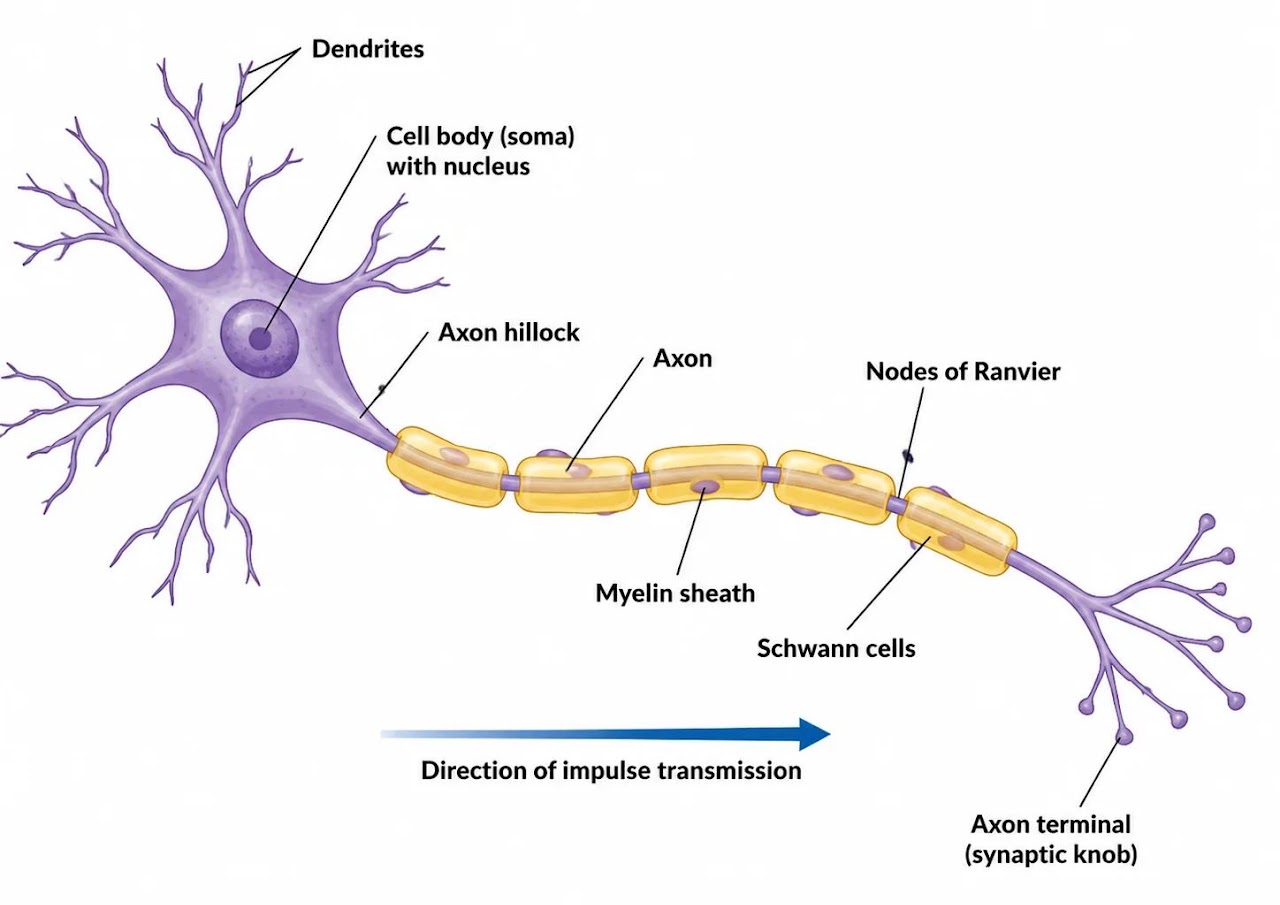
A neuron is a specialised nerve cell that receives, processes and transmits information through electrical and chemical signalling.
Parts of a Neuron
1. Cell Body (Soma)
- Contains the nucleus and cellular organelles.
- Maintains the cell’s metabolic functions.
- Integrates incoming signals.
2. Dendrites
- Receive signals from other neurons.
- Carry information toward the cell body.
3. Axon
- Conducts electrical impulses away from the cell body.
- May extend over long distances.
4. Myelin Sheath
- Insulating covering surrounding many axons.
- Increases the speed and efficiency of nerve impulse conduction.
5. Nodes of Ranvier
- Gaps between myelin segments.
- Allow saltatory conduction in myelinated axons.
6. Axon Terminals
- Form connections with other neurons or target cells.
- Release neurotransmitters at chemical synapses.
Types of Neurons
| Type | Function |
|---|---|
| Sensory neurons | Carry sensory information toward the CNS |
| Motor neurons | Carry signals from the CNS to muscles or glands |
| Interneurons | Connect and process signals between neurons within the CNS |
Nerve Impulse
A nerve impulse, or action potential, is a rapid electrical change across the neuronal membrane.
It occurs through changes in ion permeability, especially sodium and potassium movement.
Important Features
- Resting membrane potential.
- Depolarisation.
- Repolarisation.
- Refractory period.
- Propagation along the axon.
Synapse
A synapse is a junction through which a neuron communicates with another neuron, muscle cell or gland cell.
Types
- Chemical synapse
- Electrical synapse
Most neuronal communication occurs through chemical synapses using neurotransmitters.
7. Neurotransmitters and Behaviour
Definition
Neurotransmitters are chemical messengers released by neurons to communicate with other cells.
They influence movement, mood, attention, learning, sleep and many other physiological functions.
| Neurotransmitter | Major functions |
|---|---|
| Acetylcholine | Muscle contraction, autonomic functions, attention and memory |
| Dopamine | Movement, motivation, reward-related learning and cognition |
| Serotonin | Mood-related signalling, sleep, appetite and gastrointestinal function |
| Norepinephrine | Alertness, attention and stress responses |
| GABA | Major inhibitory neurotransmitter in the adult brain |
| Glutamate | Major excitatory neurotransmitter; important in learning and memory |
|---|---|
| Glycine | Inhibitory signalling, particularly in the spinal cord and brainstem |
| Endogenous opioids | Modulation of pain, stress and reward |
Clinical note: Conditions such as depression and schizophrenia involve complex biological and psychosocial processes. They cannot be explained accurately as a simple deficiency or excess of one neurotransmitter.
Importance in Nursing
Neurotransmitter knowledge helps nurses understand:
- The action of certain neurological and psychiatric medications.
- Changes in consciousness and cognition.
- Neuromuscular transmission.
- Movement disorders.
- Responses to stress.
- Pain modulation.
8. Major Parts of the Brain and Their Functions
A. Cerebrum
The cerebrum is the largest part of the brain and contains the cerebral cortex and important deeper structures.
Functions:
- Conscious perception
- Thinking
- Memory
- Language
- Learning
- Voluntary movement
- Decision-making
- Emotional regulation
Lobes of the Cerebral Cortex
1. Frontal Lobe
Functions:
- Planning and decision-making
- Voluntary motor control
- Behaviour regulation
- Working memory
- Speech production in language-dominant regions
Damage may lead to changes in planning, personality, behaviour or voluntary movement.
2. Parietal Lobe
Functions:
- Processing touch, pressure, pain and temperature information
- Body awareness
- Spatial perception
- Integration of sensory information
Damage may cause sensory disturbances or spatial neglect.
3. Temporal Lobe
Functions:
- Auditory processing
- Memory
- Language comprehension in relevant regions
- Recognition of objects and faces through distributed networks
Damage may affect memory, hearing-related processing or language comprehension.
4. Occipital Lobe
Functions:
- Primary visual processing
- Interpretation of visual features through connected cortical areas
Damage may cause visual impairment despite structurally normal eyes.
5. Insula
Functions include:
- Awareness of internal body sensations
- Taste processing
- Pain-related processing
- Emotional and autonomic integration
B. Diencephalon
1. Thalamus
The thalamus acts as a major relay and processing centre for sensory and motor information.
Functions:
- Relays most sensory information to the cerebral cortex.
- Participates in attention and consciousness.
- Contributes to motor and cognitive circuits.
Important: Olfaction initially reaches cortical areas without the same obligatory thalamic relay used by most other senses.
2. Hypothalamus
The hypothalamus helps regulate homeostasis.
Functions:
- Body temperature
- Hunger and thirst
- Sleep–wake regulation
- Autonomic activity
- Endocrine regulation through the pituitary gland
- Stress responses
- Reproductive and motivational functions
C. Cerebellum
The cerebellum coordinates movement and helps maintain balance and posture.
Functions:
- Coordination of voluntary movement
- Balance
- Posture
- Motor learning
- Timing and correction of movements
Damage: May cause ataxia, impaired coordination and abnormal balance.
D. Brainstem
The brainstem consists of:
- 1. Midbrain
- 2. Pons
- 3. Medulla oblongata
Major Functions
- Regulation of breathing
- Cardiovascular control
- Sleep and arousal
- Cranial nerve functions
- Important reflexes, including swallowing and coughing
Damage to the brainstem may be life-threatening.
E. Limbic System
The limbic system refers to interconnected structures involved in memory, motivation and emotional processing.
Important Structures
Amygdala
- Important in emotional learning.
- Processes threat-related and emotionally significant information.
Hippocampus
- Important for forming new episodic memories.
- Contributes to spatial learning.
Cingulate cortex
- Participates in attention, emotion, motivation and pain processing.
Hypothalamus
- Connects emotional and motivational processes with physiological responses.
Important: Emotions are generated and regulated by interconnected brain networks, not by one isolated emotional centre.
F. Basal Ganglia
The basal ganglia are groups of deep brain nuclei involved in:
- Movement control
- Habit learning
- Action selection
- Reward-related learning
Dysfunction of basal ganglia circuits is important in disorders such as Parkinson disease.
9. Spinal Cord, Reflexes and Behaviour
Spinal Cord
The spinal cord is a major part of the CNS that connects the brain with the peripheral nervous system.
Functions
- Transmits sensory signals toward the brain.
- Carries motor signals toward the body.
- Coordinates many reflex actions.
- Participates in autonomic functions.
Reflex Action
A reflex is a rapid, relatively automatic response to a stimulus.
Reflex Arc
The basic reflex arc consists of:
- 1. Receptor
- 2. Sensory neuron
- 3. Central integration
- 4. Motor neuron
- 5. Effector
Example: Withdrawal Reflex
When a person touches a painful object, sensory signals activate spinal neural circuits that produce a rapid withdrawal response.
Nursing Importance
Reflex testing helps assess the integrity of selected nervous system pathways.
Examples:
- Patellar reflex
- Achilles reflex
- Plantar response
- Pupillary light reflex
10. Autonomic Nervous System and Behaviour
The autonomic nervous system regulates many involuntary physiological functions.
It includes sympathetic and parasympathetic divisions.
Sympathetic Nervous System
Associated with mobilisation of the body during stress or physical activity.
Often described as the fight-or-flight response.
Effects may include:
- Increased heart rate
- Pupil dilation
- Increased blood flow to skeletal muscles
- Reduced gastrointestinal motility
- Increased sweating
- Bronchodilation
Parasympathetic Nervous System
Generally supports restorative and digestive functions.
Often described as the rest-and-digest response.
Effects may include:
- Slower heart rate
- Increased gastrointestinal activity
- Stimulation of salivation
- Promotion of bladder emptying
- Pupillary constriction
Comparison
| Sympathetic | Parasympathetic |
|---|---|
| Supports physiological mobilisation | Supports many restorative functions |
| Generally increases heart rate | Generally decreases heart rate |
| Dilates pupils | Constricts pupils |
| Generally reduces gastrointestinal activity | Generally increases gastrointestinal activity |
| Promotes sweating | No equivalent widespread sweat-gland effect |
| Supports urine storage | Promotes bladder emptying |
Both divisions work together to maintain physiological regulation.
11. Endocrine System and Behaviour
The endocrine system influences behaviour by releasing hormones into the bloodstream.
Hormones act on specific receptors and can affect brain function, metabolism, growth and stress responses.
Important Hormones
| Hormone | Main physiological or behavioural relevance |
|---|---|
| Cortisol | Stress response, metabolism and energy regulation |
| Adrenaline | Rapid physiological responses to stress |
| Thyroid hormones | Metabolism, development and normal neurological function |
| Insulin | Blood glucose regulation; affects brain energy availability |
| Melatonin | Circadian rhythm and sleep timing |
| Oxytocin | Reproductive functions and aspects of social behaviour |
| Oestrogens | Reproduction, brain function and other physiological processes |
| Testosterone | Reproductive functions and influences on development and behaviour |
Stress Response
Two major biological systems contribute to stress responses.
1. Sympathetic–Adrenomedullary System
- Stress-related neural activity increases sympathetic output.
- The adrenal medulla releases adrenaline and noradrenaline.
- Heart rate, alertness and other physiological functions may increase.
2. Hypothalamic–Pituitary–Adrenal (HPA) Axis
The hormonal pathway is:
Hypothalamus (CRH) → Anterior pituitary (ACTH) → Adrenal cortex (Cortisol)
Cortisol contributes to energy regulation and adaptation during stress.
Prolonged disturbances in stress-response systems may affect sleep, mood, metabolism and physical health.
12. Sensation
Definition
Sensation is the process by which specialised sensory receptors detect physical or chemical stimuli and convert them into neural signals.
It is the initial stage of receiving sensory information.
Examples include:
- Detecting light
- Hearing a sound
- Feeling pressure
- Detecting heat
- Tasting sweetness
- Smelling an odour
Difference Between Sensation and Perception
| Sensation | Perception |
|---|---|
| Detection and neural encoding of stimuli | Organization and interpretation of sensory information |
| Begins at sensory receptors | Involves processing across brain networks |
| Provides sensory signals | Produces meaningful interpretation |
| Example: Detecting a sound | Example: Recognising the sound as a ringing telephone |
Remember: Sensation detects stimuli; perception interprets their meaning.
13. Sensory Processes
Sensory processing involves several stages through which information is detected, transmitted and interpreted.
Stages of Sensory Processing
1. Stimulation
A physical or chemical stimulus activates a sensory receptor.
Example: Light enters the eye.
2. Reception
The sensory receptor responds to the stimulus.
Example: Photoreceptor cells in the retina respond to light.
3. Transduction
The receptor converts stimulus energy into an electrical change that can contribute to neural signalling.
4. Transmission
Sensory information travels through neural pathways toward the CNS.
5. Central Processing
The brain and spinal cord process and integrate sensory information.
6. Perception
Conscious awareness and interpretation may occur, depending on the sensory system and processing conditions.
Example: Recognising a visual stimulus as a familiar face.
14. Types of Sensory Receptors
Sensory receptors are classified according to the stimuli they detect.
| Receptor type | Stimulus detected | Example |
|---|---|---|
| Photoreceptors | Light | Rods and cones of retina |
| Mechanoreceptors | Mechanical deformation | Touch receptors, inner ear hair cells |
| Thermoreceptors | Temperature changes | Warm and cold receptors |
| Chemoreceptors | Chemical substances | Taste and smell receptors |
| Nociceptors | Potentially tissue-damaging stimuli | Pain-related sensory endings |
| Proprioceptors | Position, movement and muscle stretch | Muscle spindles and joint-related receptors |
| Osmoreceptors | Changes in fluid osmolarity | Hypothalamic osmosensitive structures |
15. Major Sensory Systems
1. Visual Sensation
Organ: Eye
Receptors: Rods and cones in the retina.
Functions
- Detection of light
- Colour vision
- Recognition of shapes
- Visual acuity
- Motion perception
Basic Visual Pathway
Retina → Optic nerve → Optic chiasm → Optic tract → Lateral geniculate nucleus → Optic radiations → Visual cortex.
Clinical importance: Lesions along the visual pathway may cause characteristic visual field defects.
2. Auditory Sensation
Organ: Ear
Receptors: Hair cells of the cochlea.
Basic Hearing Process
- 1. Sound waves enter the external ear.
- 2. The tympanic membrane vibrates.
- 3. Auditory ossicles transmit mechanical vibrations.
- 4. Cochlear fluid movement stimulates hair cells.
- 5. Electrical signals travel through the cochlear division of cranial nerve VIII.
- 6. Brain pathways process sound.
Functions: Hearing and recognition of sound characteristics.
3. Olfactory Sensation
Organ: Nose
Receptors: Olfactory receptor neurons in the olfactory epithelium.
Process
Odour molecules → Olfactory receptors → Olfactory nerve fibres → Olfactory bulb → Olfactory pathways and cortical regions.
Function: Detection and identification of odours.
Smell has important connections with emotional and memory systems.
4. Gustatory Sensation
Organ: Tongue and other regions containing taste buds.
Receptors: Taste receptor cells.
Five Commonly Recognised Basic Tastes
- 1. Sweet
- 2. Sour
- 3. Salty
- 4. Bitter
- 5. Umami
Taste information is transmitted primarily through cranial nerves VII, IX and X.
Clinical importance: Changes in taste may affect appetite, nutrition and quality of life.
5. Tactile Sensation
Organ: Skin
Includes:
- Touch
- Pressure
- Vibration
- Texture discrimination
Specialised cutaneous receptors transmit information through sensory nerves to the CNS.
6. Temperature Sensation
Thermoreceptors detect changes in skin temperature.
This information contributes to protective responses and thermal awareness.
7. Pain Sensation (Nociception)
Nociceptors detect potentially harmful mechanical, thermal or chemical stimuli.
Pain is a personal sensory and emotional experience influenced by biological, psychological and social factors.
Important: Nociception and conscious pain are related but not identical processes.
8. Proprioception
Proprioception is the awareness of body position and movement.
Receptors in muscles, tendons and joints provide relevant sensory information.
Example: A person can identify the position of their arm with their eyes closed.
9. Vestibular Sensation
The vestibular apparatus of the inner ear detects head movement and orientation relative to gravity.
Functions:
- Balance
- Postural control
- Stabilisation of gaze during head movement
16. Important Concepts in Sensory Psychology
A. Absolute Threshold
The minimum intensity of a stimulus that can be detected under specified conditions, often defined as detection on 50% of trials.
Example: The faintest sound a person can detect under particular testing conditions.
B. Difference Threshold
The smallest detectable difference between two stimuli under specified conditions.
Also called the just noticeable difference (JND).
Example: Detecting a small difference between two weights.
C. Weber’s Law
Weber’s law describes how, for many sensory tasks within certain ranges, the detectable change in stimulus
intensity is approximately proportional to the original intensity.
Formula:
ΔI / I = k
Where:
- ΔI = Just noticeable difference
- I = Original stimulus intensity
- k = Weber fraction
D. Sensory Adaptation
A reduction in sensory receptor response or perceived intensity during continued exposure to a constant stimulus.
Example: Becoming less aware of a persistent odour.
E. Habituation
A reduction in a behavioural or neural response following repeated exposure to a stimulus that has no significant consequences.
Example: Gradually ignoring a harmless, repeated background noise.
Difference: Sensory adaptation often involves changes in receptor or sensory pathway responsiveness, whereas habituation is a form of learning or central response reduction.
F. Sensory Deprivation
A condition involving reduced sensory input.
Prolonged or severe deprivation may affect attention, mood, perception and orientation.
G. Sensory Overload
Occurs when incoming sensory stimulation exceeds an individual’s ability to process it comfortably.
Example: A patient in an ICU may experience distress from continuous alarms, bright lights, pain and frequent interruptions.
17. Factors Affecting Sensation and Sensory Processing
Important factors include:
- 1. Age: Sensory functioning may change during development and ageing.
- 2. Physical health: Neurological or sensory disorders may impair function.
- 3. Attention: Influences which sensory information receives further processing.
- 4. Previous experience: Can affect interpretation of sensory information.
- 5. Medication: Some medicines may influence hearing, vision, alertness or sensory responses.
- 6. Fatigue: May reduce attention and sensory performance.
- 7. Emotional state: Anxiety and stress may influence sensory experiences.
- 8. Environmental conditions: Lighting, noise and other conditions affect sensory input.
- 9. Nutritional status: Certain deficiencies may impair neurological or sensory function.
18. Biological Basis of Learning, Memory and Emotions
Learning
Learning involves relatively lasting changes in knowledge or behaviour resulting from experience.
Biological processes supporting learning include:
- Synaptic plasticity
- Changes in neural connections
- Neurotransmitter signalling
- Repeated activation of neural circuits
Memory
Memory involves encoding, storage and retrieval of information.
Important brain regions and networks include:
- Hippocampus and related medial temporal structures
- Prefrontal cortex
- Distributed cortical networks
- Amygdala for some forms of emotional learning
Emotions
Emotions involve coordinated activity across brain, autonomic and endocrine systems.
Important structures include:
- Amygdala
- Prefrontal cortex
- Insula
- Hypothalamus
- Other interconnected regions
Neuroplasticity
Definition: Neuroplasticity is the nervous system’s capacity to change its structure, function or connections in response to experience, learning, development or injury.
Nursing Importance
Neuroplasticity contributes to learning and some forms of functional recovery during rehabilitation after neurological injuries.
Recovery depends on multiple factors, including injury severity, timing, treatment and patient-specific circumstances.
19. Clinical Applications in Nursing
Understanding biological influences on behaviour is important in medical, surgical, psychiatric, paediatric and community nursing.
| Clinical condition | Possible biological effect on behaviour or cognition |
|---|---|
| Stroke | Changes in movement, language, cognition or emotional regulation |
| Hypoglycaemia | Confusion, irritability, behavioural change or reduced consciousness |
| Hypothyroidism | Fatigue, slowed cognition and depressive symptoms |
| Hyperthyroidism | Nervousness, restlessness and sleep disturbance |
|---|---|
| Dementia | Progressive cognitive and functional impairment |
| Traumatic brain injury | Changes in attention, memory, emotion and behaviour |
| Sleep deprivation | Reduced concentration, emotional regulation and judgment |
| Sensory impairment | Communication difficulties and reduced environmental awareness |
| Delirium | Acute, fluctuating disturbances in attention and awareness |
Nursing Responsibilities
1. Neurological Assessment
- Assess level of consciousness.
- Observe orientation, memory and attention.
- Check pupil responses where indicated.
- Assess motor strength and sensation.
- Monitor for sudden neurological changes.
2. Psychological Assessment
- Observe mood and behaviour.
- Identify emotional distress.
- Assess coping and support systems.
- Report significant changes in cognition or behaviour.
3. Sensory Assessment
- Assess vision and hearing difficulties.
- Identify sensory loss or abnormal sensations.
- Support the use of prescribed glasses and hearing aids.
- Maintain a safe environment.
4. Patient Communication
- Use simple, clear language.
- Allow adequate response time.
- Reduce distracting noise.
- Adapt communication for sensory or cognitive impairment.
5. Patient Safety
- Implement appropriate fall-prevention measures.
- Monitor patients with altered consciousness.
- Recognise and report acute confusion.
- Prevent avoidable sensory deprivation or overload.
6. Health Education
- Explain the relationship between physical and psychological health.
- Encourage healthy sleep and appropriate nutrition.
- Support stress-management strategies.
- Educate patients and families regarding neurological or sensory limitations.
Clinical priority: Sudden confusion, new weakness, speech disturbance, seizure activity or reduced consciousness requires prompt medical assessment.
20. Important Differences for Examinations
Heredity vs Environment
| Heredity | Environment |
|---|---|
| Transmission of genetic information | External and experiential influences |
| Involves genes and chromosomes | Includes family, nutrition, education and culture |
| Contributes to biological predispositions | Contributes to learning and adaptation |
| Interacts with environmental influences | Interacts with inherited characteristics |
Sensory Neuron vs Motor Neuron
| Sensory neuron | Motor neuron |
|---|---|
| Carries information toward CNS | Carries signals away from CNS |
| Also called afferent neuron | Also called efferent neuron |
| Associated with sensory input | Associated with motor output |
Sensation vs Perception
| Sensation | Perception |
|---|---|
| Detects and encodes stimuli | Organizes and interprets sensory information |
| Starts at sensory receptors | Involves central nervous system processing |
| Example: Detecting light | Example: Recognising a face |
CNS vs PNS
| CNS | PNS |
|---|---|
| Brain and spinal cord | Nerves and structures outside the CNS |
| Integrates and processes information | Connects the CNS with the rest of the body |
| Coordinates many responses | Transmits sensory, motor and autonomic signals |
21. Important University Examination Questions
Long Answer Questions (10–15 Marks)
- 1. Define the biological basis of behaviour. Explain the role of the nervous system in human behaviour.
- 2. Describe the relationship between body and mind with suitable examples.
- 3. Explain the influence of heredity and environment on human behaviour.
- 4. Describe the structure and major functions of the brain in relation to behaviour.
- 5. Define sensation. Explain the stages and types of sensory processes.
- 6. Discuss the role of hormones and neurotransmitters in human behaviour.
Short Answer Questions (5 Marks)
- 1. Explain the biopsychosocial model.
- 2. Describe the influence of genetics on behaviour.
- 3. Define genotype and phenotype.
- 4. Explain the role of the hypothalamus in behaviour.
- 5. Write the functions of the frontal lobe.
- 6. Describe the structure of a neuron.
- 7. Differentiate between sympathetic and parasympathetic nervous systems.
- 8. Explain the functions of major neurotransmitters.
- 9. Differentiate between sensation and perception.
- 10. Explain sensory adaptation and habituation.
- 11. Describe the role of the limbic system.
- 12. Write the nursing importance of understanding brain and behaviour.
Very Short Answer Questions (2 Marks)
- 1. Define the biological basis of behaviour.
- 2. What is heredity?
- 3. Define gene.
- 4. What is genotype?
- 5. Name the major divisions of the nervous system.
- 6. What is a neuron?
- 7. Define synapse.
- 8. Name the largest part of the brain.
- 9. Which brain structure is important for coordination and balance?
- 10. What is the function of the hippocampus?
- 11. Define sensation.
- 12. What is sensory adaptation?
- 13. Define absolute threshold.
- 14. What is a reflex arc?
- 15. Define neuroplasticity.
22. Multiple-Choice Questions (MCQs)
1. The structural and functional unit of the nervous system is:
Answer: B. Neuron
2. Which brain structure is especially important in forming new episodic memories?
Answer: B. Hippocampus
3. Which lobe is most closely associated with primary visual processing?
Answer: C. Occipital
4. The primary inhibitory neurotransmitter in the adult brain is:
Answer: A. GABA
5. The autonomic nervous system is divided mainly into:
Answer: B. Sympathetic and parasympathetic divisions
6. The biological process of converting sensory stimulus energy into neural signals is called:
Answer: B. Transduction
7. Which structure is especially important for movement coordination?
Answer: A. Cerebellum
8. The hormone released from the adrenal cortex during activation of the HPA axis is:
Answer: C. Cortisol
9. The smallest detectable difference between two stimuli is called:
Answer: B. Difference threshold
10. Human behaviour is best understood as the result of:
Answer: D. Interaction of biological, psychological and environmental factors
23. Quick Revision Notes
- The biological basis of behaviour explains how biological processes influence thoughts, emotions and actions.
- Mind and body influence each other continuously.
- The biopsychosocial model includes biological, psychological and social factors.
- Genes influence behaviour but do not determine most complex behaviours independently.
- Typical human somatic cells contain 46 chromosomes.
- The nervous system is divided into CNS and PNS.
- The neuron is the basic functional unit of the nervous system.
- Neurotransmitters transmit chemical signals between neurons.
- GABA is a major inhibitory neurotransmitter in the adult brain.
- Glutamate is a major excitatory neurotransmitter.
- The frontal lobe contributes to planning, behaviour regulation and voluntary movement.
- The occipital lobe is important for vision.
- The cerebellum coordinates movement and balance.
- The hippocampus is important in forming new episodic memories.
- The hypothalamus regulates many homeostatic functions.
- The sympathetic nervous system supports physiological mobilisation.
- The parasympathetic nervous system supports many restorative functions.
- Sensation involves detection of stimuli.
- Perception involves interpretation of sensory information.
- Transduction converts stimulus energy into electrical changes.
- Sensory adaptation occurs during sustained stimulation.
- Neuroplasticity allows the nervous system to change with learning and experience.
24. Conclusion
Human behaviour develops through the interaction of the nervous system, genetics, hormonal activity, sensory processes and environmental experiences.
The brain plays a central role in learning, memory, emotions, movement and cognition, while genetic and endocrine factors contribute to individual differences in behaviour.
Understanding the biological basis of behaviour helps nurses recognise neurological, psychological and sensory changes, communicate effectively, provide holistic care and support patient safety.
This knowledge forms the foundation for further study of mental health, developmental psychology, cognition, personality, motivation and emotional processes.
Chapter reference images