Pharmacology
Antiseptics and Disinfectants
Types, classification, mechanisms of action, uses, precautions and nursing responsibilities related to antiseptics and disinfectants.
Open quizzes and study tools Download PDF
CHAPTER 23 / PHARMACOLOGY 23. Antiseptics and Disinfectants
1. Definitions
An antiseptic is a chemical preparation used on living tissue to reduce microorganisms. A disinfectant is used on inanimate surfaces or equipment to eliminate many or all pathogenic microorganisms, depending on its level and contact conditions. Sterilization destroys all viable microorganisms, including bacterial spores. Cleaning removes dirt and organic material and is essential before most disinfection or sterilization procedures.
2. Differences between antiseptics, disinfectants and sterilants
| Feature | Antiseptic | Disinfectant | Sterilant |
|---|---|---|---|
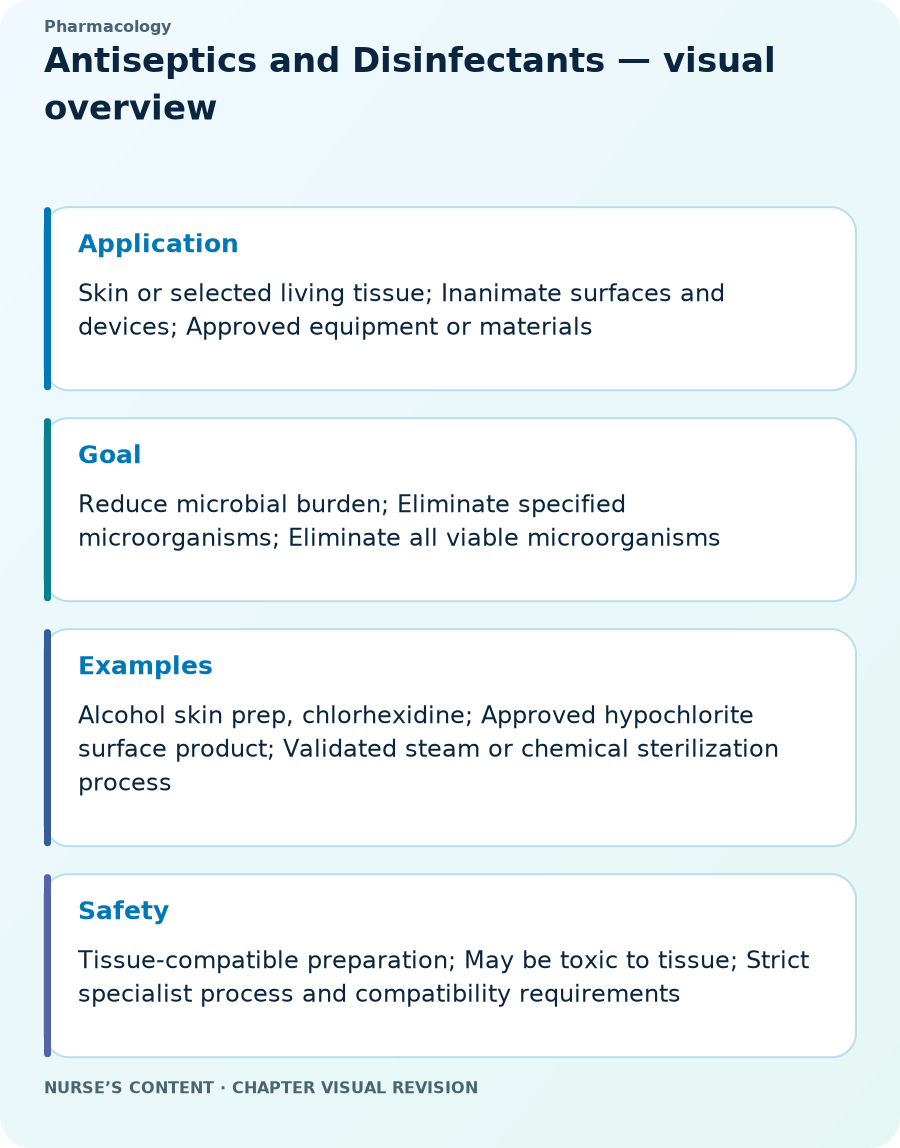
| Application | Skin or selected living tissue | Inanimate surfaces and devices | Approved equipment or materials |
| Goal | Reduce microbial burden | Eliminate specified microorganisms | Eliminate all viable microorganisms |
| Examples | Alcohol skin prep, chlorhexidine | Approved hypochlorite surface product | Validated steam or chemical sterilization process |
| Safety | Tissue-compatible preparation | May be toxic to tissue | Strict specialist process and compatibility requirements |
A chemical may be an antiseptic or disinfectant depending on formulation and concentration. Never use an environmental surface product on skin merely because its active ingredient resembles a skin preparation.
3. Classification and mechanisms
| Agent | Mechanism | Uses and precautions |
|---|---|---|
| Alcohols (ethanol, isopropanol) | Protein denaturation and membrane disruption | Hand rubs, selected skin/equipment preparations; flammable, not sporicidal, allow drying. |
| Chlorhexidine | Disrupts microbial membranes | Approved skin and hand preparations; avoid eyes, middle ear and neural tissue; rare serious allergy. |
| Iodophors (povidone-iodine) | Oxidative effects and protein disruption | Selected skin/mucosal preparation depending on product; thyroid/neonatal considerations. |
| Chlorine compounds (sodium hypochlorite) | Oxidative damage | Environmental surfaces and spill protocols; corrosive, affected by organic material, never mix with acids or ammonia. |
| Hydrogen peroxide / peracetic acid | Oxidative damage | Approved surfaces or equipment processing; concentration and material compatibility matter. |
| Quaternary ammonium compounds | Membrane disruption | Selected low-level surface disinfection; activity against spores and some organisms is limited. |
| Glutaraldehyde / OPA | Protein cross-linking or related chemical effects | Specialist high-level device disinfection; toxic exposures, ventilation and rinsing requirements. |
| Phenolic compounds | Membrane and protein effects | Selected environmental products; follow setting-specific restrictions. |
4. Levels of disinfection and Spaulding classification
| Device category | Example | Required processing concept |
|---|---|---|
| Critical | Surgical instrument entering sterile tissue | Sterilization using validated process. |
| Semicritical | Device contacting mucous membranes | At least high-level disinfection where appropriate; sterilize when indicated/possible. |
| Noncritical | BP cuff contacting intact skin | Cleaning and appropriate low-level disinfection. |
High-level disinfection eliminates many microorganisms but may not reliably destroy large numbers of bacterial spores. Low-level disinfection targets selected vegetative bacteria, viruses and fungi. Device instructions and institutional infection-control procedures take precedence [12].
5. Factors affecting effectiveness
- • Concentration and contact or wet time specified by the manufacturer.
- • Organic material, biofilm and prior cleaning.
- • Microbial species and resistance, including spores.
- • Temperature, pH, surface compatibility and complete coverage.
- • Correct dilution, storage, expiry and solution stability.
Increasing concentration beyond the approved level does not guarantee better results and can damage articles or expose staff to toxic substances.
6. Dilution calculations and safe handling
Use the manufacturer's approved concentration and institutional spill protocol. For a fictional arithmetic example, 5% stock diluted to 0.5% final concentration has a tenfold dilution: 100 mL stock made up to 1,000 mL final volume. This is a maths illustration, not a universal disinfectant prescription. Check actual stock strength, active ingredient definition and required contact time; percentages for different products may not be comparable. Wear appropriate PPE, prepare in a suitable ventilated area, label the container and never mix incompatible cleaners. Do not spray chemicals onto patients.
7. Hand hygiene and skin preparation
Alcohol-based hand rub is suitable in many clinical situations; soap and water are necessary for visibly dirty hands and other specified situations. Perform hand hygiene at the appropriate moments, including before aseptic procedures and after body-fluid exposure risk. For injection or invasive procedure skin preparation, use the approved agent and application technique; allow drying as required. Assess allergy and neonatal or mucosal precautions. Gloves do not replace hand hygiene. Avoid routine chemical application to open wounds without a specific indication.
8. Nursing responsibilities
Identify the object or tissue, choose the correct product and check its instructions. Clean equipment and maintain prescribed contact time. Use gloves and eye protection when required; segregate contaminated articles. Document or log processing where indicated. Report spills, exposure, damaged devices, incorrect dilutions and infection-control breaches. Keep chemicals in labelled containers away from food, medicines and children.
9. Examination questions
Long answer questions
- 1. Define and classify antiseptics and disinfectants with mechanisms and uses.
- 2. Explain levels of disinfection, Spaulding classification and nursing precautions.
Short answer questions
- • Alcohols; chlorhexidine; hypochlorite; sterilization versus disinfection; contact time; factors affecting effectiveness.
Very short answer questions
- • Which process destroys bacterial spores as well as other viable microorganisms? — Sterilization.
- • Where are antiseptics intended for use? — Living tissue, in approved formulations.
- • Should bleach be mixed with ammonia? — No.
10. Quick revision
Clean before processing. Match device risk category to reprocessing method. Follow product concentration, contact time and compatibility instructions. Distinguish skin preparations from surface disinfectants and never mix chemicals casually.
Conclusion
Antiseptic and disinfectant safety depends on selecting the right formulation for the right target, following validated procedures and preventing occupational and patient exposure.
Chapter reference images