Pharmacology
Emergency and Critical Care Drugs
Adrenaline, atropine, emergency bronchodilators, vasopressors, anticonvulsants, emergency cardiac drugs, antidotes and drugs used in resuscitation.
Open quizzes and study tools Download PDF
CHAPTER 22 / PHARMACOLOGY 22. Emergency and Critical Care Drugs
1. Introduction
Emergency medicines treat immediately threatening disturbances of breathing, circulation, consciousness or metabolism. They complement, rather than replace, high-quality assessment, CPR, defibrillation, airway support and treatment of the cause. The following examples are for supervised nursing education; actual administration follows the current locally adopted emergency algorithm and authorized clinical team.
2. Adrenaline (epinephrine): indications must not be confused
Adrenaline stimulates alpha and beta adrenergic receptors. Vasoconstriction improves vascular tone; beta effects support cardiac stimulation and bronchodilation. The route, concentration and dose depend on the emergency.
| Adult teaching example | Route and dose | Important distinction |
|---|---|---|
| Anaphylaxis (RCUK protocol) | 0.5 mg IM into anterolateral thigh, using 1 mg/mL; repeat after 5 minutes if needed | Patient with circulation; urgent ABC assessment and support [4]. |
| Cardiac arrest (AHA 2025) | 1 mg IV/IO every 3–5 minutes under adult ALS protocol | Pulseless patient; continue CPR and rhythm-specific defibrillation [3]. |
Never substitute the IM anaphylaxis regimen for the IV/IO arrest regimen or vice versa. Use concentration in mg/mL rather than relying on ratio notation. In arrest, give adrenaline as soon as feasible for nonshockable rhythm and after initial unsuccessful defibrillation attempts for shockable rhythm, following the adopted algorithm. Paediatric algorithms are different.
3. Emergency cardiac drugs
| Drug | Main role | Nursing considerations |
|---|---|---|
| Atropine | Selected symptomatic bradycardia with haemodynamic compromise | Monitor ECG and perfusion; pacing or alternative drugs may be necessary. AHA 2025 adult starting dose is 1 mg IV; follow complete algorithm and local protocol. |
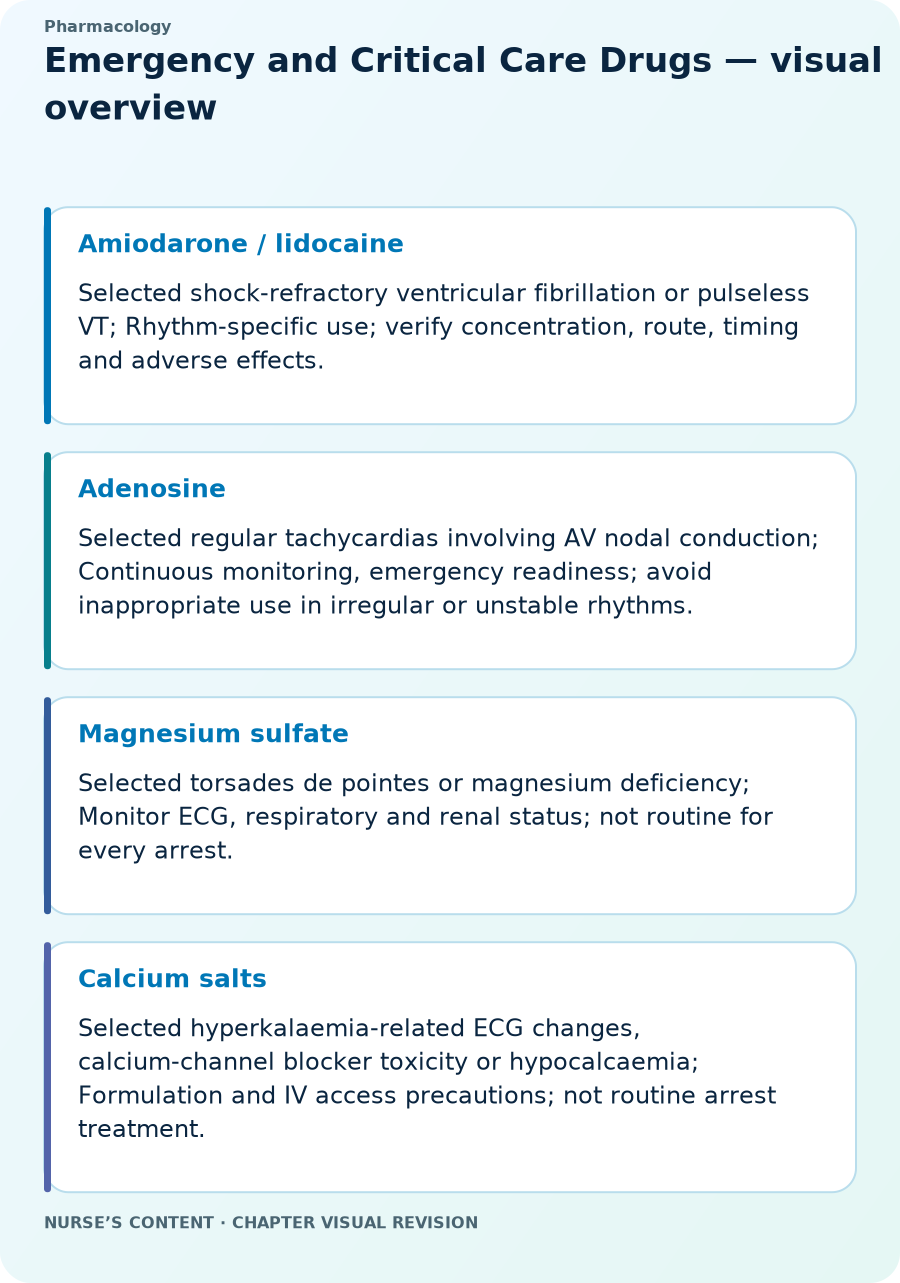
| Amiodarone / lidocaine | Selected shock-refractory ventricular fibrillation or pulseless VT | Rhythm-specific use; verify concentration, route, timing and adverse effects. |
| Adenosine | Selected regular tachycardias involving AV nodal conduction | Continuous monitoring, emergency readiness; avoid inappropriate use in irregular or unstable rhythms. |
| Magnesium sulfate | Selected torsades de pointes or magnesium deficiency | Monitor ECG, respiratory and renal status; not routine for every arrest. |
| Calcium salts | Selected hyperkalaemia-related ECG changes, calcium-channel blocker toxicity or hypocalcaemia | Formulation and IV access precautions; not routine arrest treatment. |
| Sodium bicarbonate | Selected toxicological or metabolic indications | Sodium load, alkalosis, compatibility; not routine during cardiac arrest. |
Atropine is not a routine medication for asystole or pulseless electrical activity. Unstable tachyarrhythmias may require immediate electrical cardioversion. Do not delay defibrillation to prepare a medicine.
4. Vasopressors and inotropes
| Drug | Major action / use | Monitoring |
|---|---|---|
| Noradrenaline | Vasoconstrictor, common first-choice pressor in septic shock | Continuous haemodynamics and perfusion; monitor extravasation and ischaemia. |
| Adrenaline infusion | Alpha/beta stimulation in selected shock | Arrhythmia, ischaemia, hyperglycaemia; prescribed titration. |
| Vasopressin | V1-mediated vasoconstriction; selected adjunct in shock | Perfusion and sodium/water effects; not routine replacement for arrest adrenaline. |
| Dobutamine | Inotrope for selected low cardiac output | HR, ECG, BP, perfusion and response. |
| Dopamine | Dose-related adrenergic effects; selected circumstances | Arrhythmias and extravasation; not a routine renal-protective infusion. |
Use approved standardized concentrations and pump settings. Verify line access, compatible infusions and titration targets. Reassess lactate trends, urine output, capillary refill and mental status alongside BP. Persistent shock requires review of underlying cause, volume status and source control.
5. Emergency bronchodilators, anticonvulsants and metabolic medicines
Salbutamol and ipratropium are used in selected acute bronchospasm; systemic corticosteroids may support treatment but are not immediate bronchodilators. Monitor work of breathing, oxygenation, HR and response. Benzodiazepines (lorazepam, diazepam or midazolam depending on protocol/access) are used for prolonged convulsive seizures; support ventilation and monitor sedation. Second-line antiseizure drugs are chosen under protocol. IV glucose treats severe hypoglycaemia when appropriate; glucagon may be useful when IV access is unavailable depending on setting. In hyperkalaemia, IV calcium can stabilize cardiac membranes, insulin with glucose shifts potassium intracellularly, and other therapies remove potassium. Glucose and potassium require serial monitoring; calcium itself does not lower potassium.
6. Common antidotes
| Toxic exposure | Antidote / treatment concept | Safety point |
|---|---|---|
| Opioids | Naloxone | Support ventilation; repeat/observe as effect may wear off. |
| Paracetamol overdose | N-acetylcysteine | Time-sensitive risk assessment and liver monitoring. |
| Organophosphates | Atropine, selected oxime such as pralidoxime | Protect staff from contamination; titrate to clinical protocol. |
| Unfractionated heparin | Protamine | Reversal based on heparin exposure; hypotension/anaphylactoid risk. |
| Warfarin | Vitamin K and PCC when indicated | Assess severity of bleeding and INR. |
| Digoxin | Digoxin immune Fab | Selected severe toxicity; monitor rhythm and potassium. |
| Local anaesthetic systemic toxicity | Lipid emulsion under specialist protocol | Activate anaesthetic emergency response. |
| Magnesium toxicity | Calcium gluconate under protocol | Stop magnesium as directed, support ventilation and monitor ECG. |
Flumazenil is not a universal overdose antidote; it may precipitate seizures. Poisoning requires agent identification, supportive care and toxicology consultation. Do not induce vomiting routinely. Antidote dose depends on exposure and protocol.
7. Nursing responsibilities and crash-cart management
Check emergency trolleys for expiry, appropriate concentrations, seals and functioning equipment according to policy. During resuscitation, assign roles, announce medication name/dose, use closed-loop confirmation and document exact times. Check dose, route and concentration without delaying life-saving compressions. Monitor response, report errors promptly and replenish supplies after use. Participate in simulation and debriefing.
8. Examination questions
Long answer questions
- 1. Classify emergency drugs and explain the different roles of adrenaline.
- 2. Describe vasopressors, inotropes and relevant critical care monitoring.
- 3. List common antidotes and their nursing considerations.
Short answer questions
- • Adrenaline in anaphylaxis versus arrest; atropine; noradrenaline; naloxone; magnesium sulfate; crash cart.
Very short answer questions
- • First-line route of adrenaline in anaphylaxis? — IM.
- • Adult arrest adrenaline interval under AHA 2025? — Every 3–5 minutes.
- • Is sodium bicarbonate routinely recommended in all cardiac arrests? — No.
9. Quick revision
Treat airway, breathing and circulation first. Different adrenaline regimens are not interchangeable. Rhythm and haemodynamic status guide cardiac drugs. Verify concentrations and document resuscitation medication timing. Antidotes supplement essential supportive care.
Conclusion
Emergency pharmacology requires rapid but accurate verification, protocol-based decision-making, continuous assessment and effective teamwork. Training and current local algorithms are essential.
Chapter reference images