Pharmacology
Vitamins, Minerals and Nutritional Supplements
Fat-soluble vitamins, water-soluble vitamins, minerals, electrolyte preparations, nutritional supplements and deficiency treatment.
Open quizzes and study tools Download PDF
CHAPTER 20 / PHARMACOLOGY 20. Vitamins, Minerals and Nutritional Supplements
1. Introduction
Vitamins are organic micronutrients required for normal metabolism; minerals are inorganic elements with structural, regulatory and enzymatic roles. Supplements replenish deficiencies or meet special requirements. They are not substitutes for balanced nutrition or treatment of an underlying illness. Dietary requirements differ from therapeutic replacement doses and vary by age, sex, pregnancy and national reference standards.
2. Fat-soluble vitamins
| Vitamin | Functions / sources | Deficiency | Excess / precautions |
|---|---|---|---|
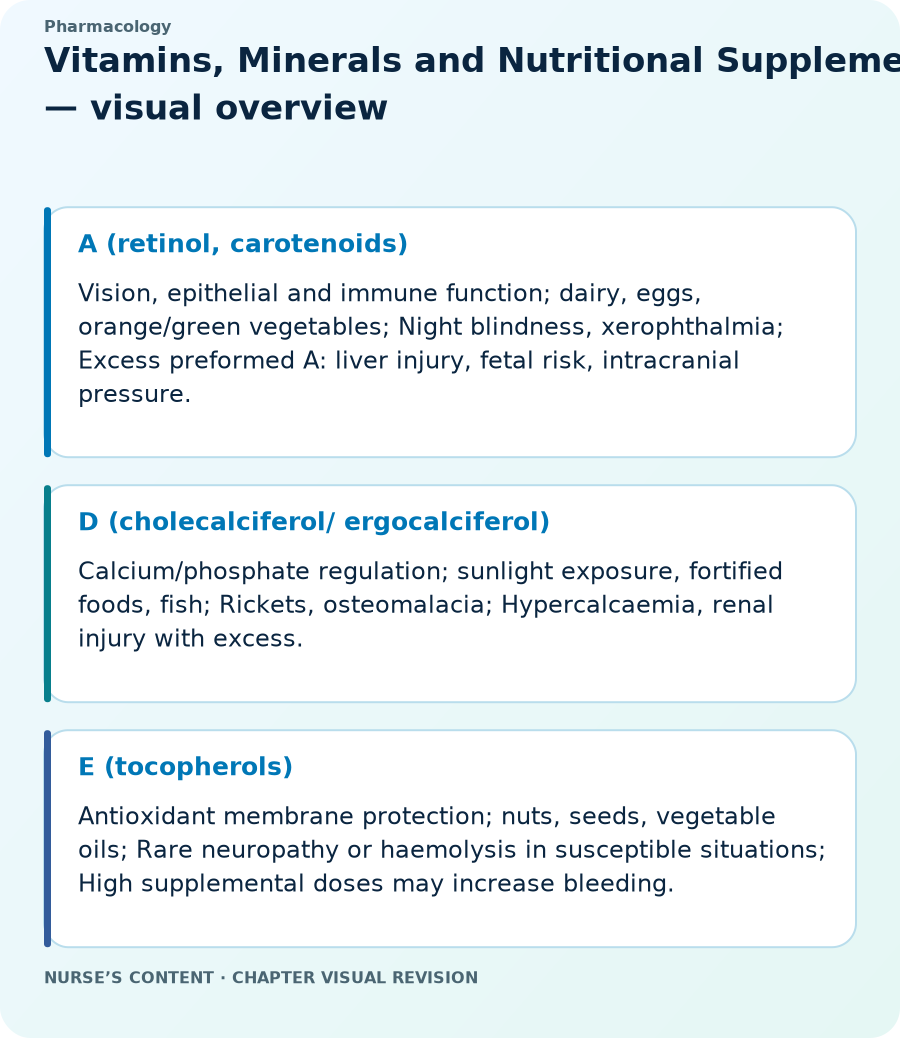
| A (retinol, carotenoids) | Vision, epithelial and immune function; dairy, eggs, orange/green vegetables | Night blindness, xerophthalmia | Excess preformed A: liver injury, fetal risk, intracranial pressure. |
| D (cholecalciferol/ ergocalciferol) | Calcium/phosphate regulation; sunlight exposure, fortified foods, fish | Rickets, osteomalacia | Hypercalcaemia, renal injury with excess. |
| E (tocopherols) | Antioxidant membrane protection; nuts, seeds, vegetable oils | Rare neuropathy or haemolysis in susceptible situations | High supplemental doses may increase bleeding. |
| K | Activation of clotting and bone proteins; leafy vegetables | Bleeding tendency | Important interaction with warfarin; avoid abrupt changes in intake. |
Vitamin A and D may accumulate. High-dose preparations should be given only for authorized indications. Different vitamin D forms are not dose-interchangeable: calcitriol is active hormone and requires special monitoring.
3. Water-soluble vitamins
| Vitamin | Main function / source | Deficiency and key caution |
|---|---|---|
| B1 thiamine | Carbohydrate metabolism; whole grains, legumes | Beriberi, Wernicke encephalopathy; urgent replacement in suspected high-risk cases. |
| B2 riboflavin | FAD/FMN coenzymes; dairy, eggs | Angular cheilitis, glossitis. |
| B3 niacin | NAD/NADP; meat, whole grains | Pellagra (dermatitis, diarrhoea, dementia); high therapeutic doses may cause flushing and hepatic effects. |
| B5 pantothenate | Coenzyme A; widespread in foods | Deficiency uncommon. |
| B6 pyridoxine | Amino acid metabolism, neurotransmitters | Neuropathy, dermatitis, selected anaemia; excessive long-term doses can cause neuropathy. |
| B7 biotin | Carboxylase cofactor; varied foods | Rare dermatitis/neurological symptoms; supplements may interfere with lab tests. |
| B9 folate | DNA synthesis; greens, legumes, fortified foods | Megaloblastic anaemia, fetal neural tube defect risk; assess B12 status. |
| B12 cobalamin | DNA synthesis and myelin; animal foods, fortified foods | Megaloblastic anaemia and neurological impairment. |
| C ascorbic acid | Collagen synthesis, iron absorption; fruits, vegetables | Scurvy, impaired wound healing; excess may cause GI symptoms or kidney stone risk. |
Water-soluble does not mean harmless at unlimited doses. Treatment of a deficiency requires assessment of dietary intake, absorption, medication effects and underlying disease.
4. Mineral preparations
| Mineral | Sources and physiological role | Deficiency / treatment considerations |
|---|---|---|
| Calcium | Dairy, fortified foods, ragi; bones, muscle and signalling | Hypocalcaemia; calcium salts for indicated replacement; constipation and interaction risks. |
| Iron | Meat, legumes, leafy vegetables; haemoglobin | Iron-deficiency anaemia; oral/IV therapy according to cause and tolerance. |
| Iodine | Iodized salt, seafood; thyroid hormones | Goitre and developmental effects; excess also affects thyroid function. |
| Zinc | Meat, legumes, nuts; enzymes and immune function | Growth and wound-healing problems; excessive zinc may cause copper deficiency. |
| Magnesium | Nuts, greens, legumes; enzyme and neuromuscular function | Hypomagnesaemia, arrhythmias; renal clearance and infusion safety matter. |
| Phosphorus | Protein-rich foods; ATP, bones | Hypophosphataemia with refeeding or other disorders; replacement requires monitoring. |
| Selenium / copper | Varied foods; enzyme systems | Deficiency uncommon in many populations; excess can be toxic. |
5. Electrolyte preparations and oral rehydration
Sodium and chloride replacement may use prescribed crystalloid solutions. Potassium supplements treat documented deficits or specified needs; concentrate is a high-alert product and must never be administered by direct IV push. Calcium gluconate or chloride and magnesium sulfate are used in selected monitored indications; formulations are not automatically interchangeable. Phosphate replacement may affect calcium and renal function. Oral rehydration salts are prepared in the exact water volume indicated on the packet; over-concentrated or incorrectly diluted ORS may be harmful.
6. Nutritional supplements and therapeutic nutrition
Oral nutritional supplements may provide energy and protein to individuals unable to meet needs through usual intake. Enteral formula is prescribed according to gastrointestinal function, nutritional needs and clinical conditions. Parenteral nutrition is a specialized IV treatment requiring assessment, strict asepsis and metabolic monitoring. Refeeding syndrome can occur in undernourished individuals after nutrition restarts; phosphate, potassium, magnesium and thiamine require attention. Follow a multidisciplinary nutrition plan rather than rapidly increasing intake without assessment.
7. Nursing responsibilities and patient education
Assess dietary history, weight trend, deficiency symptoms and relevant laboratory results. Verify elemental mineral content and vitamin form, prescribed dose, route and duration. Check duplicate supplements, herbal products, interactions and renal/hepatic status. Counsel on balanced food sources, safe storage, correct administration and avoiding megadoses. Record supplements during medication reconciliation, including biotin before relevant laboratory tests.
8. Examination questions
Long answer questions
- 1. Classify vitamins and discuss deficiency and toxicity of fat- and water-soluble vitamins.
- 2. Describe common mineral and electrolyte preparations with nursing safety measures.
Short answer questions
- • Vitamin A toxicity; thiamine; B12; folic acid; iron preparations; ORS; refeeding syndrome.
Very short answer questions
- • Deficiency of vitamin C causes? — Scurvy.
- • Vitamin K is required for synthesis of functional forms of which proteins? — Selected clotting factors.
- • Can concentrated KCl be given IV push? — No.
9. Quick revision
A, D, E and K are fat-soluble. B-group and C are water-soluble but can still cause toxicity at excessive doses. Replacement should match the deficiency and clinical setting. Verify electrolyte concentration and route carefully.
Conclusion
Nutritional pharmacotherapy supports metabolism and recovery when the appropriate nutrient, formulation and treatment plan are selected and monitored safely.
Chapter reference images