Pharmacology
Drugs Used in Paediatric and Geriatric Patients
Age-related pharmacological changes, paediatric dosage principles, geriatric pharmacology, drug safety and special nursing considerations.
Open quizzes and study tools Download PDF
CHAPTER 18 / PHARMACOLOGY 18. Drugs Used in Paediatric and Geriatric Patients
1. Introduction
Age influences absorption, distribution, metabolism, excretion and tissue response. Children are not small adults, and older adults are heterogeneous rather than a single dosing group. Developmental physiology, functional status, comorbidities and formulation suitability affect medicine safety.
2. Paediatric pharmacokinetics
| Process | Developmental considerations |
|---|---|
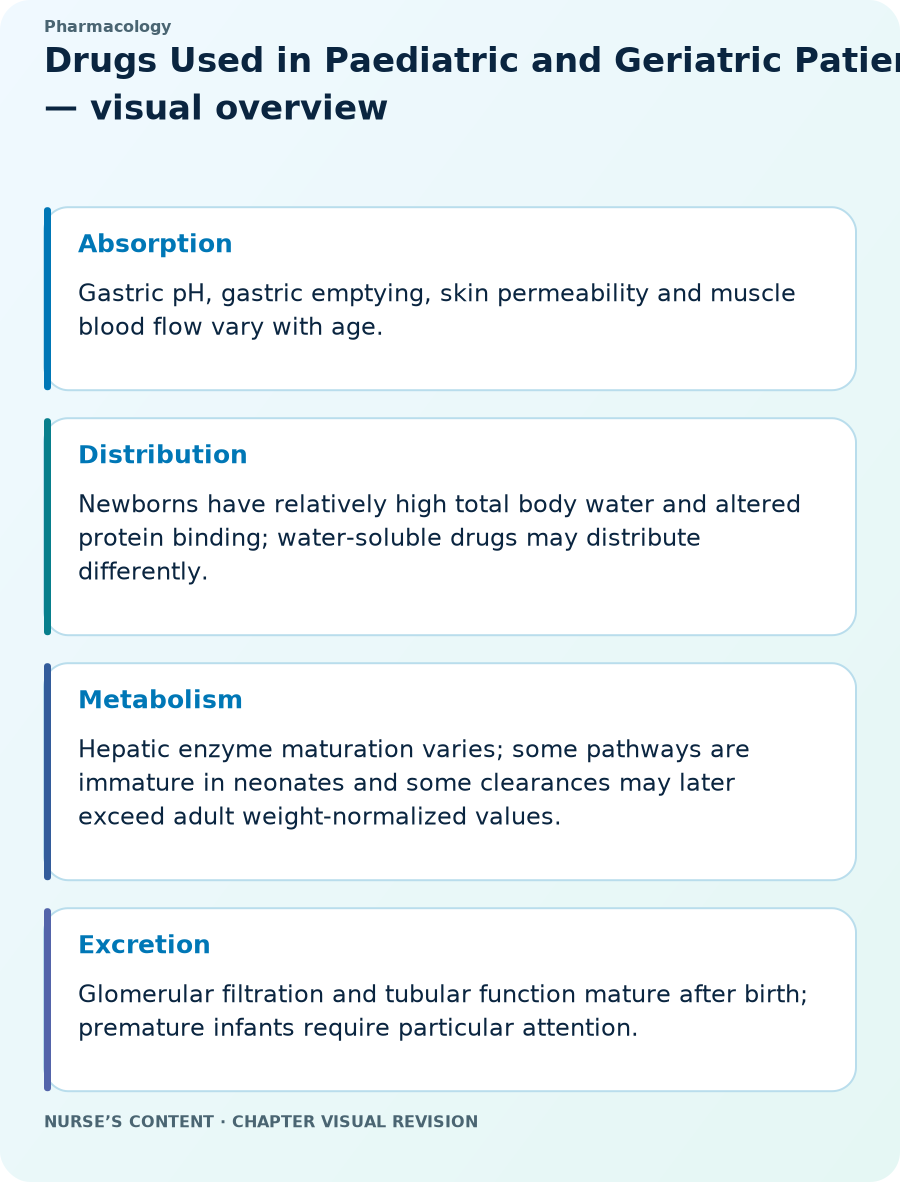
| Absorption | Gastric pH, gastric emptying, skin permeability and muscle blood flow vary with age. |
| Distribution | Newborns have relatively high total body water and altered protein binding; water-soluble drugs may distribute differently. |
| Metabolism | Hepatic enzyme maturation varies; some pathways are immature in neonates and some clearances may later exceed adult weight-normalized values. |
| Excretion | Glomerular filtration and tubular function mature after birth; premature infants require particular attention. |
3. Paediatric dosing principles
Use age-specific approved references, actual current weight in kg, gestational/postnatal age for neonates, dosing interval and maximum dose. For selected drugs, BSA is used. Verify concentration and delivery device, especially when small volumes are required. See Chapter 04 for worked calculations. Historical age-based adult-dose fractions are not reliable modern rules.
Practice case: A fictional order is 8 mg/kg/dose every 8 hours for a child weighing 12 kg. Each dose = 96 mg; three doses/day = 288 mg/day. A solution of 80 mg/5 mL requires 6 mL per dose. Verify the clinically appropriate dose and actual formulation before use.
4. Paediatric dosage forms and administration
- • Use an oral syringe or other calibrated device for liquids; household spoons are unreliable.
- • Verify mg/mL and whether a suspension needs shaking or reconstitution. Explain storage and expiry after reconstitution.
- • Do not mix medicine into a full bottle of food or milk because incomplete intake can cause underdosing. Use an approved method and small suitable amount if advised.
- • Check developmental ability to swallow tablets. Use age-appropriate explanations and caregiver participation.
- • Avoid automatically repeating a dose after vomiting; consult the drug-specific protocol and assess timing.
5. Examples of paediatric precautions
| Medicine group | Important considerations |
|---|---|
| Aspirin | Avoid routine use for viral fever because of Reye syndrome risk; specialist indications exist. |
| Opioids and sedatives | Respiratory depression; age-specific restrictions, particularly codeine and tramadol. |
| Antibiotics | Use weight/age-specific regimens; neonatal ceftriaxone/calcium and bilirubin precautions. |
| Antihistamine / cough products | May cause sedation, paradoxical excitation or toxicity; avoid unsuitable OTC products in young children. |
| Paracetamol | Weight-based prescribed dosing and maximum total exposure; check multiple products. |
6. Geriatric pharmacokinetics and pharmacodynamics
Older adults may have reduced renal reserve, altered hepatic metabolism, reduced total body water and lean mass, increased body fat proportions and changes in sensitivity to CNS or cardiovascular drugs. Low muscle mass may conceal renal impairment when serum creatinine appears normal. Frailty, swallowing difficulties, poor nutrition and multimorbidity influence therapy. Some long-acting lipid-soluble drugs can accumulate; dose adjustment depends on the actual drug and patient.
7. Polypharmacy and potentially inappropriate medicines
Polypharmacy often refers to five or more concurrent medicines, but the clinical issue is inappropriate or burdensome treatment, not a number alone. A prescribing cascade occurs when a medicine's adverse effect is mistaken for a new disease and treated with another medicine. Review indications, expected benefit, interactions, duplicate ingredients and patient goals.
| Group | Potential older-adult risks |
|---|---|
| Benzodiazepines / Z-drugs | Falls, cognitive effects, sedation and dependence. |
| Strong anticholinergics | Confusion, constipation, retention and blurred vision. |
| NSAIDs | GI bleed, renal injury, BP and fluid retention. |
| Insulin / sulfonylureas | Hypoglycaemia, especially with irregular intake. |
| Antihypertensives / diuretics | Orthostatic symptoms, electrolyte changes and falls. |
| Anticoagulants | Bleeding risk; benefit must be considered alongside individualized risk. |
Tools such as Beers Criteria and STOPP/START support medicine review, but they are not substitutes for clinical judgment or automatic prohibitions. Deprescribing is planned and supervised, with tapering when necessary.
8. Nursing care for older adults
Perform medication reconciliation including OTC and herbal products. Assess vision, hearing, memory, dexterity, financial and transport barriers. Use accessible instructions, teach-back, appropriate organizers and caregiver support with consent. Monitor sedation, falls, delirium, orthostatic BP, hydration, bowel function and renal tests. Avoid restraints or sedation simply for convenience; identify underlying causes of agitation.
9. Comparison of special populations
| Feature | Paediatric | Geriatric |
|---|---|---|
| Key dose concerns | Growth, weight, maturation | Renal function, frailty, interactions |
| Common formulation issue | Accurate liquid measurement | Swallowing, device handling, multiple medicines |
| Monitoring emphasis | Weight changes, feeding, behaviour | Falls, cognition, function, organ reserve |
| Education | Child and caregiver, developmentally appropriate | Patient-centred, accessible, caregiver support if preferred |
10. Examination questions
Long answer questions
- 1. Explain age-related pharmacokinetic changes in children and older adults.
- 2. Describe paediatric dosage and geriatric medication safety with nursing responsibilities.
Short answer questions
- • Neonatal dosing; polypharmacy; oral syringe; prescribing cascade; deprescribing.
Very short answer questions
- • Which weight unit is preferred for paediatric dosing? — Kilograms.
- • Can creatinine alone rule out reduced renal function in a frail older person? — No.
- • What is a prescribing cascade? — Treating a medicine adverse effect as a new illness with another medicine.
11. Quick revision
Children require validated weight- and age-specific dosing. Older adults need organ-function and frailty assessment. Both populations benefit from medication reconciliation, accessible education and close monitoring.
Conclusion
Age-sensitive drug care prevents avoidable dosing errors, adverse effects and loss of function, while preserving the benefits of appropriate treatment.
Chapter reference images