Pharmacology
Drugs Used in Obstetrics and Gynaecology
Uterotonics, oxytocics, tocolytics, contraceptives, drugs used during labour, drugs used in pregnancy-related conditions and medicines used in reproductive health.
Open quizzes and study tools Download PDF
CHAPTER 17 / PHARMACOLOGY 17. Drugs Used in Obstetrics and Gynaecology
1. Introduction
Obstetric and gynaecological medicines influence uterine activity, pregnancy complications, contraception, reproductive hormones and maternal-newborn outcomes. Drug safety depends on gestational stage, maternal condition, fetal effects, route, dose and clinical setting. Pregnancy and breastfeeding require specific benefit-risk assessment, not automatic avoidance of necessary treatment.
2. Uterotonics and oxytocics
Uterotonics promote uterine contraction. They may be used for labour induction or augmentation, prevention of postpartum haemorrhage (PPH), or treatment of uterine atony; these are different indications and regimens.
| Drug | Mechanism / clinical role | Main precautions |
|---|---|---|
| Oxytocin | Activates uterine oxytocin receptors; induction/augmentation and PPH management | Tachysystole, fetal compromise during labour, water intoxication with excessive exposure; controlled infusions and monitoring. |
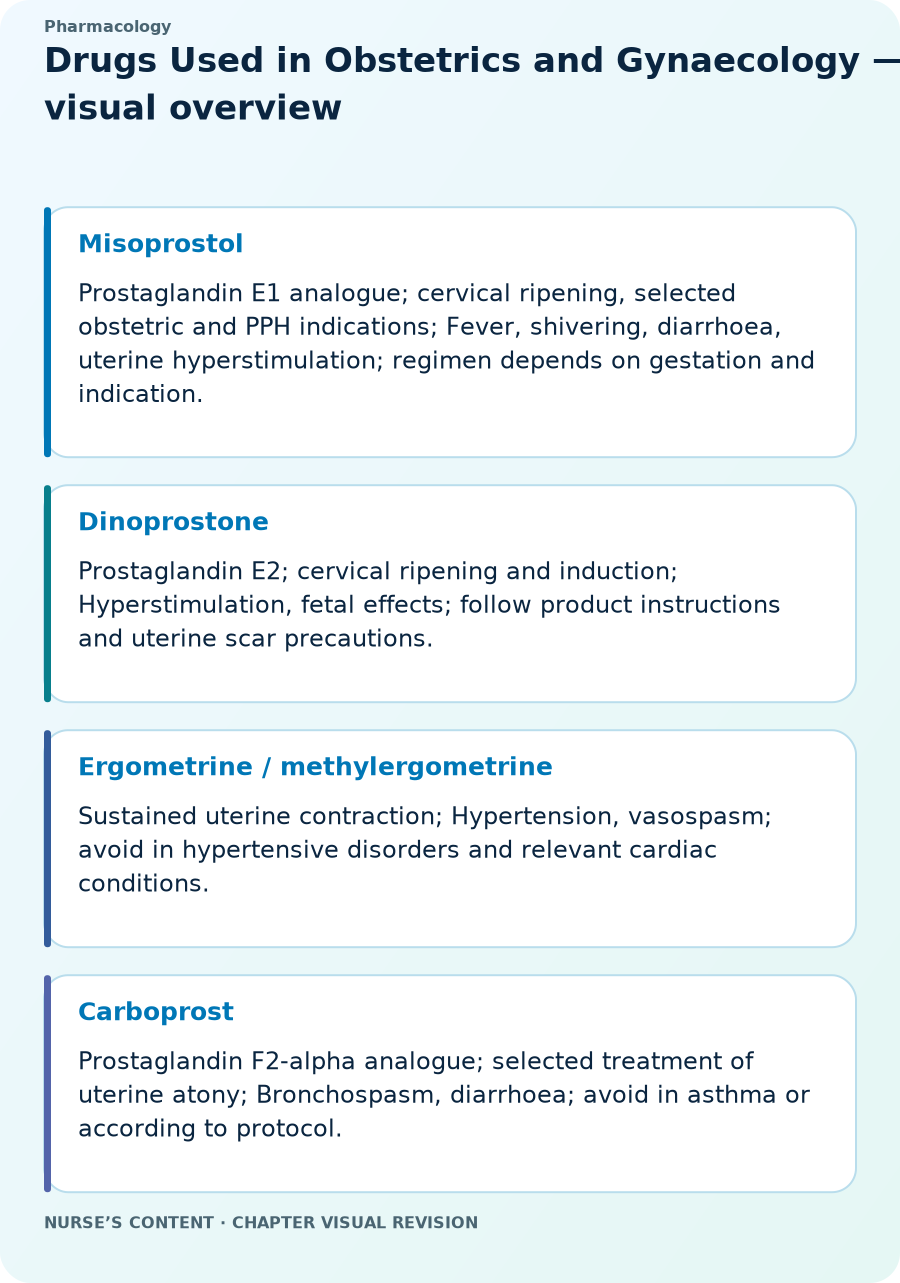
| Misoprostol | Prostaglandin E1 analogue; cervical ripening, selected obstetric and PPH indications | Fever, shivering, diarrhoea, uterine hyperstimulation; regimen depends on gestation and indication. |
| Dinoprostone | Prostaglandin E2; cervical ripening and induction | Hyperstimulation, fetal effects; follow product instructions and uterine scar precautions. |
| Ergometrine / methylergometrine | Sustained uterine contraction | Hypertension, vasospasm; avoid in hypertensive disorders and relevant cardiac conditions. |
| Carboprost | Prostaglandin F2-alpha analogue; selected treatment of uterine atony | Bronchospasm, diarrhoea; avoid in asthma or according to protocol. |
| Carbetocin | Longer-acting oxytocin analogue for selected PPH prevention | Product/setting-specific indication; haemodynamic effects. |
Nursing care during labour induction
Verify indication, cervical assessment and obstetric history in the treatment plan. Establish baseline fetal heart rate and uterine activity, administer prescribed medication through a controlled delivery system, monitor contractions and fetal status, and promptly follow the escalation pathway for tachysystole or fetal compromise. Never administer uterotonics solely because labour appears slow without obstetric assessment.
3. Drugs used in postpartum haemorrhage
PPH requires rapid assessment of blood loss, uterine tone, vital signs and cause. Oxytocin is a first-line uterotonic for treatment in WHO 2025 guidance. The first-response bundle also incorporates uterine massage, tranexamic acid, IV fluid resuscitation, examination for causes and escalation [10]. Tranexamic acid is antifibrinolytic, not a uterotonic; timing is important. Treatment selection and dosing must follow the obstetric emergency protocol; blood products and surgical interventions may also be necessary. Do not delay urgent care while calculating or preparing medication.
4. Tocolytics and antenatal corticosteroids
| Agent | Use / action | Nursing considerations |
|---|---|---|
| Nifedipine | Calcium-channel blockade; selected short-term tocolysis | Hypotension, headache, dizziness; assess maternal BP and fetal status. |
| Atosiban | Oxytocin receptor antagonism | Selected tocolysis where available; infusion monitoring. |
| Indomethacin | Prostaglandin inhibition in selected gestational contexts | Fetal ductal and renal effects; gestational age/duration restrictions. |
| Betamethasone / dexamethasone | Antenatal corticosteroids for eligible threatened preterm birth | Promote fetal lung maturation; monitor maternal glucose and infection-related considerations. |
Tocolysis is not appropriate in all preterm labour, particularly when delivery is indicated for maternal or fetal safety. Antenatal corticosteroids are distinct from tocolytics and require eligibility-based timing.
5. Medicines for hypertensive disorders of pregnancy
Labetalol, nifedipine and hydralazine are examples of agents used under pregnancy-specific protocols; assess BP and maternal-fetal response. ACE inhibitors and ARBs are avoided in pregnancy. Magnesium sulfate prevents or treats eclamptic seizures; it is not a primary antihypertensive. Monitor respiratory rate, deep tendon reflexes, urine output and clinical status according to protocol. Reduced clearance can increase toxicity; respiratory depression, absent reflexes or reduced consciousness require immediate escalation and interruption as directed. Calcium gluconate is used in management of serious magnesium toxicity under protocol.
6. Contraceptive drugs and devices
| Method | Main mechanism / use | Important counselling |
|---|---|---|
| Combined oral contraceptives | Oestrogen plus progestogen; suppress ovulation | Assess thrombotic risk, migraine with aura, hypertension and other eligibility factors. |
| Progestogen-only pills | Suppress ovulation variably and thicken cervical mucus | Timing rules vary by product; counselling on missed doses. |
| Injectable progestogen | Depot medroxyprogesterone | Irregular bleeding, delayed return to fertility in some users. |
| Implant | Long-acting progestogen | Irregular bleeding, insertion/removal by trained provider, interactions. |
| Hormonal intrauterine system | Levonorgestrel; cervical mucus/endometrial effects | Trained insertion; assess abnormal bleeding, pelvic pain and expulsion symptoms. |
| Nonhormonal copper IUD | Local contraceptive effect | May increase menstrual bleeding/cramps; also emergency contraception when eligible. |
| Emergency contraception | Levonorgestrel, ulipristal or eligible copper IUD | Time-sensitive, method-specific guidance; does not terminate an established pregnancy. |
Most contraceptive methods do not protect against sexually transmitted infections; condoms reduce STI transmission risk. Respect informed choice and avoid coercion. Medical eligibility varies with
clinical conditions and postpartum timing. Enzyme-inducing medicines may reduce effectiveness of selected hormonal methods.
7. Other reproductive and pregnancy-related medicines
Iron and folate treat or prevent nutritional deficiencies as indicated. Anti-D immunoglobulin prevents RhD sensitization in eligible unsensitized RhD-negative patients; verify blood group, indication and timing. Antiemetics such as doxylamine/pyridoxine or other appropriate agents may be prescribed for pregnancy-related nausea; severe vomiting requires evaluation and fluid/electrolyte care. Fertility medicines (letrozole, clomiphene or gonadotropins in specific contexts) require specialist monitoring because of multiple pregnancy and ovarian hyperstimulation risks. Local or systemic hormone therapy for menopause requires individualized risk assessment.
8. Nursing responsibilities
- • Verify pregnancy status, gestational age, obstetric history, allergies and prescribed indication.
- • Monitor fetal and maternal observations as required; distinguish infusion orders for induction from PPH orders.
- • Escalate bleeding, severe headache, visual symptoms, chest pain, seizures, reduced fetal movement or abnormal observations promptly.
- • Counsel on safe medicine use, contraception, adherence and warning signs. Maintain consent, privacy and respectful maternity care.
9. Examination questions
Long answer questions
- 1. Classify uterotonics, describe their actions and nursing considerations.
- 2. Discuss tocolytics, magnesium sulfate and drugs used in obstetric emergencies.
- 3. Describe hormonal contraception and patient education.
Short answer questions
- • Oxytocin; misoprostol; carboprost; tranexamic acid in PPH; anti-D immunoglobulin; emergency contraception.
Very short answer questions
- • Common first-line uterotonic for PPH treatment? — Oxytocin.
- • Anticonvulsant used for eclampsia? — Magnesium sulfate.
- • Which uterotonic may worsen asthma? — Carboprost.
10. Quick revision
Uterotonics increase uterine contraction; tocolytics reduce it. Tranexamic acid reduces fibrinolysis. Magnesium sulfate is used for eclamptic seizure prevention/treatment. Contraception requires informed medical eligibility assessment.
Conclusion
Safe reproductive pharmacotherapy requires precise indication-specific prescribing, maternal-fetal monitoring, prompt emergency escalation and respect for autonomy.
Chapter reference images