Pharmacology
Anti-inflammatory and Musculoskeletal Drugs
NSAIDs, corticosteroids, antigout drugs, muscle relaxants, drugs used in rheumatoid arthritis and medicines used for musculoskeletal disorders.
Open quizzes and study tools Download PDF
CHAPTER 16 / PHARMACOLOGY 16. Anti-inflammatory and Musculoskeletal Drugs
1. Introduction
Inflammation is a protective response to tissue injury, infection or immune activation. It can cause redness, heat, swelling, pain and loss of function. Anti-inflammatory medicines reduce components of this response. Musculoskeletal pharmacotherapy also includes drugs that modify immune disease, lower urate, reduce muscle spasm or improve bone health.
2. Non-steroidal anti-inflammatory drugs (NSAIDs)
NSAIDs inhibit cyclooxygenase (COX) enzymes, reducing prostaglandin synthesis. COX-1 contributes to gastric mucosal protection and platelet function; COX-2 is involved in inflammation and other physiological functions. Inhibition can provide analgesic, antipyretic and anti-inflammatory effects but also cause adverse reactions.
| Group | Examples | Major precautions |
|---|---|---|
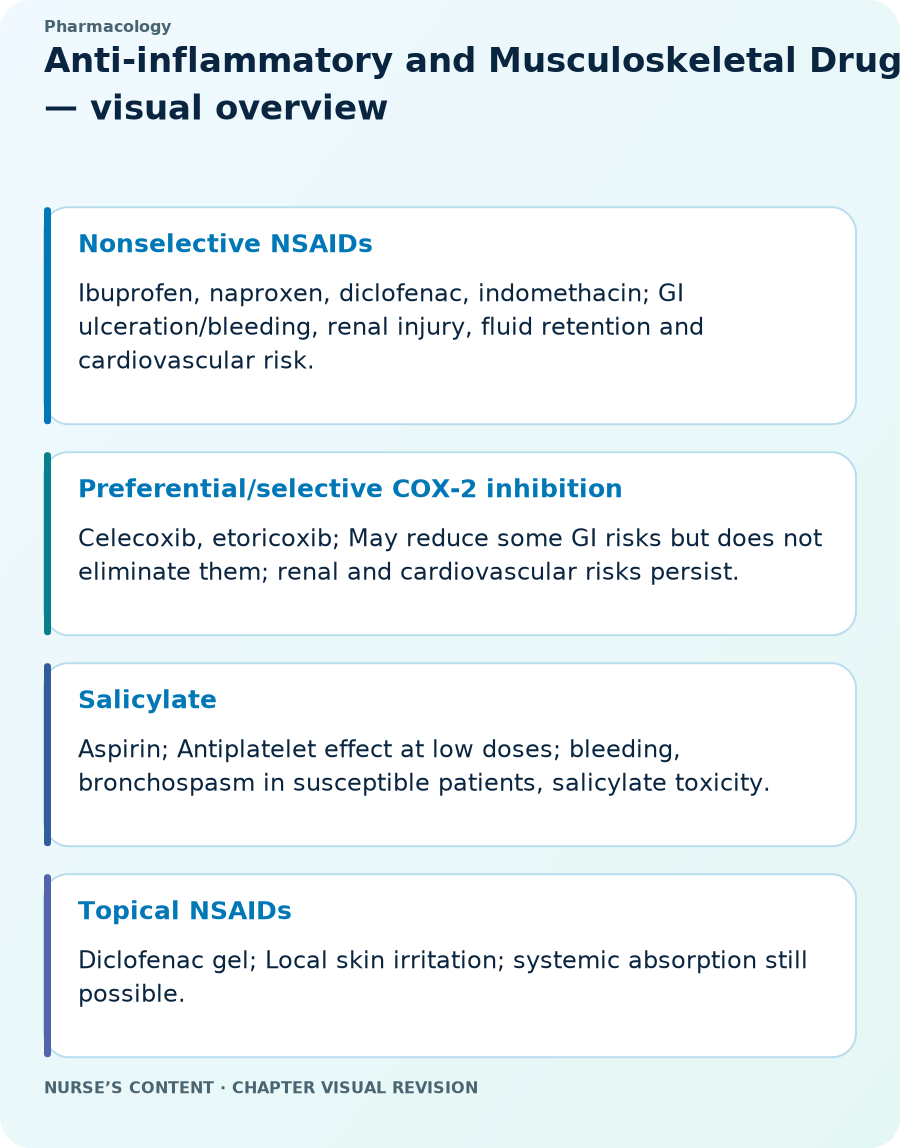
| Nonselective NSAIDs | Ibuprofen, naproxen, diclofenac, indomethacin | GI ulceration/bleeding, renal injury, fluid retention and cardiovascular risk. |
| Preferential/selective COX-2 inhibition | Celecoxib, etoricoxib | May reduce some GI risks but does not eliminate them; renal and cardiovascular risks persist. |
| Salicylate | Aspirin | Antiplatelet effect at low doses; bleeding, bronchospasm in susceptible patients, salicylate toxicity. |
| Topical NSAIDs | Diclofenac gel | Local skin irritation; systemic absorption still possible. |
Avoid duplicate NSAIDs. Assess GI bleeding history, renal function, cardiovascular disease, anticoagulant or steroid use, asthma sensitivity and pregnancy before use. NSAIDs are generally avoided in later pregnancy and require particular caution from 20 weeks onward. Aspirin is not routinely used for fever in children with viral illness because of Reye syndrome risk. Paracetamol is an analgesic and antipyretic, not a conventional anti-inflammatory NSAID.
3. Corticosteroids
Prednisolone, dexamethasone, hydrocortisone and methylprednisolone act through intracellular glucocorticoid receptors, modifying gene expression and inflammatory responses. They are used for selected inflammatory and autoimmune disorders through oral, IV, local or intra-articular routes when indicated. Risks include hyperglycaemia, infection, osteoporosis, hypertension, mood changes, muscle weakness and adrenal suppression. Monitor glucose, BP, infection and bone health when relevant. Prolonged systemic courses must not be stopped abruptly without appropriate review.
4. Antigout drugs
Gout develops through deposition of monosodium urate crystals, producing inflammatory arthritis. Acute flare treatment and long-term urate reduction have different goals.
| Drug / group | Mechanism and indication | Nursing concerns |
|---|---|---|
| Colchicine | Alters microtubule-dependent neutrophil activity; acute flare or prophylaxis in selected cases | Diarrhoea, marrow/neuromuscular toxicity; severe interactions with strong CYP3A4/P-gp inhibitors, renal/hepatic review. |
| NSAIDs / glucocorticoids | Reduce inflammation during selected flares | Screen comorbidities and contraindications. |
| Allopurinol | Xanthine oxidase inhibitor; lowers urate production | Rash, severe hypersensitivity; renal assessment, prescribed titration. |
| Febuxostat | Xanthine oxidase inhibitor | Liver monitoring; cardiovascular risk review. |
| Probenecid | Increases urinary urate excretion | Kidney stones, interactions; renal function matters. |
Urate-lowering treatment is generally long term, with clinical and serum urate monitoring. It is not an immediate analgesic. A flare can occur during initiation; use prescribed prophylaxis when indicated. Fever, severe joint pain and systemic illness may indicate septic arthritis and need urgent evaluation.
5. Rheumatoid arthritis and disease-modifying antirheumatic drugs (DMARDs)
| Group | Representative drug | Important monitoring |
|---|---|---|
| Conventional synthetic DMARD | Methotrexate | CBC, liver, renal tests; usually WEEKLY for inflammatory arthritis, not daily; pregnancy and interaction precautions. |
| Other conventional DMARDs | Hydroxychloroquine, sulfasalazine, leflunomide | Retinal screening for hydroxychloroquine; CBC/liver tests for several agents; reproductive precautions. |
| Biological DMARDs | Adalimumab, etanercept, tocilizumab, rituximab | Infection risk; appropriate TB/hepatitis screening and infusion/injection monitoring. |
| Targeted synthetic DMARDs | Tofacitinib and other JAK inhibitors | Infection, thrombosis, cardiovascular and malignancy risks; specialist risk assessment. |
DMARDs aim to modify disease activity and reduce structural damage, unlike simple analgesics. Clinical benefit may take weeks or months. Methotrexate dosing errors can be fatal: verify indication and designated weekly day, and clarify daily orders for rheumatoid arthritis. Folic acid may be prescribed to reduce selected adverse effects.
6. Muscle relaxants and other musculoskeletal agents
Baclofen is a GABA-B agonist used for spasticity; sedation, weakness and withdrawal risk are important, especially with intrathecal therapy. Tizanidine is an alpha-2 agonist that reduces spasticity; monitor sedation, hypotension and interactions. Cyclobenzaprine and similar agents may have selected short-term roles in acute muscle spasm, with sedation and anticholinergic effects. Neuromuscular blockers used during anaesthesia are different: they cause paralysis without analgesia or unconsciousness (Chapter 24). For osteoporosis, calcium/vitamin D when indicated, bisphosphonates, denosumab and selected anabolic agents may be prescribed (Chapter 12).
7. Nursing responsibilities
Assess pain and function, inflammation, GI symptoms, renal/hepatic status, infection and medication history. Monitor laboratory tests for DMARDs; teach weekly dosing, report rash or fever, and reinforce vaccination and infection precautions. Encourage prescribed exercise, physiotherapy, joint protection and adherence. Do not automatically combine analgesics without checking ingredients and risks.
8. Examination questions
Long answer questions
- 1. Classify NSAIDs and explain mechanism, adverse effects and nursing precautions.
- 2. Discuss antigout drugs and DMARDs, with a comparison of acute and chronic gout treatment.
Short answer questions
- • Colchicine; allopurinol; methotrexate safety; corticosteroids; baclofen; COX inhibitors.
Very short answer questions
- • Which enzyme is inhibited by allopurinol? — Xanthine oxidase.
- • Methotrexate for rheumatoid arthritis is usually given how often? — Weekly per prescription.
- • Which class inhibits cyclooxygenase? — NSAIDs.
9. Quick revision
NSAIDs reduce prostaglandins but may harm the GI tract, kidney and cardiovascular system. Colchicine controls gout inflammation; allopurinol lowers urate. DMARDs modify disease rather than merely relieving pain. Distinguish skeletal muscle antispasticity drugs from anaesthetic neuromuscular blockers.
Conclusion
Musculoskeletal pharmacology combines symptom control and disease modification, supported by organ-function monitoring, safe dose schedules and rehabilitation.
Chapter reference images