Pharmacology
Antiparasitic Drugs
Antimalarials, antiamoebic drugs, anthelmintics and drugs used to treat other parasitic infections.
Open quizzes and study tools Download PDF
CHAPTER 15 / PHARMACOLOGY 15. Antiparasitic Drugs
1. Introduction
Antiparasitic medicines treat infections caused by protozoa, helminths and ectoparasites. Drug selection depends on parasite species, life cycle, tissue involvement, severity, resistance, age and pregnancy status. A single drug may not eliminate all stages of a parasite.
2. Antimalarial drugs
Malaria is caused by Plasmodium species and transmitted primarily by infected female Anopheles mosquitoes. Blood-stage infection causes clinical illness; P. vivax and P. ovale may form dormant liver hypnozoites, causing relapse. Diagnose suspected malaria promptly using approved parasitological methods where possible; severe illness requires urgent treatment.
| Drug / class | Action or clinical role | Safety points |
|---|---|---|
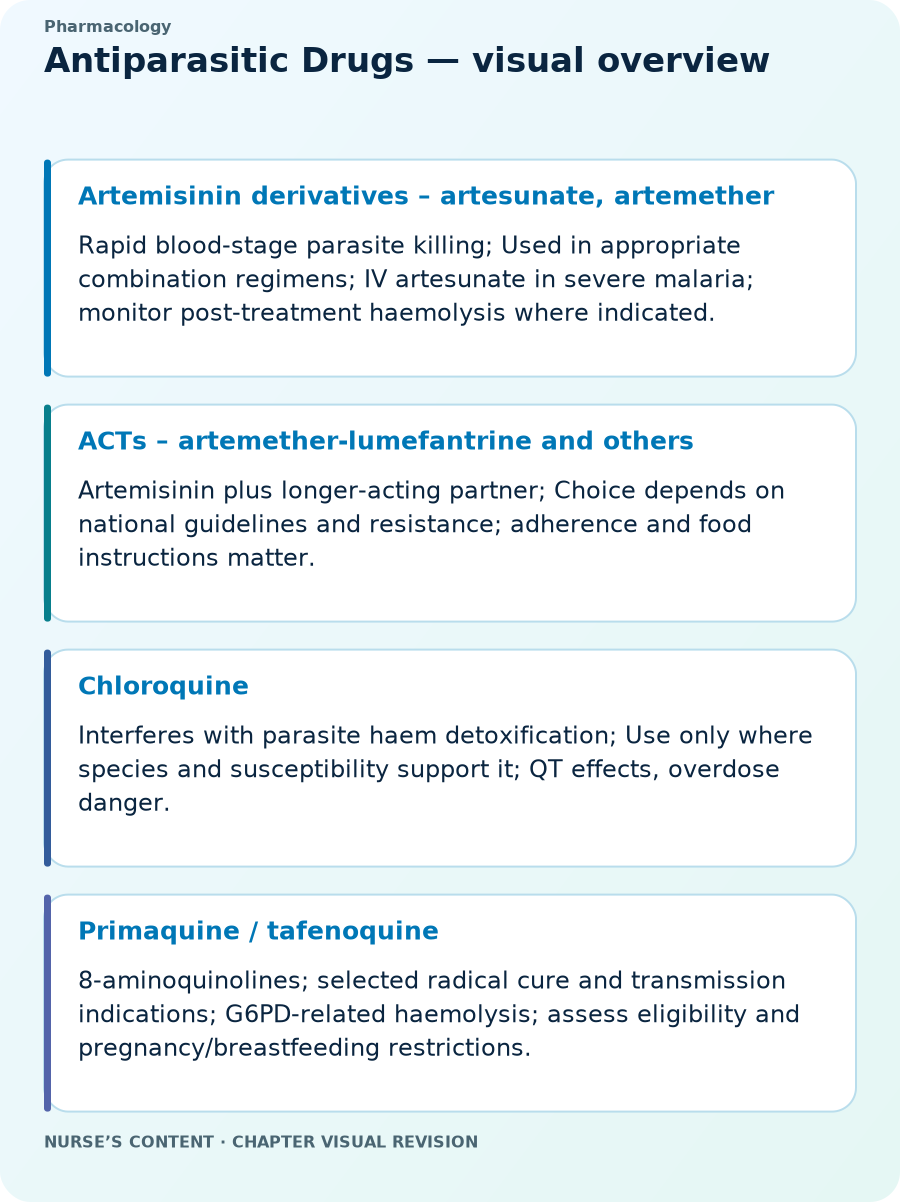
| Artemisinin derivatives – artesunate, artemether | Rapid blood-stage parasite killing | Used in appropriate combination regimens; IV artesunate in severe malaria; monitor post-treatment haemolysis where indicated. |
| ACTs – artemether-lumefantrine and others | Artemisinin plus longer-acting partner | Choice depends on national guidelines and resistance; adherence and food instructions matter. |
| Chloroquine | Interferes with parasite haem detoxification | Use only where species and susceptibility support it; QT effects, overdose danger. |
| Primaquine / tafenoquine | 8-aminoquinolines; selected radical cure and transmission indications | G6PD-related haemolysis; assess eligibility and pregnancy/breastfeeding restrictions. |
| Quinine | Blood-stage activity | Cinchonism, hypoglycaemia, QT effects; selected alternative protocols. |
| Atovaquone-proguanil | Mitochondrial and folate-related effects | Selected treatment/prophylaxis; renal and interaction review. |
Current malaria regimens should follow national/state protocols and WHO recommendations [9]. Artemisinin monotherapy is not appropriate routine oral treatment. Radical cure of vivax/ovale requires clinical consideration of G6PD status, appropriate agent and other contraindications. Severe malaria can present with impaired consciousness, severe anaemia, respiratory distress, hypoglycaemia or organ dysfunction and requires inpatient emergency management.
3. Antiamoebic and other antiprotozoal drugs
| Drug | Clinical use and mechanism | Important precautions |
|---|---|---|
| Metronidazole / tinidazole | Nitroimidazoles; invasive amoebiasis, giardiasis, trichomoniasis and selected anaerobic infections | GI effects, metallic taste; interactions and alcohol-related product advice. |
| Paromomycin / other luminal amoebicides | Eliminate organisms remaining in intestinal lumen | Follow availability and specialist plan; GI effects. |
| Nitazoxanide | Selected protozoal diarrhoeal infections | Indication and immune status matter; not for every diarrhoeal illness. |
| Liposomal amphotericin B | Selected visceral leishmaniasis regimens | Infusion reactions, renal and electrolyte monitoring. |
| Miltefosine | Selected leishmaniasis regimens | GI effects, pregnancy contraindications and contraceptive guidance. |
In invasive Entamoeba histolytica disease, a tissue-active nitroimidazole is usually followed by a luminal agent to eradicate residual intestinal infection. Detection of nonpathogenic amoebae does not justify the same treatment. Trichomoniasis requires prescribed patient and partner management guidance to reduce reinfection.
4. Anthelmintic drugs
| Class / example | Action and representative use | Adverse effects / cautions |
|---|---|---|
| Benzimidazoles – albendazole, mebendazole | Disrupt parasite microtubules; many intestinal nematodes | Abdominal symptoms; prolonged systemic courses require liver and CBC monitoring. |
| Ivermectin | Activates parasite chloride channels; strongyloidiasis and selected other infections | Neurological or inflammatory reactions in selected contexts; specialist assessment for certain co-infections. |
| Praziquantel | Alters parasite calcium permeability; schistosomiasis and selected cestodes | Dizziness, GI symptoms; tissue infections need specialist care. |
| Pyrantel | Neuromuscular paralysis of susceptible nematodes | GI discomfort; indication-specific use. |
| Diethylcarbamazine (DEC) | Selected lymphatic filariasis regimens | Inflammatory reactions; not safe for all co-endemic filarial infections. |
Neurocysticercosis treatment requires assessment of cyst location, inflammation and seizures; empiric deworming may be harmful in selected CNS or ocular disease. Strongyloides infection can disseminate during immunosuppression; assess epidemiological exposure before high-risk immunosuppressive treatment when indicated.
5. Ectoparasiticides
Permethrin is used topically for selected scabies and lice formulations; concentration, application site and duration differ. Oral ivermectin is used in selected cases under medical guidance. Treat appropriate close contacts and manage bedding/clothing according to protocol. Persistent itching after scabies treatment does not always mean treatment failure; reassess before repeating medicines. Avoid inappropriate insecticide exposure.
6. Prevention and nursing responsibilities
In malaria, monitor temperature, consciousness, glucose, haemoglobin, urine output and treatment response. For intestinal parasites, assess nutrition, hydration and symptoms, and collect specimens according to laboratory guidance. Verify pregnancy, G6PD and other relevant tests before high-risk medicines. Reinforce vector control, insecticide-treated nets, safe water, sanitation, hand hygiene and food safety. Community mass drug administration follows programme eligibility and exclusion criteria, not individual self-prescription.
7. Examination questions
Long answer questions
- 1. Classify antimalarial medicines and discuss nursing care.
- 2. Explain antiamoebic and anthelmintic drugs with mechanisms and adverse effects.
Short answer questions
- • ACT; primaquine; G6PD testing; metronidazole; albendazole; ivermectin; DEC.
Very short answer questions
- • Which parasite species can form hypnozoites? — P. vivax and P. ovale.
- • Important test before selected radical-cure medicines? — G6PD assessment.
- • Which drugs disrupt helminth microtubules? — Benzimidazoles such as albendazole.
8. Quick revision
Malaria treatment depends on species and severity; severe malaria is an emergency. Tissue and luminal amoebicides have different roles. Anthelmintic selection depends on parasite species and location; prevention reduces reinfection.
Conclusion
Antiparasitic treatment is most effective when the correct organism, life stage and patient-specific safety risks guide the prescribed regimen.
Chapter reference images