Pharmacology
Antimicrobial Drugs
Antibiotics, antibacterial drugs, antifungal drugs, antiviral drugs, antitubercular drugs, antileprotic drugs and antimicrobial resistance.
Open quizzes and study tools Download PDF
CHAPTER 14 / PHARMACOLOGY 14. Antimicrobial Drugs
1. Introduction
Antimicrobials inhibit or kill pathogenic microorganisms. They include antibacterials, antifungals, antivirals and antimycobacterial drugs. Selective toxicity means targeting a microbial process while minimizing harm to the host. Appropriate choice depends on infection site, organism, susceptibility, severity, immune status and patient characteristics.
2. Classification of antibacterial agents
| Class / examples | Major mechanism | Key adverse effects / monitoring |
|---|---|---|
| Penicillins – amoxicillin, piperacillin-tazobactam | Inhibit cell wall synthesis | Allergy, diarrhoea, renal dosing; beta-lactamase inhibitor combination has distinct spectrum. |
| Cephalosporins – cefazolin, cefuroxime, ceftriaxone, cefepime | Inhibit cell wall synthesis; spectrum varies | Allergy, GI effects; drug-specific renal or biliary considerations; ceftriaxone neonatal calcium precautions. |
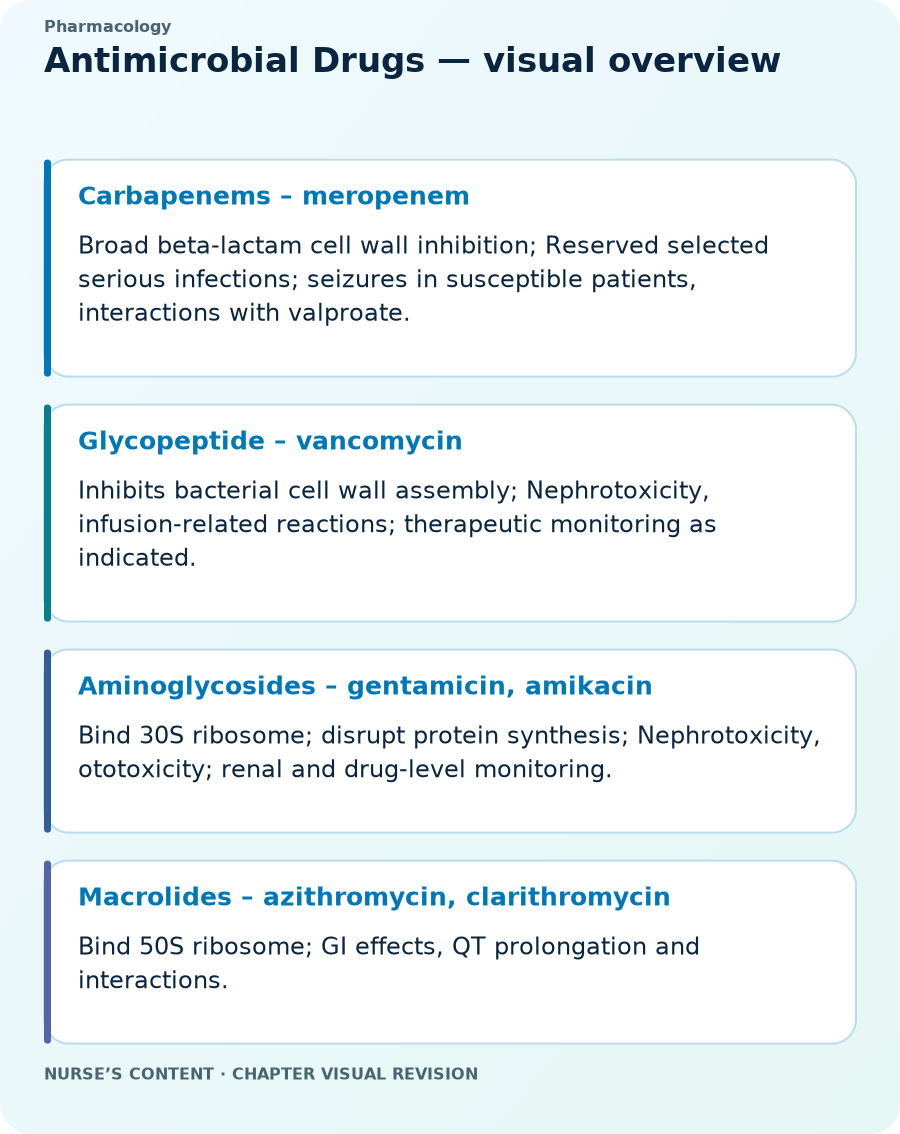
| Carbapenems – meropenem | Broad beta-lactam cell wall inhibition | Reserved selected serious infections; seizures in susceptible patients, interactions with valproate. |
| Glycopeptide – vancomycin | Inhibits bacterial cell wall assembly | Nephrotoxicity, infusion-related reactions; therapeutic monitoring as indicated. |
| Aminoglycosides – gentamicin, amikacin | Bind 30S ribosome; disrupt protein synthesis | Nephrotoxicity, ototoxicity; renal and drug-level monitoring. |
| Macrolides – azithromycin, clarithromycin | Bind 50S ribosome | GI effects, QT prolongation and interactions. |
| Tetracyclines – doxycycline | Inhibit 30S protein synthesis | Photosensitivity, oesophageal injury, interactions with minerals; indication-specific pregnancy/child precautions. |
| Fluoroquinolones – ciprofloxacin, levofloxacin | Inhibit DNA gyrase/topoisomerase | Tendon injury, neuropathy, CNS effects, QT effects; reserve for appropriate indications. |
| Sulfonamide/trimethoprim | Sequential folate pathway inhibition | Rash, hyperkalaemia, marrow effects; review renal status and interactions. |
| Nitroimidazole – metronidazole | Damages DNA in susceptible anaerobes and protozoa | GI symptoms, metallic taste, neuropathy with prolonged use; warfarin interaction. |
| Oxazolidinone – linezolid | Inhibits 50S initiation complex | Myelosuppression, neuropathy, serotonergic interactions. |
| Lincosamide – clindamycin | Inhibits 50S protein synthesis | Diarrhoea, increased C. difficile risk. |
3. Bactericidal and bacteriostatic action
Bactericidal drugs kill susceptible bacteria under defined test conditions; bacteriostatic drugs inhibit growth. Beta-lactams and aminoglycosides are commonly bactericidal, while tetracyclines are commonly bacteriostatic. Classification depends on organism, concentration and conditions, and does not by itself determine clinical superiority. MIC (minimum inhibitory concentration) is the lowest tested concentration preventing visible growth under standardized conditions. Culture and susceptibility results guide targeted therapy.
4. Antifungal drugs
| Class / examples | Action | Nursing considerations |
|---|---|---|
| Azoles – fluconazole, itraconazole | Inhibit ergosterol synthesis | Liver effects, many interactions, drug-specific QT effects. |
| Polyenes – amphotericin B, nystatin | Bind ergosterol and disrupt membranes | Amphotericin: infusion reactions, renal injury, potassium/magnesium loss; nystatin mainly local uses. |
| Echinocandins – caspofungin | Inhibit fungal cell wall glucan synthesis | IV specialist therapy, liver and infusion monitoring. |
| Allylamines – terbinafine | Inhibits squalene epoxidase | Selected dermatophytes; oral therapy requires liver assessment. |
5. Antiviral drugs
Acyclovir and valacyclovir inhibit viral DNA replication after activation in susceptible herpesviruses; monitor renal function and hydration within the care plan. Oseltamivir inhibits influenza neuraminidase and is used in selected influenza cases. HIV treatment combines antiretroviral classes such as nucleoside reverse transcriptase inhibitors (tenofovir, lamivudine), integrase inhibitors (dolutegravir) and other agents. Combination adherence, interaction review and viral-load monitoring are central. Hepatitis B and C regimens differ; direct-acting antivirals can cure many HCV infections, while HBV treatment often suppresses viral replication. Use current disease-specific regimens, not monotherapy assumptions.
6. Antitubercular drugs
| First-line drug | Mechanism / major nursing concern |
|---|---|
| Isoniazid (H) | Inhibits mycolic acid synthesis; hepatitis and peripheral neuropathy; pyridoxine when indicated. |
| Rifampicin (R) | Inhibits bacterial RNA polymerase; orange body fluids, hepatotoxicity, strong enzyme induction. |
| Pyrazinamide (Z) | Activity in selected acidic intracellular environments; hepatotoxicity, hyperuricaemia. |
| Ethambutol (E) | Inhibits arabinosyl transferase; optic toxicity, assess visual acuity and colour vision as indicated. |
Drug-susceptible TB often uses a multidrug regimen based on HRZE; exact duration and eligibility for shorter regimens depend on national programme, disease site, resistance, age and patient factors. Drug-resistant TB requires specialist regimen selection, which may include bedaquiline, linezolid and other agents. Do not use a single drug for active TB. WHO treatment guidance and India's NTEP protocols should be consulted [7]. Report jaundice, vision changes, severe rash or neuropathy promptly; support adherence and infection prevention.
7. Antileprotic drugs
WHO multidrug therapy uses rifampicin, dapsone and clofazimine for both paucibacillary and multibacillary disease, with typical durations of six and twelve months respectively [8]. Dapsone may cause haemolysis, methaemoglobinaemia or severe hypersensitivity; clofazimine may cause skin discoloration and GI effects; rifampicin has interactions and hepatic risks. Assess skin sensation, nerve function and reactions. New weakness, eye symptoms or nerve pain require prompt assessment; reactions may occur during or after treatment.
8. Antimicrobial resistance (AMR) and stewardship
AMR arises when microorganisms survive medicines that previously acted effectively. Mechanisms include drug-inactivating enzymes, changed target, efflux pumps and reduced permeability. Inappropriate antibiotic exposure, poor infection prevention and transmission accelerate resistance. The WHO AWaRe framework groups antibiotics into Access, Watch and Reserve for stewardship [6]. Collect cultures when indicated without dangerously delaying urgent therapy, review results, use the prescribed targeted regimen and stop or narrow therapy when directed. Do not use antibiotics for routine viral illness or save leftover courses.
9. Nursing responsibilities
Verify allergy details and indication, check renal and hepatic function, cultures, timing, dose and compatibility. Monitor therapeutic response, renal injury, rash, diarrhoea, QT risk and infusion reactions. Severe diarrhoea after antibiotics may indicate C. difficile; initiate appropriate assessment and precautions. Educate about prescribed duration, side effects and follow-up. For sepsis, timely escalation and appropriately prescribed antimicrobials are essential.
10. Examination questions
Long answer questions
- 1. Classify antibacterial drugs with mechanism, indications and adverse effects.
- 2. Discuss antitubercular and antileprotic medicines with nursing care.
- 3. Explain antimicrobial resistance and stewardship.
Short answer questions
- • Aminoglycosides; vancomycin; tetracyclines; metronidazole; azoles; antiretrovirals; AWaRe.
Very short answer questions
- • Which TB drug may affect colour vision? — Ethambutol.
- • Aminoglycosides can harm which organs? — Kidneys and inner ear.
- • What does AWaRe stand for? — Access, Watch, Reserve.
11. Quick revision
Antibiotics differ by target and spectrum. Use susceptibility data and patient-specific precautions. HRZE is a common first-line TB framework, not a universal prescription. Monitor organ toxicity and support stewardship.
Conclusion
Effective antimicrobial use combines microbiological knowledge, safe administration, patient education and resistance prevention.
Chapter reference images