Pharmacology
Renal and Urinary System Drugs
Diuretics, antidiuretics, drugs used in urinary tract disorders and medicines affecting renal function.
Open quizzes and study tools Download PDF
CHAPTER 13 / PHARMACOLOGY 13. Renal and Urinary System Drugs
1. Introduction
Kidneys regulate fluid, electrolyte and acid–base balance, excrete many drugs and produce endocrine signals such as erythropoietin and renin. Renal impairment can alter exposure to medicines. Drugs used in urinary disorders may act at the nephron, bladder, prostate or infectious organism.
2. Diuretics and sites of action
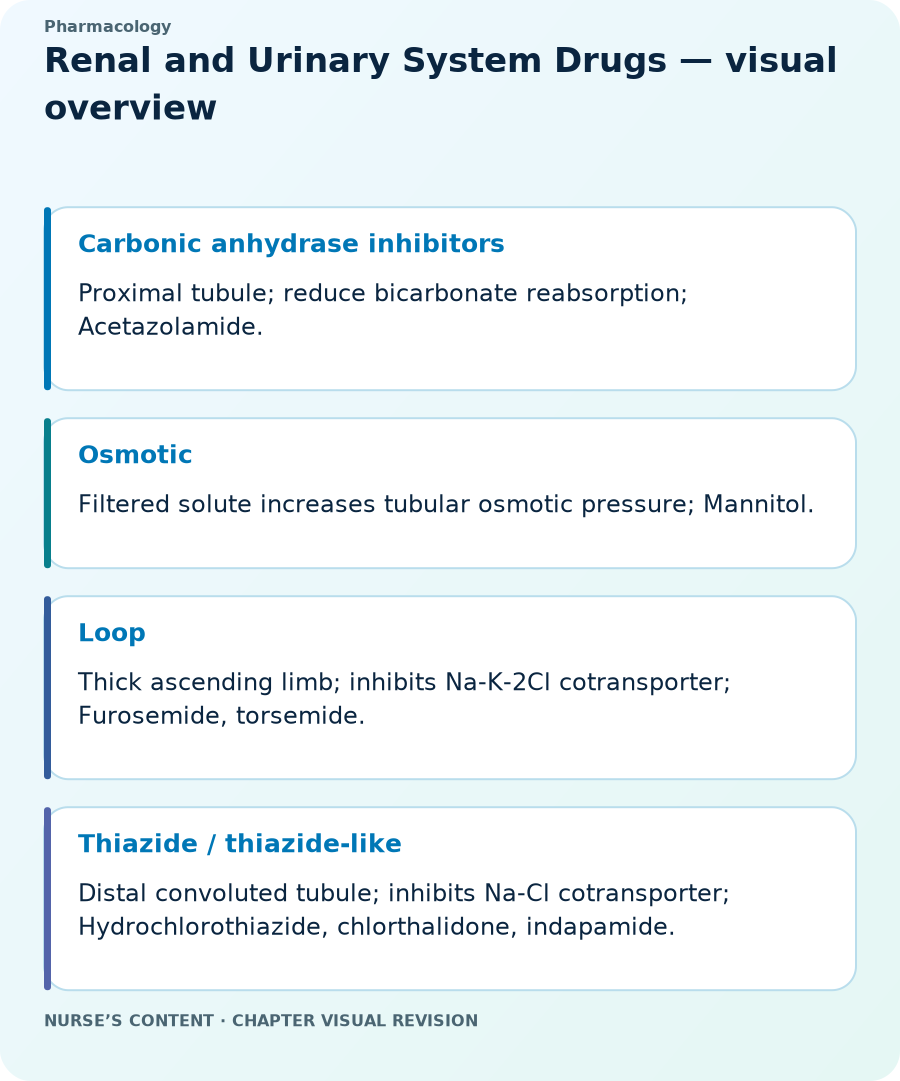
| Class | Site / mechanism | Examples |
|---|---|---|
| Carbonic anhydrase inhibitors | Proximal tubule; reduce bicarbonate reabsorption | Acetazolamide. |
| Osmotic | Filtered solute increases tubular osmotic pressure | Mannitol. |
| Loop | Thick ascending limb; inhibits Na-K-2Cl cotransporter | Furosemide, torsemide. |
| Thiazide / thiazide-like | Distal convoluted tubule; inhibits Na-Cl cotransporter | Hydrochlorothiazide, chlorthalidone, indapamide. |
| Potassium-sparing | Collecting nephron; aldosterone blockade or ENaC inhibition | Spironolactone, eplerenone, amiloride. |
Clinical uses and adverse effects
Loop diuretics are used for selected congested patients and oedema; monitor volume status, potassium, magnesium and renal function. Thiazide-type drugs are often used for hypertension; adverse effects include hyponatraemia, hypokalaemia and hyperuricaemia. Potassium-sparing drugs can cause dangerous hyperkalaemia, especially in CKD or with renin-angiotensin system blockers. Acetazolamide can cause metabolic acidosis, electrolyte changes and kidney stones; indications include glaucoma, altitude illness prevention or selected acid–base disorders. Mannitol has specialized uses such as selected intracranial hypertension; it is not a routine treatment for oliguria and may worsen pulmonary congestion or renal injury.
3. Antidiuretic drugs and vasopressin antagonists
Desmopressin is a synthetic vasopressin analogue with V2 receptor effects that increase renal water reabsorption. It treats central diabetes insipidus and selected bleeding or enuresis indications. Water retention and hyponatraemia are key risks. Monitor sodium, fluid intake, urine output and prescribed fluid advice. Nephrogenic diabetes insipidus is not routinely corrected by desmopressin; treatment depends on cause. Tolvaptan blocks V2 receptors and promotes free water excretion; it has selected indications requiring close sodium and liver monitoring. Rapid sodium correction can be harmful.
4. Drugs used in urinary tract infections
| Group / example | Nursing considerations |
|---|---|
| Nitrofurantoin | Selected lower UTI; not appropriate for pyelonephritis or systemic infection; review renal function. |
| Fosfomycin | Selected uncomplicated lower UTI; formulation and indication specific. |
| Trimethoprim-sulfamethoxazol e | Susceptibility-guided use; hyperkalaemia, rash, renal and interaction review. |
| Beta-lactams / other agents | Choice based on syndrome, susceptibility, allergy and local guidance. |
UTI treatment is determined by symptoms, site of infection, pregnancy, renal function and culture when indicated. Do not treat asymptomatic bacteriuria routinely except recognized indications such as pregnancy or selected invasive urological procedures. Fever, flank pain, vomiting or instability may indicate upper UTI or sepsis and requires escalation.
5. Drugs for benign prostatic hyperplasia and bladder dysfunction
Alpha-1 blockers such as tamsulosin relax smooth muscle at the prostate and bladder outlet and may improve flow; assess postural hypotension. 5-alpha-reductase inhibitors finasteride and dutasteride reduce dihydrotestosterone and prostate size over months; sexual adverse effects and interpretation of PSA results matter. Antimuscarinics (oxybutynin, solifenacin) and beta-3 agonist mirabegron have selected roles in overactive bladder; monitor retention, constipation, BP and cognitive effects. Bethanechol has limited use in selected non-obstructive urinary retention. Acute inability to void requires assessment for obstruction and appropriate drainage, not empirical drug treatment.
6. Medicines affecting renal function
NSAIDs may reduce renal perfusion; ACE inhibitors/ARBs alter glomerular haemodynamics and may increase potassium; aminoglycosides and other agents can cause nephrotoxicity. Some medicines require dose adjustment, alternative selection or therapeutic drug monitoring. ACE inhibitors/ARBs and SGLT2 inhibitors are beneficial in selected CKD populations, so renal monitoring does not imply these drugs should be automatically stopped. Dialysis changes clearance for some medicines; administration timing and supplemental doses are drug-specific.
7. Nursing responsibilities
- • Measure intake, output, daily weight and blood pressure as appropriate; assess oedema and dehydration.
- • Review creatinine trends, potassium, sodium and magnesium, and report acute kidney injury indicators.
- • Verify renal dose and dialysis timing; avoid unauthorized drug changes. Assess concurrent nephrotoxins.
- • For diuretics, plan toileting and fall prevention; monitor orthostatic symptoms and treatment response.
- • Monitor dysuria, urinary retention, fever and signs of systemic infection. Teach adherence and hydration only within the individualized fluid plan.
8. Examination questions
Long answer questions
- 1. Classify diuretics according to nephron site and explain nursing responsibilities.
- 2. Describe antidiuretics and drugs used in urinary disorders.
Short answer questions
- • Furosemide; spironolactone; mannitol; desmopressin; nitrofurantoin; tamsulosin.
Very short answer questions
- • Which diuretics block Na-K-2Cl? — Loop diuretics.
- • Desmopressin acts mainly on which receptor in kidney? — V2.
- • Major risk of potassium-sparing diuretics? — Hyperkalaemia.
9. Quick revision
Diuretic class predicts nephron site and electrolyte effect. Desmopressin may cause water intoxication. Lower UTI agents are not automatically suitable for upper UTI. Renal impairment changes drug exposure.
Conclusion
Renal pharmacotherapy depends on accurate fluid, electrolyte and renal assessment and drug-specific dosing verification.
Chapter reference images