Pharmacology
Endocrine System Drugs
Insulin, oral antidiabetic drugs, thyroid hormones, antithyroid drugs, corticosteroids, sex hormones and drugs affecting calcium metabolism.
Open quizzes and study tools Download PDF
CHAPTER 12 / PHARMACOLOGY 12. Endocrine System Drugs
1. Introduction
Endocrine medicines replace deficient hormones, modify hormone synthesis or secretion, block hormone action or alter metabolic pathways. Many require individualized dosing and laboratory monitoring because physiological effects extend across organ systems.
2. Insulin
Insulin is a peptide hormone that promotes glucose uptake in insulin-sensitive tissues, reduces hepatic glucose production and supports anabolism. It is essential for type 1 diabetes and is used in many patients with type 2 diabetes and selected acute metabolic conditions.
| Type | Examples | Approximate clinical role |
|---|---|---|
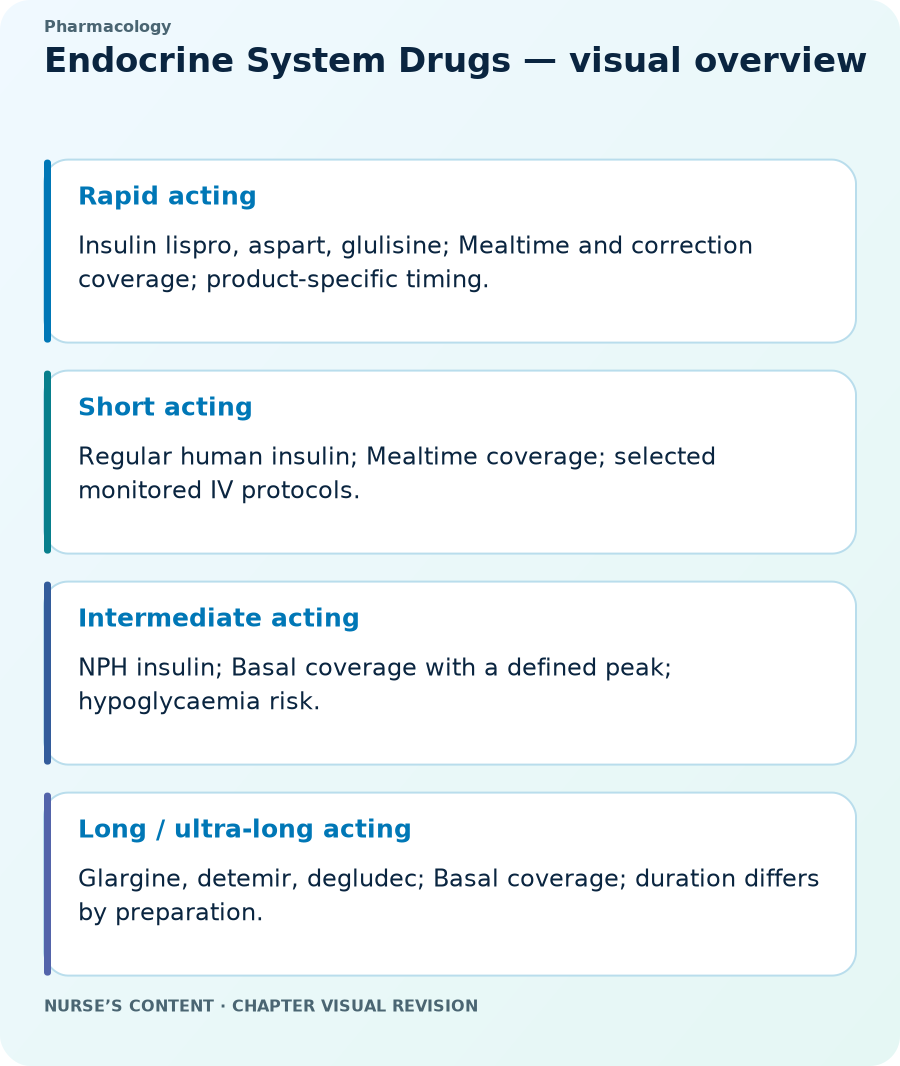
| Rapid acting | Insulin lispro, aspart, glulisine | Mealtime and correction coverage; product-specific timing. |
| Short acting | Regular human insulin | Mealtime coverage; selected monitored IV protocols. |
| Intermediate acting | NPH insulin | Basal coverage with a defined peak; hypoglycaemia risk. |
| Long / ultra-long acting | Glargine, detemir, degludec | Basal coverage; duration differs by preparation. |
| Premixed | Human or analogue premixed formulations | Fixed basal and mealtime components; less dosing flexibility. |
Insulin nursing responsibilities
- • Verify insulin type, concentration (for example U-100 versus other strengths), delivery device and prescribed units. Use compatible syringes or pens; never share a pen.
- • Check glucose, meal timing, intake, illness and the ordered regimen. Do not assume basal insulin should be omitted when a patient is fasting, especially in type 1 diabetes.
- • Rotate injection sites within an appropriate area and inspect for lipohypertrophy. Follow product storage instructions; protect insulin from freezing and excessive heat.
- • Monitor for hypoglycaemia: sweating, tremor, hunger, palpitations, confusion, seizures or loss of consciousness. If awake and safe to swallow, follow the oral glucose protocol; if unable to swallow, use emergency guidance, parenteral glucose or prescribed glucagon. Do not give oral liquids to an unconscious patient.
- • IV insulin is high alert; use standardized concentrations, infusion pumps and frequent glucose and electrolyte monitoring as ordered.
3. Non-insulin antidiabetic drugs
| Class / examples | Mechanism | Risks and monitoring |
|---|---|---|
| Biguanide – metformin | Reduces hepatic glucose production; improves insulin sensitivity | GI symptoms, B12 deficiency; renal review and acute illness precautions. |
| Sulfonylurea – glimepiride, gliclazide | Stimulates pancreatic insulin release | Hypoglycaemia, weight gain. |
| DPP-4 inhibitors – sitagliptin, linagliptin | Prolong endogenous incretin activity | Drug-specific renal adjustment; selected adverse effects including rare pancreatitis. |
| SGLT2 inhibitors – empagliflozin, dapagliflozin | Increase urinary glucose excretion | Genital infections, volume depletion, euglycaemic ketoacidosis; sick-day/perioperative instructions. |
| GLP-1 receptor agonists – semaglutide, liraglutide | Glucose-dependent insulin effects, reduced appetite, slower gastric emptying | GI symptoms, dehydration; formulation-specific and procedural considerations. |
| Thiazolidinedione – pioglitazone | Improves insulin sensitivity through PPAR-gamma | Weight gain, fluid retention, fractures; caution in heart failure. |
| Alpha-glucosidase inhibitor – acarbose | Delays carbohydrate digestion | Flatulence, diarrhoea; meal timing. |
Some GLP-1 therapies are injectable; semaglutide also has oral formulations. These agents are not substitutes for insulin in type 1 diabetes. Treatment choice considers glucose, cardiovascular and renal disease, hypoglycaemia risk and access. Diabetic ketoacidosis (DKA) needs urgent protocol-based fluid, insulin and electrolyte treatment; potassium monitoring is essential.
4. Thyroid and antithyroid drugs
Levothyroxine is synthetic T4 used for hypothyroidism. Administer consistently according to formulation instructions, commonly on an empty stomach; iron and calcium interfere with absorption. Monitor TSH and free T4 as indicated. Excess replacement may cause palpitations, tremor, weight loss and atrial arrhythmias.
Carbimazole (converted to methimazole), methimazole and propylthiouracil (PTU) reduce thyroid hormone synthesis; PTU also reduces peripheral T4 to T3 conversion. Fever or sore throat may signal agranulocytosis and requires urgent assessment and blood counts; jaundice may indicate hepatic injury. Pregnancy-specific drug choices require specialist advice. Radioactive iodine has selected indications and is contraindicated during pregnancy; radiation precautions apply.
5. Corticosteroids
Glucocorticoids (hydrocortisone, prednisolone, dexamethasone) regulate gene transcription and reduce inflammation; they are also used for hormone replacement in adrenal insufficiency. Mineralocorticoid fludrocortisone supports sodium retention in selected adrenal insufficiency. Adverse effects include hyperglycaemia, hypertension, infection risk, osteoporosis, mood changes, GI effects and hypothalamic-pituitary-adrenal suppression. Long-term therapy may require a gradual taper. Patients with adrenal insufficiency need prescribed sick-day rules and emergency treatment education.
6. Sex hormones and reproductive drugs
Oestrogens and progestogens are used in contraception and selected hormone replacement regimens. Testosterone is used in defined deficiency states; monitor product-specific effects and contraindications. GnRH agonists or antagonists modify gonadotropin release for selected reproductive or oncological indications. Hormonal treatment requires risk assessment for thrombosis, malignancy and pregnancy when relevant; see Chapter 17.
7. Drugs affecting calcium and bone metabolism
| Drug group | Use / action | Nursing points |
|---|---|---|
| Calcium, vitamin D | Replace deficiency and support bone health | Check intake, renal status; excess causes hypercalcaemia. |
| Bisphosphonates | Alendronate, zoledronic acid; inhibit bone resorption | Oral administration instructions, oesophageal irritation, renal review, rare jaw osteonecrosis. |
| Denosumab | RANKL inhibition | Hypocalcaemia, dental risk; plan continuity or transition to avoid rebound fracture risk. |
| Calcitonin / calcimimetics | Selected calcium disorders; cinacalcet reduces PTH | Monitor calcium, symptoms and indication. |
8. Examination questions
Long answer questions
- 1. Classify insulin and non-insulin antidiabetic medicines with nursing care.
- 2. Describe thyroid drugs and corticosteroids with adverse effects.
Short answer questions
- • Hypoglycaemia; metformin; SGLT2 inhibitors; levothyroxine; antithyroid drugs; bisphosphonates.
Very short answer questions
- • Essential therapy for type 1 diabetes? — Insulin.
- • Which antidiabetic class increases urinary glucose loss? — SGLT2 inhibitors.
- • One synthetic thyroid hormone? — Levothyroxine.
9. Quick revision
Insulin is high alert. Check meal timing, glucose and formulation. Thyroid treatment is lab guided. Glucocorticoids can suppress adrenal function. Calcium-modifying drugs require monitoring for abnormal calcium.
Conclusion
Endocrine pharmacology requires integration of hormone physiology, laboratory results, medication timing, patient education and early recognition of metabolic emergencies.
Chapter reference images