Pharmacology
Gastrointestinal System Drugs
Antacids, antiulcer drugs, proton pump inhibitors, H2 blockers, antiemetics, laxatives, antidiarrhoeals, antispasmodics and digestive enzymes.
Open quizzes and study tools Download PDF
CHAPTER 11 / PHARMACOLOGY 11. Gastrointestinal System Drugs
1. Introduction
Gastrointestinal medicines modify acid secretion, mucosal protection, motility, nausea pathways, pancreatic function or intestinal fluid balance. Treatment is directed towards the cause of symptoms, not simply their suppression. Persistent vomiting, haematemesis, melaena, severe abdominal pain, dysphagia, weight loss or dehydration requires clinical evaluation.
2. Antacids
Antacids neutralize gastric acid and provide relatively rapid short-term relief of acid-related symptoms. They do not eradicate Helicobacter pylori or reliably heal all ulcer disease.
| Preparation | Action and adverse effects |
|---|---|
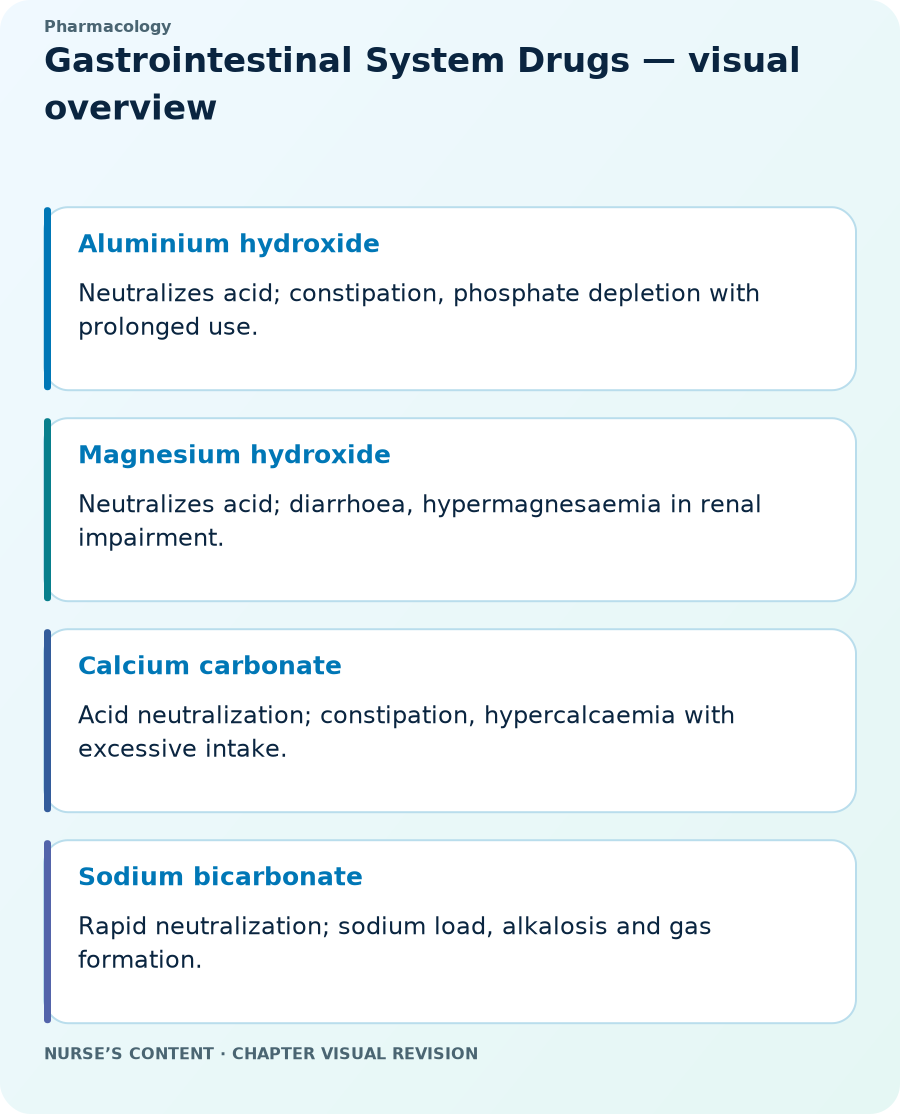
| Aluminium hydroxide | Neutralizes acid; constipation, phosphate depletion with prolonged use. |
| Magnesium hydroxide | Neutralizes acid; diarrhoea, hypermagnesaemia in renal impairment. |
| Calcium carbonate | Acid neutralization; constipation, hypercalcaemia with excessive intake. |
| Sodium bicarbonate | Rapid neutralization; sodium load, alkalosis and gas formation. |
Antacids can bind or alter absorption of other medicines. Check separation intervals for iron, levothyroxine, tetracyclines and other drugs. Renal impairment requires careful selection.
3. Antiulcer and acid-suppressing drugs
| Class | Examples / mechanism | Uses and nursing points |
|---|---|---|
| Proton pump inhibitors (PPIs) | Omeprazole, pantoprazole, esomeprazole; inhibit gastric H+/K+-ATPase | GERD, peptic ulcer, selected GI bleed protocols; review swallowing and timing instructions; long-term use requires indication review. |
| H2 receptor antagonists | Famotidine; reduces histamine-mediated acid secretion | Acid-related disease; renal dosing, possible confusion in vulnerable patients. |
| Mucosal protectants | Sucralfate forms protective barrier | Selected ulcer therapy; constipation, binds other medicines. |
| Prostaglandin analogue | Misoprostol reduces acid and supports mucosal protection | Selected NSAID-ulcer prevention; diarrhoea and uterine effects; distinct pregnancy-related indications. |
| Bismuth preparations | Mucosal and antimicrobial effects | Selected H. pylori regimens; may darken stool and tongue. |
PPIs are not interchangeable milligram for milligram. Many oral formulations are given before meals, but timing depends on product. Prolonged exposure may be associated with hypomagnesaemia, B12 deficiency and selected infections; assess benefit and risk rather than abruptly discontinuing needed treatment. Ranitidine has undergone safety-related regulatory restrictions in many markets; verify current local status, rather than assuming it is a routine first choice.
H. pylori infection
Eradication uses an acid suppressant plus appropriate antibiotics and sometimes bismuth. Regimens depend on resistance, prior exposure and local guidance. Encourage adherence to the prescribed course and arrange test of cure according to the clinical plan. Do not use an antibiotic casually for nonspecific gastritis.
4. Antiemetics and prokinetics
| Class / example | Mechanism and uses | Adverse effects |
|---|---|---|
| Ondansetron | 5-HT3 receptor antagonist; selected postoperative or chemotherapy nausea | Headache, constipation, QT prolongation. |
| Metoclopramide | Dopamine antagonism and prokinetic action; selected nausea/gastroparesis | Dystonia, restlessness, tardive dyskinesia risk; avoid prolonged inappropriate use. |
| Domperidone | Peripheral dopamine antagonism | QT prolongation and serious cardiac risk; review restrictions and interactions. |
| H1 antihistamines | Promethazine, dimenhydrinate; motion sickness and selected nausea | Sedation, anticholinergic effects; route-specific injury concerns with promethazine. |
| NK1 antagonists | Aprepitant; chemotherapy-associated nausea prevention | CYP interactions; use in prescribed combinations. |
Metoclopramide and other dopamine-blocking antiemetics may worsen Parkinson symptoms. A mechanical bowel obstruction is a contraindication to prokinetics. Correct dehydration and assess electrolyte disturbance in persistent vomiting.
5. Laxatives
| Type | Examples | Action / precautions |
|---|---|---|
| Bulk forming | Ispaghula (psyllium) | Increases stool bulk; adequate fluid and swallowing ability needed. |
| Osmotic | Lactulose, polyethylene glycol | Retains water in bowel; diarrhoea and dehydration if excessive. |
| Stimulant | Senna, bisacodyl | Increases motility; cramps, avoid suspected obstruction. |
| Stool softener | Docusate | Facilitates stool softening; benefit varies. |
| Rectal preparations | Glycerol suppository, selected enemas | Local action; assess contraindications; phosphate enemas can cause severe electrolyte problems. |
Lactulose also has a prescribed role in hepatic encephalopathy by reducing ammonia absorption; monitor stool frequency, hydration and mental status.
6. Antidiarrhoeals and antispasmodics
Oral rehydration solution (ORS) replaces water and electrolytes using glucose-sodium cotransport and is central to diarrhoea management. Loperamide reduces motility and may be used in selected adults; avoid inappropriate use in bloody diarrhoea, fever with suspected invasive infection, suspected toxic megacolon or young children. Zinc is used in childhood diarrhoea according to local guideline age-specific regimens. Antibiotics are reserved for specific indications. Antispasmodics such as dicyclomine or hyoscine butylbromide may reduce smooth-muscle spasm but can cause urinary retention, constipation and anticholinergic effects. Severe unexplained pain must be investigated.
7. Digestive enzymes and other medicines
Pancrelipase supplies lipase, protease and amylase to patients with pancreatic exocrine insufficiency. Give with prescribed meals and snacks; do not crush enteric-coated preparations. Monitor stool characteristics, nutritional status and weight. Simethicone reduces surface tension of gas bubbles and may relieve selected symptoms. Ursodeoxycholic acid has specific hepatobiliary indications and is not a general digestive tonic.
8. Nursing responsibilities
Assess pain, bowel pattern, hydration, swallowing, medications and laboratory results. Verify administration relative to meals and separation from interacting medicines. Observe for bleeding, constipation, diarrhoea, extrapyramidal effects and cardiac symptoms. Educate about ORS preparation using the correct water volume, diet and warning signs; document response.
9. Examination questions
Long answer questions
- 1. Classify antiulcer drugs with mechanisms and nursing care.
- 2. Describe antiemetics, laxatives and antidiarrhoeal drugs.
Short answer questions
- • Proton pump inhibitors; H2 blockers; ondansetron; lactulose; ORS; pancreatic enzymes.
Very short answer questions
- • What enzyme do PPIs inhibit? — Gastric H+/K+-ATPase.
- • One osmotic laxative? — Lactulose.
- • Which antiemetic blocks 5-HT3 receptors? — Ondansetron.
10. Quick revision
Antacids neutralize existing acid; PPIs inhibit acid production. Antiemetics act at different receptors. ORS treats fluid and electrolyte loss. Verify causes and contraindications before changing motility; monitor for GI bleeding and dehydration.
Conclusion
Gastrointestinal pharmacology requires correct selection, interaction review and monitoring of nutritional and fluid status alongside symptom relief.
Chapter reference images