Pharmacology
Respiratory System Drugs
Bronchodilators, antiasthmatics, corticosteroids, antihistamines, antitussives, expectorants, mucolytics and drugs used in respiratory allergies.
Open quizzes and study tools Download PDF
CHAPTER 10 / PHARMACOLOGY 10. Respiratory System Drugs
1. Introduction
Respiratory medicines improve airway calibre, reduce inflammation, manage allergy and modify cough or secretions. Asthma and COPD are different disorders with overlapping medicines but different treatment strategies. Assess symptoms, oxygenation, inhaler technique and severity before judging therapeutic failure.
2. Bronchodilators
| Group | Examples / action | Indications and adverse effects |
|---|---|---|
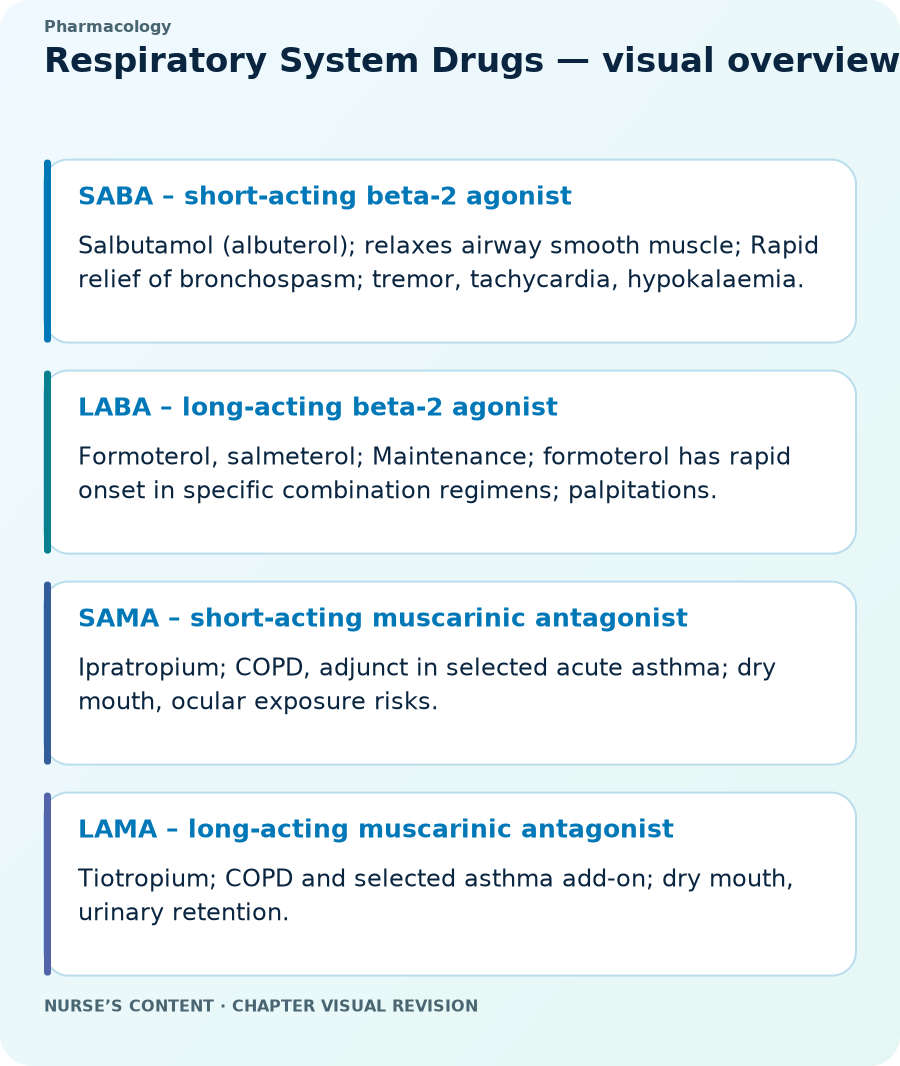
| SABA – short-acting beta-2 agonist | Salbutamol (albuterol); relaxes airway smooth muscle | Rapid relief of bronchospasm; tremor, tachycardia, hypokalaemia. |
| LABA – long-acting beta-2 agonist | Formoterol, salmeterol | Maintenance; formoterol has rapid onset in specific combination regimens; palpitations. |
| SAMA – short-acting muscarinic antagonist | Ipratropium | COPD, adjunct in selected acute asthma; dry mouth, ocular exposure risks. |
| LAMA – long-acting muscarinic antagonist | Tiotropium | COPD and selected asthma add-on; dry mouth, urinary retention. |
| Methylxanthines | Theophylline, aminophylline; multiple mechanisms | Limited selected role; narrow therapeutic window, nausea, arrhythmias, seizures. |
3. Anti-inflammatory and controller medicines
| Class | Examples | Key nursing considerations |
|---|---|---|
| Inhaled corticosteroids (ICS) | Budesonide, beclometasone, fluticasone | Reduce airway inflammation; oral candidiasis, dysphonia; teach mouth rinsing. |
| Systemic corticosteroids | Prednisolone, hydrocortisone | Selected acute exacerbations; glucose rise, infection risk; long-term adverse effects. |
| Leukotriene receptor antagonist | Montelukast | Selected asthma/allergic rhinitis; discuss serious mood, sleep or behavioural changes. |
| Biologic agents | Omalizumab, mepolizumab, dupilumab and others | Selected severe asthma phenotypes; specialist assessment and reaction monitoring. |
4. Asthma treatment principles
Asthma requires treatment of airway inflammation as well as bronchoconstriction. GINA 2026 supports ICS-containing therapy; for adults and adolescents, low-dose ICS-formoterol reliever-based regimens are preferred when appropriate and available [5]. Long-acting beta agonists must not be used alone to treat asthma. Not all ICS/LABA products are suitable as relievers. A patient frequently using a rescue inhaler needs review of control, adherence, technique and triggers. Acute severe asthma may require controlled oxygen, repeated prescribed inhaled bronchodilators, systemic corticosteroids and escalation; silent chest, exhaustion or altered consciousness are particularly concerning.
5. COPD pharmacotherapy
Long-acting bronchodilators (LAMA and LABA) are commonly used for maintenance according to symptoms and exacerbation history. ICS is added in selected patients, taking account of exacerbations and other factors; it may increase pneumonia risk. Short-acting bronchodilators may relieve symptoms. Smoking cessation, vaccination, rehabilitation and correct inhaler use complement medicines. Controlled oxygen and ventilatory support may be needed during severe exacerbations.
6. Antihistamines and allergy medicines
First-generation H1 blockers (chlorpheniramine, diphenhydramine) may cause sedation and anticholinergic effects. Second-generation H1 blockers (cetirizine, loratadine, fexofenadine) are generally less sedating, though individual responses vary. Intranasal corticosteroids reduce allergic nasal inflammation. Topical nasal decongestants such as oxymetazoline may cause rebound congestion with prolonged use; oral sympathomimetics can worsen hypertension or palpitations. Antihistamines are not first-line treatment of anaphylaxis.
7. Cough and secretion medicines
| Group | Examples / role | Safety considerations |
|---|---|---|
| Antitussive | Dextromethorphan; selected dry cough | Sedation, misuse and serotonergic interactions; avoid inappropriate suppression of productive cough. |
| Opioid antitussive | Codeine in restricted selected situations | Respiratory depression and age-related restrictions; not appropriate for routine paediatric use. |
| Expectorant | Guaifenesin | Intended to loosen secretions; benefit may be limited. |
| Mucolytic | Acetylcysteine, carbocisteine | Reduce mucus viscosity; GI effects and possible bronchospasm. |
Persistent cough, haemoptysis, weight loss, hypoxia or severe dyspnoea requires evaluation of the underlying cause rather than symptom suppression.
8. Inhaler and nebulizer nursing care
Check the exact device, medicine and prescribed puffs. For a conventional pressurized metered-dose inhaler, coordinate slow inhalation with actuation; a spacer may improve delivery. Dry-powder devices generally require a different, sufficiently forceful inspiratory technique. Teach by demonstration and return demonstration; follow product instructions, prime when required and check dose counter. Nebulization requires the prescribed solution and device; monitor response and clean equipment appropriately. Use respiratory infection precautions. Assess peak flow or other measures when clinically indicated.
9. Examination questions
Long answer questions
- 1. Classify antiasthmatic drugs with mechanisms, adverse effects and nursing care.
- 2. Discuss respiratory allergy, cough and mucus-modifying medicines.
Short answer questions
- • Salbutamol; ipratropium; inhaled corticosteroids; theophylline toxicity; inhaler technique; antihistamines.
Very short answer questions
- • Salbutamol acts on which receptor? — Beta-2.
- • Why rinse after ICS? — To reduce local adverse effects such as candidiasis.
- • Can LABA alone treat asthma safely? — No.
10. Quick revision
Bronchodilators open airways; ICS treats inflammation. Formoterol-containing reliever combinations are regimen-specific. Distinguish SABA, LABA, SAMA and LAMA. Monitor inhaler technique and warning signs of respiratory deterioration.
Conclusion
Respiratory pharmacology depends on correct delivery devices, differentiation of symptom relief from inflammation control and prompt escalation of severe respiratory distress.
Chapter reference images