Pharmacology
Drugs Acting on Blood and Blood-Forming Organs
Haematinics, iron preparations, vitamin B12, folic acid, anticoagulants, thrombolytics, haemostatics and drugs used in anaemia.
Open quizzes and study tools Download PDF
CHAPTER 09 / PHARMACOLOGY 09. Drugs Acting on Blood and Blood-Forming Organs
1. Introduction
Blood-related pharmacology includes agents that replace nutrients required for haematopoiesis, stimulate marrow production, modify clotting and platelet function, dissolve thrombi or support haemostasis. Anaemia is a clinical finding with several possible causes; replacement is selected after identifying the cause.
2. Haematinics and iron preparations
Haematinics support red cell formation when deficiency is present. Iron is required for haemoglobin synthesis and other enzymes. Absolute iron deficiency may arise from blood loss, inadequate intake, increased requirement or malabsorption.
| Preparation | Use | Adverse effects and precautions |
|---|---|---|
| Oral ferrous salts | Ferrous sulfate, fumarate, gluconate | Nausea, constipation, dark stool; assess elemental iron content, interactions and adherence. |
| IV iron | Iron sucrose, ferric carboxymaltose and others | Used when indicated; infusion reactions, hypotension, formulation-specific hypophosphataemia risk. |
Iron may interact with levothyroxine, tetracyclines and fluoroquinolones; separate according to product guidance. Do not give iron indiscriminately in anaemia unrelated to iron deficiency. Monitor haemoglobin and iron indices; ferritin may rise with inflammation. Store iron safely away from children because overdose can be serious.
3. Vitamin B12 and folic acid
Cobalamin is essential for DNA synthesis and normal neurological function. Hydroxocobalamin or cyanocobalamin preparations are used for deficiency, with oral or injection routes selected according to cause and severity. B12 deficiency can cause megaloblastic anaemia and neurological abnormalities. Folic acid supports one-carbon metabolism and DNA synthesis; it treats folate deficiency and contributes to neural tube defect prevention before and during early pregnancy. Exclude or treat B12 deficiency when appropriate before relying on folate alone, because anaemia may improve while neurological injury progresses.
4. Other drugs used in anaemia and marrow disorders
Erythropoiesis-stimulating agents (epoetin alfa, darbepoetin) stimulate red cell production in selected CKD and chemotherapy-related contexts. Assess iron status, BP and haemoglobin; excessive response increases thrombotic risk. Filgrastim, a granulocyte colony-stimulating factor (G-CSF), stimulates neutrophil production in selected patients; bone pain is common, rare splenic complications are possible. Anaemia due to bleeding requires assessment and source control; blood transfusion is not a routine substitute for determining the cause.
5. Anticoagulants
| Drug/class | Mechanism | Monitoring and reversal concepts |
|---|---|---|
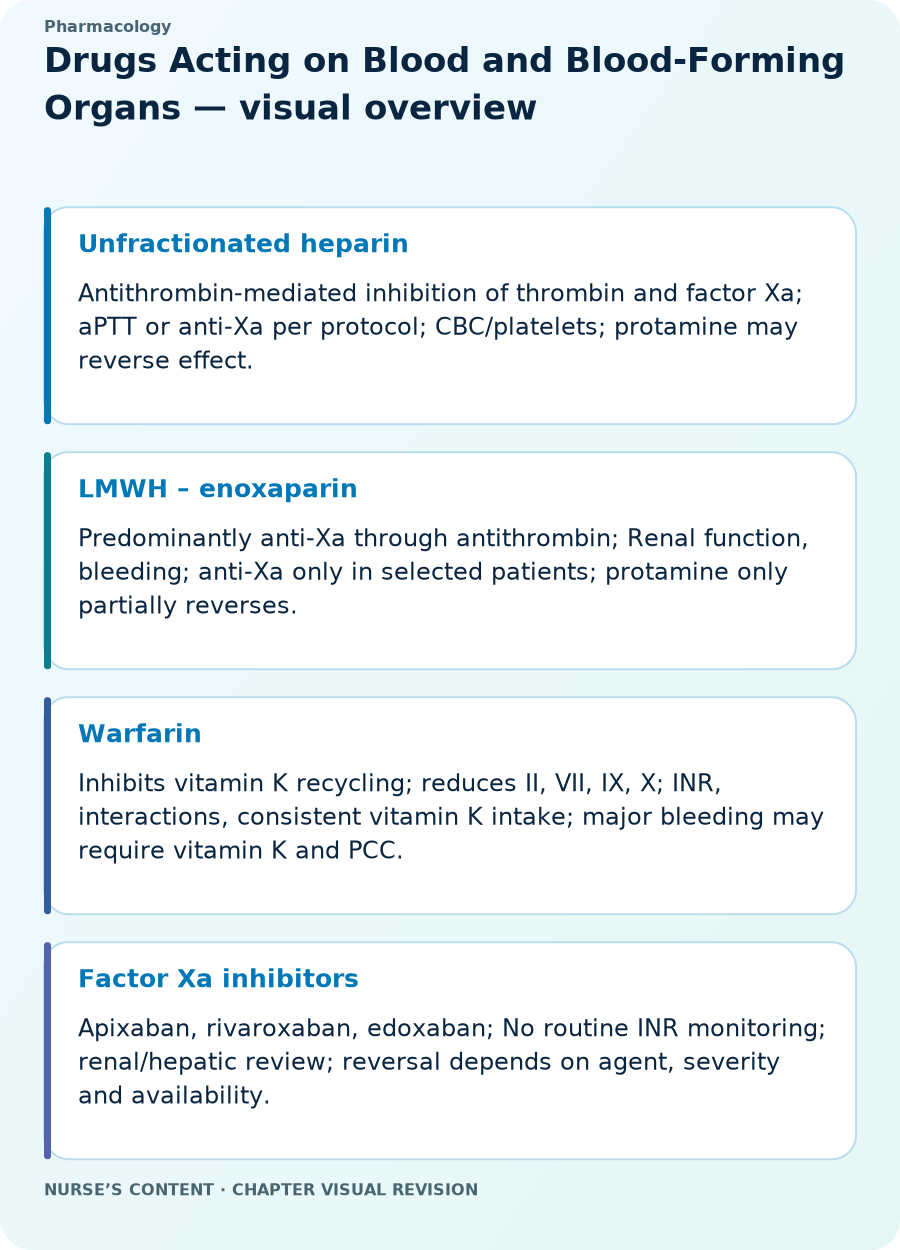
| Unfractionated heparin | Antithrombin-mediated inhibition of thrombin and factor Xa | aPTT or anti-Xa per protocol; CBC/platelets; protamine may reverse effect. |
| LMWH – enoxaparin | Predominantly anti-Xa through antithrombin | Renal function, bleeding; anti-Xa only in selected patients; protamine only partially reverses. |
| Warfarin | Inhibits vitamin K recycling; reduces II, VII, IX, X | INR, interactions, consistent vitamin K intake; major bleeding may require vitamin K and PCC. |
| Factor Xa inhibitors | Apixaban, rivaroxaban, edoxaban | No routine INR monitoring; renal/hepatic review; reversal depends on agent, severity and availability. |
| Direct thrombin inhibitor | Dabigatran | Renal function; idarucizumab is a specific reversal agent where available. |
Heparin-induced thrombocytopenia (HIT)
Immune-mediated HIT can cause thrombosis despite low platelets. A significant platelet fall or new thrombosis during relevant heparin exposure warrants urgent assessment. Stop heparin and initiate the approved evaluation/treatment pathway when HIT is suspected; alternative anticoagulation requires specialist direction.
6. Antiplatelets and thrombolytics
Antiplatelets reduce platelet aggregation: aspirin irreversibly inhibits platelet COX-1 and clopidogrel blocks P2Y12. They have selected roles in arterial disease and coronary intervention. Thrombolytics (alteplase, tenecteplase) promote plasmin-mediated fibrin breakdown. Uses depend on the indication and exact eligibility, such as selected acute ischaemic stroke, STEMI or massive pulmonary embolism. Major hazard is serious bleeding, including intracranial haemorrhage. Confirm onset time, eligibility, imaging where required, contraindications and monitoring through the appropriate emergency pathway.
7. Haemostatics
Tranexamic acid reduces fibrinolysis and is used in selected bleeding settings, including protocol-based trauma and PPH care. Vitamin K supports synthesis of vitamin-K-dependent factors and reverses warfarin effects over time. Factor concentrates and prothrombin complex concentrate (PCC) replace specific clotting components. Desmopressin promotes release of von Willebrand factor and factor VIII in selected disorders; monitor water balance and sodium. Topical haemostatic materials assist local bleeding control.
8. Nursing responsibilities
Review bleeding history, allergies, CBC, platelet count, renal function, INR or other tests as required. Use bleeding precautions and report melaena, haematuria, severe headache, neurological changes or unexplained hypotension. Verify drug-specific dose timing before procedures; avoid automatic substitution between anticoagulants. Teach patients about prescribed therapy, interactions and when to seek help.
9. Examination questions
Long answer questions
- 1. Describe haematinics, iron, B12 and folate preparations.
- 2. Classify anticoagulants, thrombolytics and haemostatics with nursing responsibilities.
Short answer questions
- • Iron sucrose; B12 deficiency; warfarin monitoring; HIT; tranexamic acid; erythropoietin.
Very short answer questions
- • Warfarin monitoring test? — INR.
- • Heparin reversal agent? — Protamine (extent depends on preparation).
- • Specific dabigatran reversal agent? — Idarucizumab.
10. Quick revision
Treat the cause of anaemia. Iron supports haemoglobin; B12 is important for neural function. Anticoagulants inhibit coagulation, antiplatelets inhibit aggregation, thrombolytics break down fibrin, and haemostatics support bleeding control.
Conclusion
Blood-related medicines require careful interpretation of laboratory results, monitoring for bleeding or thrombosis and patient-specific therapeutic planning.
Chapter reference images