Pharmacology
Cardiovascular Drugs
Antihypertensives, antianginal drugs, antiarrhythmics, cardiac glycosides, diuretics, vasodilators, anticoagulants and antiplatelet drugs.
Open quizzes and study tools Download PDF
CHAPTER 08 / PHARMACOLOGY 08. Cardiovascular Drugs
1. Introduction
Cardiovascular medicines act on blood pressure, cardiac contractility, electrical conduction, vascular tone, volume regulation, coagulation and lipid metabolism. Treatment selection depends on diagnosis, comorbidities, haemodynamics, laboratory results and patient preferences.
2. Antihypertensive drugs
| Class / example | Mechanism and uses | Adverse effects and monitoring |
|---|---|---|
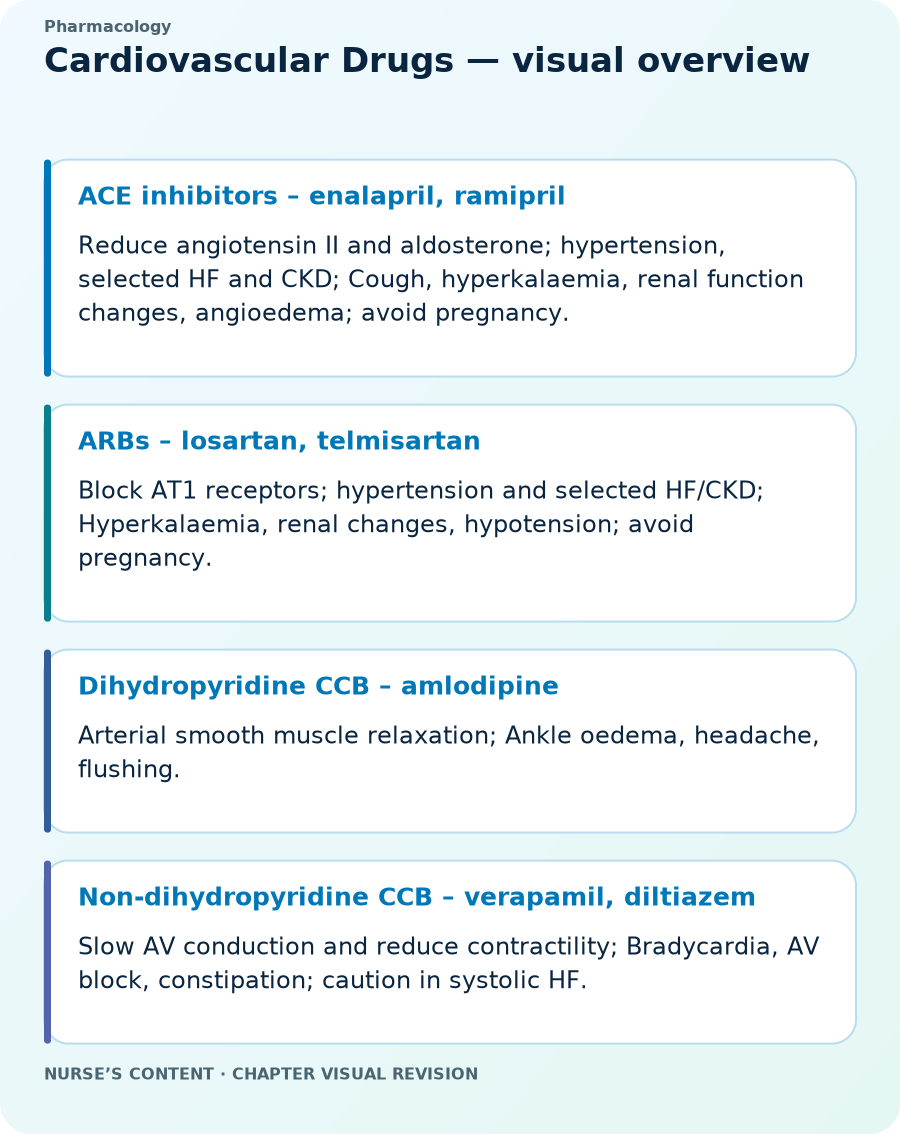
| ACE inhibitors – enalapril, ramipril | Reduce angiotensin II and aldosterone; hypertension, selected HF and CKD | Cough, hyperkalaemia, renal function changes, angioedema; avoid pregnancy. |
| ARBs – losartan, telmisartan | Block AT1 receptors; hypertension and selected HF/CKD | Hyperkalaemia, renal changes, hypotension; avoid pregnancy. |
| Dihydropyridine CCB – amlodipine | Arterial smooth muscle relaxation | Ankle oedema, headache, flushing. |
| Non-dihydropyridine CCB – verapamil, diltiazem | Slow AV conduction and reduce contractility | Bradycardia, AV block, constipation; caution in systolic HF. |
| Thiazide-like – chlorthalidone | Reduce sodium reabsorption distally | Hyponatraemia, hypokalaemia, gout; monitor electrolytes. |
| Beta-blockers – bisoprolol, metoprolol | Reduce cardiac stimulation and renin | Bradycardia, hypotension, bronchospasm; selected indications. |
| Central or direct agents – clonidine, hydralazine | Reduce sympathetic tone or vascular resistance | Sedation/rebound BP or reflex tachycardia; drug-specific monitoring. |
A single measurement does not ordinarily establish chronic hypertension. Assess orthostatic symptoms; do not give an extra dose solely because of one elevated reading without clinical review. Severe BP elevation with acute organ injury requires emergency assessment.
3. Antianginal and vasodilator drugs
Nitrates (glyceryl trinitrate, isosorbide mononitrate) generate nitric oxide signalling, producing mainly venodilation and reducing cardiac preload. They relieve selected anginal symptoms. Headache, dizziness and hypotension are common. Combination with phosphodiesterase-5 inhibitors can produce profound hypotension and is contraindicated within product-specific intervals. Nitrate-free intervals may be prescribed to limit tolerance. Beta-blockers and calcium channel blockers reduce myocardial oxygen demand or improve coronary blood flow. Ranolazine has selected antianginal use with QT and interaction precautions. New or persistent chest pain requires urgent assessment for acute coronary syndrome rather than repeated unsupervised dosing.
4. Antiarrhythmic drugs
| Vaughan Williams class | Example and effect |
|---|---|
| I – Sodium-channel blockers | Lidocaine (IB), flecainide (IC); selected rhythm-specific indications. |
| II – Beta-blockers | Metoprolol, esmolol; reduce sympathetic and AV nodal effects. |
| III – Potassium-channel effects | Amiodarone, sotalol; prolong repolarization; mixed actions possible. |
| IV – Calcium-channel blockers | Verapamil, diltiazem; slow AV nodal conduction. |
| Other agents | Adenosine transiently blocks AV nodal conduction; digoxin slows AV conduction. |
Antiarrhythmics may themselves provoke arrhythmias. Monitor rhythm, QT interval when appropriate, electrolytes and haemodynamics. Amiodarone can affect thyroid, liver, lungs and eyes and interacts with many medicines. Adenosine is used for selected regular tachycardias under monitored protocols, not for every fast rhythm.
5. Cardiac glycosides and heart failure drugs
Digoxin inhibits Na+/K+-ATPase, increasing intracellular calcium and contractility, and enhances vagal effects on the AV node. It has selected uses for symptomatic HF and ventricular rate control. Toxicity may present with nausea, visual changes, confusion, bradycardia or arrhythmias; renal impairment and hypokalaemia increase risk. Check rate/rhythm, renal function, potassium and appropriately timed levels when indicated. Severe toxicity may require digoxin immune Fab.
For selected heart failure with reduced ejection fraction, foundational medicine groups include an ARNI or ACE inhibitor/ARB, evidence-based beta-blocker, mineralocorticoid receptor antagonist and SGLT2 inhibitor. Loop diuretics relieve congestion. These require individualized initiation, titration and monitoring, not all at fixed doses.
6. Diuretics
| Class | Examples | Key effect / risk |
|---|---|---|
| Loop | Furosemide (frusemide), torsemide | Potent natriuresis; dehydration, low potassium/magnesium; ototoxicity risk. |
| Thiazide / thiazide-like | Hydrochlorothiazide, indapamide | Distal sodium loss; low sodium/potassium, urate rise. |
| Potassium-sparing | Spironolactone, eplerenone, amiloride | Hyperkalaemia; spironolactone may cause endocrine effects. |
| Osmotic | Mannitol | Selected raised intracranial pressure; fluid shifts, renal and cardiac risks. |
7. Anticoagulants and antiplatelets
Heparin and LMWH enhance antithrombin activity; warfarin reduces vitamin-K-dependent clotting factors; DOACs inhibit factor Xa or thrombin. They reduce clot formation and extension but do not directly dissolve existing clots. Aspirin inhibits platelet COX-1; clopidogrel inhibits P2Y12 receptors. Major shared risk is bleeding. See Chapter 09 for monitoring and reversal concepts.
8. Lipid-lowering drugs
Statins inhibit HMG-CoA reductase, increasing hepatic LDL clearance; monitor muscle symptoms and relevant liver findings. Ezetimibe reduces intestinal cholesterol absorption. PCSK9-targeting agents increase LDL receptor availability. Fibrates mainly reduce triglycerides; combined treatment requires interaction review. The prevention goal is reduction of cardiovascular risk, not treating laboratory numbers alone.
9. Nursing responsibilities
Assess BP, pulse, ECG, perfusion, oedema, weight, renal function and electrolytes. Monitor dizziness, falls, bleeding, drug interactions and adherence. Teach home monitoring and symptom escalation. Verify agent-specific hold parameters rather than using one universal pulse or BP threshold.
10. Examination questions
Long answer questions
- 1. Classify antihypertensive drugs with mechanisms and nursing care.
- 2. Discuss antianginal, antiarrhythmic and heart failure medicines.
Short answer questions
- • ACE inhibitors; nitrates; digoxin toxicity; loop diuretics; statins; anticoagulants versus antiplatelets.
Very short answer questions
- • Common ACE inhibitor adverse effect? — Dry cough.
- • Antidote for severe digoxin toxicity? — Digoxin immune Fab.
- • Major risk with spironolactone? — Hyperkalaemia.
11. Quick revision
ACE inhibitors/ARBs require potassium and renal monitoring; nitrates interact with PDE5 inhibitors; digoxin has a narrow therapeutic window. Rhythm-specific drugs must be selected from the ECG and clinical condition. Observe bleeding risk with antithrombotics.
Conclusion
Cardiovascular drug administration depends on accurate haemodynamic assessment, interaction review, laboratory monitoring and recognition of urgent deterioration.
Chapter reference images