Pharmacology
Drugs Acting on the Central Nervous System
Analgesics, anaesthetics, sedatives, hypnotics, antiepileptics, antipsychotics, antidepressants, anxiolytics and antiparkinsonian drugs.
Open quizzes and study tools Download PDF
CHAPTER 07 / PHARMACOLOGY 07. Drugs Acting on the Central Nervous System
1. Introduction
CNS medicines modify neuronal signalling, neurotransmitter concentrations, ion channels or neural circuit activity. They are used to relieve pain, produce anaesthesia, control seizures and treat psychiatric and neurodegenerative conditions. Many affect alertness, respiration and coordination; monitoring and safe deprescribing matter.
2. Analgesics
| Class | Examples / mechanism | Uses and major precautions |
|---|---|---|
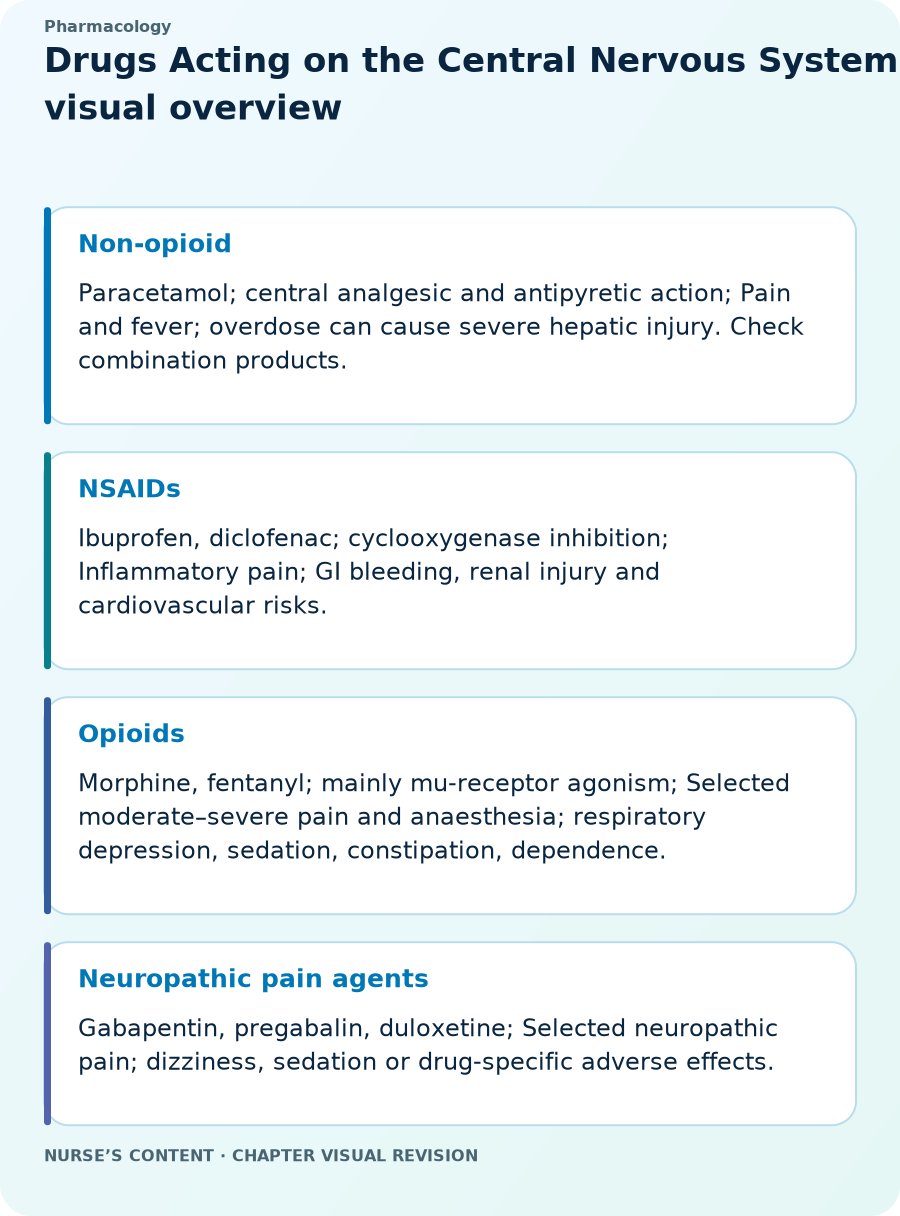
| Non-opioid | Paracetamol; central analgesic and antipyretic action | Pain and fever; overdose can cause severe hepatic injury. Check combination products. |
| NSAIDs | Ibuprofen, diclofenac; cyclooxygenase inhibition | Inflammatory pain; GI bleeding, renal injury and cardiovascular risks. |
| Opioids | Morphine, fentanyl; mainly mu-receptor agonism | Selected moderate–severe pain and anaesthesia; respiratory depression, sedation, constipation, dependence. |
| Neuropathic pain agents | Gabapentin, pregabalin, duloxetine | Selected neuropathic pain; dizziness, sedation or drug-specific adverse effects. |
Opioids require assessment of pain, sedation and respiratory status; additive CNS depressants increase risk. Naloxone is an opioid antagonist used for overdose with respiratory compromise; ventilation support and observation remain important because re-sedation can occur.
3. Anaesthetics, sedatives and hypnotics
General anaesthetics produce a controlled state of unconsciousness and other components of anaesthesia. Local anaesthetics block voltage-gated sodium channels and prevent impulse conduction in a defined area. See Chapter 24 for detailed classification.
| Group | Examples | Mechanism / risks |
|---|---|---|
| Benzodiazepines | Diazepam, lorazepam, midazolam | Enhance GABA-A signalling; anxiolysis, sedation, anticonvulsant action; falls, respiratory suppression with other depressants, withdrawal. |
| Z-drugs | Zolpidem | GABA-A receptor modulation; insomnia; next-day impairment, complex sleep behaviours. |
| Barbiturates | Phenobarbital | GABA-related inhibition; selected seizure treatment; sedation, respiratory depression, interactions. |
| Melatonin-related agents | Melatonin | Circadian rhythm effects; product and indication dependent. |
Do not abruptly stop regular benzodiazepine or barbiturate therapy without a planned withdrawal regimen. Flumazenil may reverse benzodiazepine effects but can precipitate seizures in selected overdose or dependent patients; specialist use only.
4. Antiepileptic / antiseizure drugs
| Drug | Main action / use | Important adverse effects and nursing points |
|---|---|---|
| Phenytoin | Sodium-channel modulation; selected focal seizures and emergency protocols | Nystagmus, ataxia, gingival overgrowth, rash; IV formulation and rate precautions, interactions. |
| Carbamazepine | Sodium-channel modulation; focal seizures, trigeminal neuralgia | Hyponatraemia, rash, blood dyscrasias; monitor CBC, sodium, interactions. |
| Sodium valproate | Multiple mechanisms including GABA-related effects | Hepatotoxicity, pancreatitis, thrombocytopenia, major fetal risks; strict pregnancy-related precautions. |
| Levetiracetam | SV2A modulation; multiple seizure types | Somnolence, behavioural or mood changes; renal dose review. |
| Lamotrigine | Sodium-channel and glutamate-related effects | Serious rash; slow prescribed titration and interaction review. |
| Ethosuximide | T-type calcium-channel modulation | Absence seizures; GI effects, fatigue, rare blood disorders. |
Benzodiazepines are commonly used first in emergency treatment of prolonged convulsive seizures. Protect the airway, time the seizure, avoid putting objects in the mouth and do not restrain convulsions. Persistent seizures require urgent protocol-based treatment. Monitor adherence and avoid abrupt stopping of antiseizure drugs.
5. Antipsychotics
| Class | Examples | Major considerations |
|---|---|---|
| First-generation | Haloperidol, chlorpromazine; D2 antagonism | Extrapyramidal symptoms, prolactin elevation, QT effects, sedation or hypotension. |
| Second-generation | Risperidone, olanzapine, quetiapine, clozapine; variable dopamine/serotonin actions | Metabolic effects, sedation, orthostasis; drug-specific movement and cardiac risks. |
| Partial dopamine agonist | Aripiprazole | Akathisia, nausea, impulse-control problems in some patients. |
Acute dystonia involves sustained involuntary muscle contractions; akathisia is motor restlessness; parkinsonism includes rigidity and bradykinesia; tardive dyskinesia may involve persistent involuntary movements. Neuroleptic malignant syndrome (fever, rigidity, altered mental state, autonomic instability) requires emergency escalation. Clozapine requires blood monitoring for severe neutropenia and vigilance for myocarditis, seizures and severe constipation.
6. Antidepressants, anxiolytics and mood stabilizers
| Class | Examples | Nursing considerations |
|---|---|---|
| SSRIs | Sertraline, fluoxetine, escitalopram | GI symptoms, sexual dysfunction, hyponatraemia, bleeding risk, serotonin toxicity. |
| SNRIs | Venlafaxine, duloxetine | Similar serotonergic effects; monitor BP and drug-specific risks. |
| TCAs | Amitriptyline | Anticholinergic effects, orthostasis, dangerous overdose and conduction effects. |
| MAO inhibitors | Selected specialist agents | Major food and drug interactions; require appropriate washout. |
| Other antidepressants | Mirtazapine, bupropion | Drug-specific sedation/weight effects or seizure risk. |
| Non-benzodiazepine anxiolytic | Buspirone | Delayed benefit; dizziness; not a rapid rescue sedative. |
| Mood stabilizers | Lithium, valproate, selected antipsychotics | Lithium has narrow therapeutic window; monitor levels, renal and thyroid function. |
Antidepressant benefits may develop over weeks. Monitor clinical worsening, suicidal thoughts, activation or manic symptoms, especially after initiation or dose changes. Serotonin toxicity can cause agitation, clonus, hyperreflexia, sweating and fever. Lithium toxicity may cause vomiting, tremor, ataxia and confusion, worsened by dehydration or interactions such as NSAIDs, ACE inhibitors and some diuretics.
7. Antiparkinsonian drugs
Levodopa with carbidopa replaces dopamine precursor while reducing peripheral conversion. Dopamine agonists (pramipexole), MAO-B inhibitors (rasagiline), COMT inhibitors (entacapone) and amantadine have selected roles. Antimuscarinic agents may be used in limited circumstances. Assess dyskinesia, hallucinations, orthostasis, sleep attacks and impulse-control symptoms. Parkinson medicines are time-critical; delayed or abrupt withdrawal can cause severe deterioration. Review interactions with dopamine-blocking antiemetics and antipsychotics.
8. Nursing responsibilities
Assess mental status, pain, seizure pattern, respiratory status, fall risk and baseline metabolic parameters where indicated. Verify interactions, monitor drug-specific laboratory tests, maintain seizure safety and counsel about driving, alcohol and adherence. Report sudden mental status changes or severe reactions promptly.
9. Examination questions
Long answer questions
- 1. Classify CNS drugs and discuss analgesics and antiseizure drugs.
- 2. Explain antipsychotic and antidepressant drugs with nursing care.
Short answer questions
- • Benzodiazepines; lithium toxicity; extrapyramidal symptoms; levodopa/carbidopa; opioid monitoring; serotonin toxicity.
Very short answer questions
- • Opioid antagonist? — Naloxone.
- • Drug commonly associated with gingival overgrowth? — Phenytoin.
- • Main precursor used in Parkinson disease? — Levodopa.
10. Quick revision
CNS depressants may impair breathing. Seizure medicines must not be stopped abruptly. Monitor antipsychotic movement and metabolic effects; lithium requires level monitoring. Levodopa timing is clinically important.
Conclusion
CNS pharmacotherapy requires individualized assessment of consciousness, mobility, breathing, behaviour and therapeutic response, with early recognition of severe adverse effects.
Chapter reference images