Pharmacology
Autonomic Nervous System Drugs
Sympathomimetics, sympatholytics, parasympathomimetics, anticholinergics, adrenergic drugs and cholinergic drugs.
Open quizzes and study tools Download PDF
CHAPTER 06 / PHARMACOLOGY 06. Autonomic Nervous System Drugs
1. Introduction
The autonomic nervous system (ANS) regulates involuntary functions such as heart rate, blood pressure, bronchial tone, glandular secretion, gastrointestinal activity and bladder function. Sympathetic activity supports physiological mobilization; parasympathetic activity supports many restorative and digestive functions. Drugs may mimic or block neurotransmitter action at specific receptors.
2. Neurotransmitters and receptors
Both sympathetic and parasympathetic preganglionic neurons release acetylcholine (ACh) at nicotinic receptors in autonomic ganglia. Most postganglionic sympathetic neurons release noradrenaline; sympathetic sweat glands are an important cholinergic exception. Most postganglionic parasympathetic neurons release ACh at muscarinic receptors.
| Receptor | Major effects of activation |
|---|---|
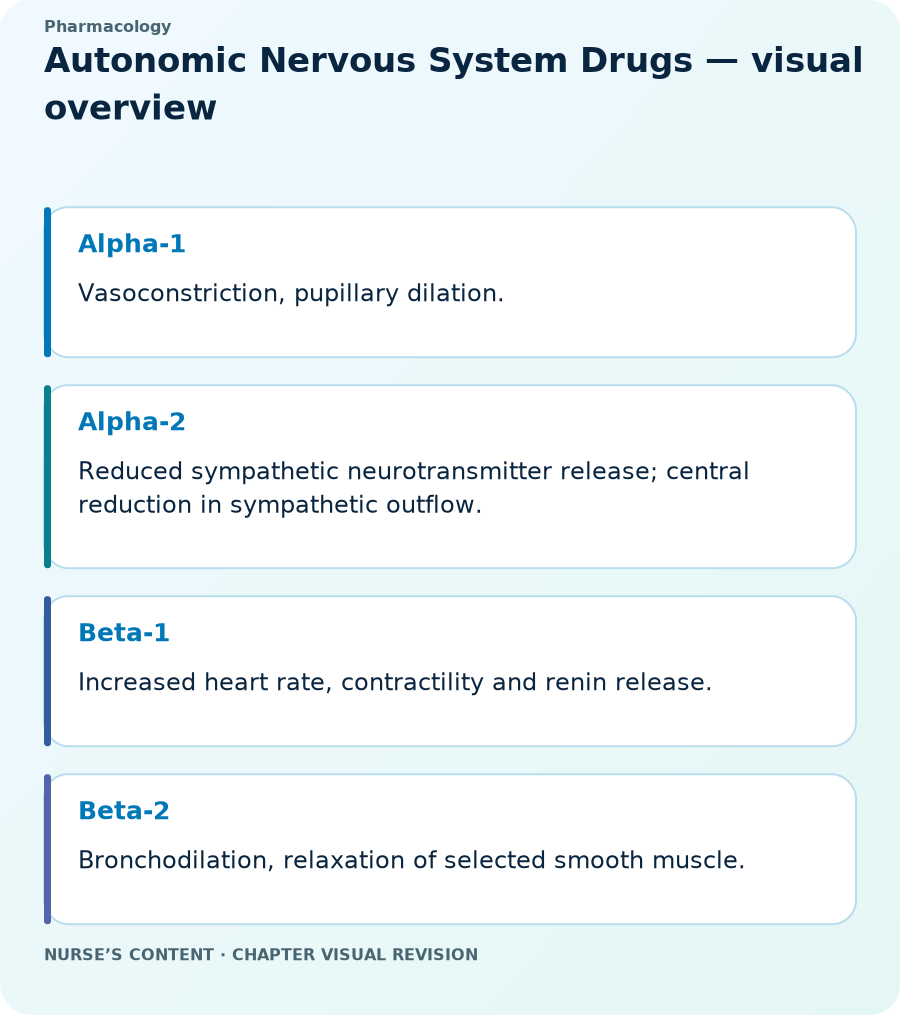
| Alpha-1 | Vasoconstriction, pupillary dilation. |
| Alpha-2 | Reduced sympathetic neurotransmitter release; central reduction in sympathetic outflow. |
| Beta-1 | Increased heart rate, contractility and renin release. |
| Beta-2 | Bronchodilation, relaxation of selected smooth muscle. |
| Beta-3 | Bladder detrusor relaxation; metabolic effects. |
| Muscarinic M2 | Slowing of heart rate. |
| Muscarinic M3 | Glandular secretion, bronchoconstriction, bladder contraction. |
| Nicotinic | Transmission in autonomic ganglia or neuromuscular junction, depending on subtype. |
3. Sympathomimetics (adrenergic agonists)
| Drug / class | Mechanism and clinical use | Important risks and monitoring |
|---|---|---|
| Adrenaline (epinephrine) | Alpha and beta agonist; anaphylaxis, resuscitation, selected shock | Tachyarrhythmia, hypertension, ischaemia; verify concentration, route and indication. |
| Noradrenaline (norepinephrine) | Predominant alpha with beta-1 effect; vasopressor in shock | Peripheral ischaemia, extravasation, arrhythmia; monitor MAP and perfusion. |
| Phenylephrine | Alpha-1 agonist; selected hypotension or local decongestion | Hypertension, reflex bradycardia. |
| Dobutamine | Mainly beta-1 stimulation; selected low cardiac output states | Arrhythmia, myocardial ischaemia; monitor ECG and haemodynamics. |
| Salbutamol | Beta-2 agonist; relief of bronchospasm | Tremor, tachycardia, hypokalaemia at higher exposure. |
| Clonidine | Central alpha-2 agonist; selected hypertension and other indications | Sedation, bradycardia, hypotension; abrupt cessation may cause rebound hypertension. |
4. Sympatholytics (adrenergic blockers)
| Class | Examples and action | Clinical use and precautions |
|---|---|---|
| Alpha-1 blockers | Prazosin, doxazosin; reduce vascular tone | Selected hypertension; first-dose postural hypotension. |
| Uroselective alpha blockers | Tamsulosin | BPH symptoms; dizziness, orthostatic symptoms, inform eye surgeon before cataract surgery. |
| Beta-1 selective blockers | Metoprolol, bisoprolol | Selected cardiac conditions; monitor HR, BP; selectivity is dose dependent. |
| Nonselective beta blockers | Propranolol | Selected arrhythmias, tremor, migraine prevention; bronchospasm, bradycardia. |
| Alpha/beta blockers | Labetalol, carvedilol | Selected hypertension or heart failure; hypotension and bradycardia. |
Beta-blockers can mask adrenergic symptoms of hypoglycaemia. Avoid abrupt cessation unless clinical urgency dictates and the prescriber directs management. Centrally acting sympatholytics include clonidine and methyldopa; although receptor agonists, their net action reduces sympathetic tone.
5. Parasympathomimetics (cholinergic drugs)
Direct muscarinic agonists such as bethanechol stimulate bladder and gastrointestinal smooth muscle in selected conditions; avoid mechanical obstruction. Pilocarpine increases secretions and contracts the pupil; it is used in selected ocular disorders and xerostomia. Indirect cholinergic agents inhibit acetylcholinesterase: neostigmine is used in selected neuromuscular reversal contexts, pyridostigmine in myasthenia gravis, and donepezil in selected dementia care.
Adverse effects: Bradycardia, sweating, salivation, diarrhoea, abdominal cramps and bronchospasm. Excess cholinergic activity may also produce weakness. Suspected organophosphate poisoning requires emergency decontamination and specialist treatment, including atropine and an appropriate oxime when indicated.
6. Anticholinergics (parasympatholytics)
| Drug | Clinical use | Adverse effects / precautions |
|---|---|---|
| Atropine | Selected symptomatic bradycardia; organophosphate muscarinic toxicity | Tachycardia, dry mouth, urinary retention; indication-specific dosing. |
| Ipratropium / tiotropium | Bronchodilation | Dry mouth; avoid spray into eyes; monitor urinary retention. |
| Oxybutynin / solifenacin | Overactive bladder | Constipation, retention, cognitive effects, especially in older adults. |
| Hyoscine butylbromide | Selected gastrointestinal smooth muscle spasm | Antimuscarinic effects; distinguish from hyoscine hydrobromide. |
| Glycopyrrolate | Reduction of secretions, selected anaesthetic use | Dry mouth, tachycardia, heat intolerance. |
Antimuscarinic drugs can worsen urinary retention and precipitate angle closure in susceptible patients. Anticholinergic delirium may occur, particularly with centrally active drugs and additive exposure.
7. Nursing importance
Assess HR, BP, respiratory status, urine output and underlying disease before administration. Observe for postural hypotension and bronchospasm. For vasopressors, use the prescribed concentration, dedicated access and pump, and monitor tissue perfusion. In suspected myasthenic versus cholinergic deterioration, assess breathing and obtain urgent specialist evaluation rather than changing therapy independently.
8. Important examination questions
Long answer questions
- 1. Classify ANS drugs and explain adrenergic receptor actions.
- 2. Describe cholinomimetics and anticholinergic drugs with uses and adverse effects.
Short answer questions
- • Adrenaline; noradrenaline; beta-blockers; atropine; neostigmine; alpha-1 blockers.
Very short answer questions
- • Principal receptor producing bronchodilation? — Beta-2.
- • Drug group used in myasthenia gravis? — Acetylcholinesterase inhibitors.
- • Name a selective alpha-1 blocker. — Prazosin.
9. Quick revision
Alpha-1 constricts vessels; beta-1 stimulates the heart; beta-2 dilates bronchi. Cholinergic drugs increase ACh effects. Antimuscarinics reduce muscarinic effects and can cause retention or dry mouth. Check indication-specific adrenaline dosing.
Conclusion
ANS pharmacology is fundamental to cardiovascular, respiratory, emergency and perioperative nursing. Receptor-based understanding supports prediction of desired and adverse responses.
Chapter reference images