Nursing Management & Leadership
Leadership Development and Professional Issues
Leadership skills, motivation, team building, mentoring, change management, stress management, time management, professional development and emerging trends in nursing administration.
Open quizzes and study tools Download PDF
CHAPTER 15 / NURSING MANAGEMENT AND LEADERSHIP 15. Leadership Development and Professional Issues
1. Leadership development
Leadership development is the planned strengthening of professional skills required to guide others and improve care. Important abilities include clinical judgment, communication, emotional intelligence, self-awareness, ethical decision-making, negotiation, delegation, change management and strategic thinking. Leadership is developed through experience, reflection, mentoring, formal education and supported practice.
2. Motivation and team building
Motivation is the process that energizes and directs behaviour towards goals. Intrinsic motivation arises from interest, meaning and achievement; extrinsic motivation includes recognition, pay and advancement. A leader can promote engagement through clear achievable goals, autonomy within scope, fair conditions, meaningful feedback, recognition and development opportunities. Motivation initiatives cannot substitute for safe staffing or adequate remuneration.
Tuckman's team development model describes forming, storming, norming, performing and adjourning. Teams clarify roles initially, work through disagreements, establish norms, perform collaboratively and review closure. Real teams may move between stages rather than follow a fixed sequence. Useful practices include shared goals, briefings, mutual support, inclusive communication and regular review.
3. Mentoring and professional development
Mentoring is a developmental relationship in which an experienced person supports another person's learning and career growth. Preceptorship generally focuses on structured clinical transition and competency; coaching emphasizes a specific performance or skill goal. Professional development includes CNE, self-directed study, reflective practice, research literacy, quality projects, specialty training and leadership assignments. Agree learning goals, maintain appropriate boundaries and evaluate progress.
4. Change management
Lewin's classical model describes unfreezing (recognize need and prepare), changing (implement and support new practice) and refreezing (integrate effective change into routine processes). A more iterative approach may use small tests of change and continuing evaluation. Identify stakeholders and barriers, explain the purpose, obtain resources, pilot new processes, provide training, monitor outcomes and adjust. Sustain change through clear responsibilities, accessible supplies and feedback.
Example: implementing a structured handover system. Review communication failures, consult staff and patients, test a short standardized template, teach its use, measure information completeness and missed tasks, and revise before wider adoption. Avoid introducing a new documentation form without assessing workload or duplication.
5. Stress management and time management
Work-related stress may arise from inadequate staffing, traumatic clinical events, shift work, conflict, harassment and lack of control. Recognize persistent fatigue, irritability, impaired concentration and emotional exhaustion. Promote adequate rest, breaks, supportive supervision, access to occupational health services and timely escalation of unsafe workload. Individual coping methods are helpful but organizational causes require organizational responses.
Time management involves setting priorities, estimating workload, planning tasks, delegating safely and reviewing completion. Urgent clinical threats come first; scheduled essential care, documentation and discharge tasks must also be completed or appropriately handed over. Use a priority matrix (urgent/important), prepare equipment efficiently and minimize unnecessary interruptions. Never defer required clinical monitoring just to finish routine paperwork.
6. Emerging professional issues
| Issue | Nursing management implication |
|---|---|
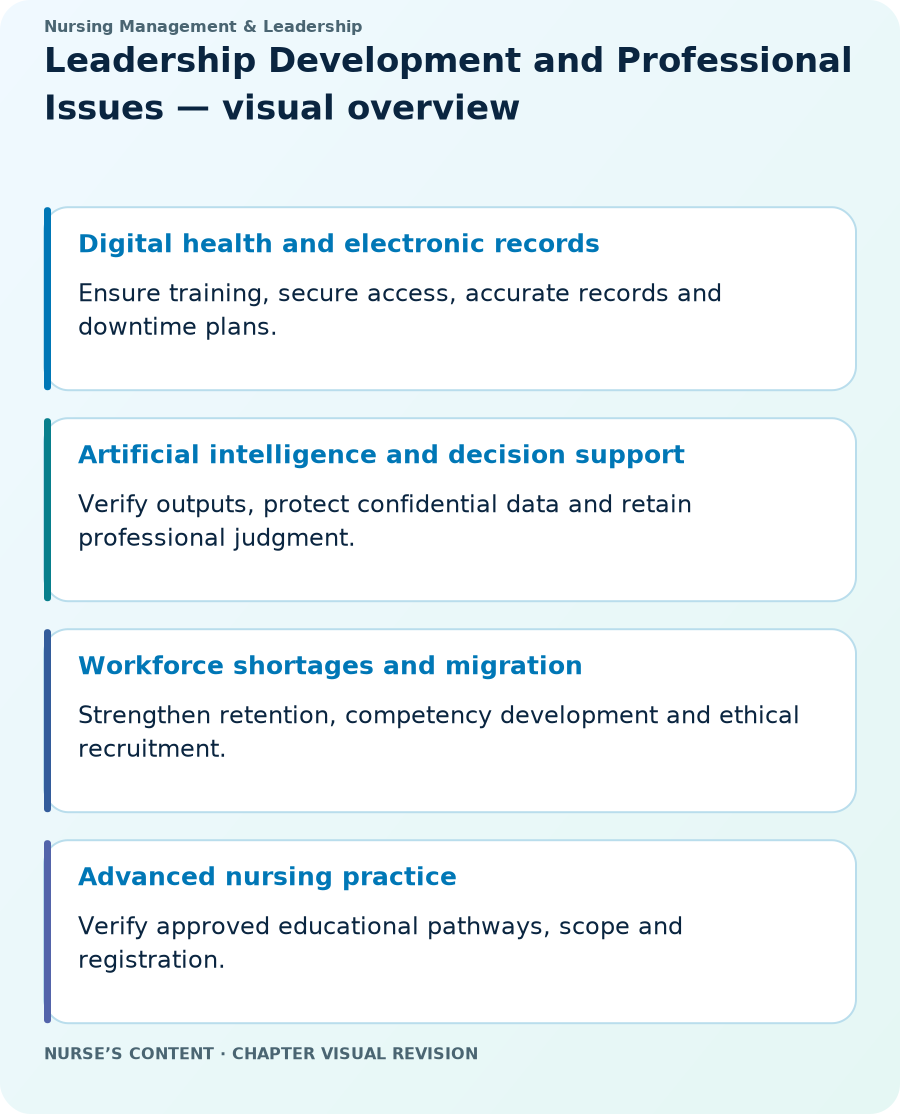
| Digital health and electronic records | Ensure training, secure access, accurate records and downtime plans. |
| Artificial intelligence and decision support | Verify outputs, protect confidential data and retain professional judgment. |
| Workforce shortages and migration | Strengthen retention, competency development and ethical recruitment. |
| Advanced nursing practice | Verify approved educational pathways, scope and registration. |
| Patient-centred and integrated care | Coordinate services across settings and support shared decisions. |
| Climate and disaster preparedness | Maintain contingency plans, occupational protection and continuity of essential services. |
7. Professional responsibilities
Maintain current knowledge and applicable registration, participate in audit and improvement, uphold confidentiality and ethics, advocate for safe practice, support colleagues and engage with professional organizations. A professional portfolio can include validated competencies, education records, project reports, reflective learning and career goals without exposing identifiable patient information.
8. Important Examination Questions
Long Answer Questions
- 1. Explain leadership development, motivation, mentoring and team building.
- 2. Discuss change management, stress and time management and emerging nursing issues.
Short Answer Questions
- 1. Lewin's change model.
- 2. Tuckman's team development.
- 3. Intrinsic and extrinsic motivation.
- 4. Mentoring versus preceptorship.
- 5. Professional portfolio.
- 6. Digital health challenges.
Very Short Answer Questions (with answers)
- 1. What is intrinsic motivation? — Motivation arising from internal interest or satisfaction.
- 2. What is coaching? — Support focused on a defined skill or performance goal.
- 3. What is CPD? — Continuing professional development.
9. Quick Revision
- • Leadership grows through learning, experience and feedback.
- • Successful change requires staff involvement and outcome measurement.
- • Safe work systems, professional development and ethical use of technology support sustainable care.
10. Conclusion
Leadership grows through learning, experience and feedback. Successful change requires staff involvement and outcome measurement. Safe work systems, professional development and ethical use of technology support sustainable care.
Chapter reference images