Nursing Foundation
Vital Signs and Health Assessment
Body temperature, pulse, respiration, blood pressure, oxygen saturation, pain assessment, general physical examination and recording of vital signs.
Open quizzes and study tools Download PDF
10. VITAL SIGNS AND HEALTH ASSESSMENT
1. Definition
Vital signs are measurable physiological indicators used to assess essential body functions and identify changes in health status.
2. Normal Adult Vital Signs
Approximate reference values for resting adults:
| Parameter | Typical value |
|---|---|
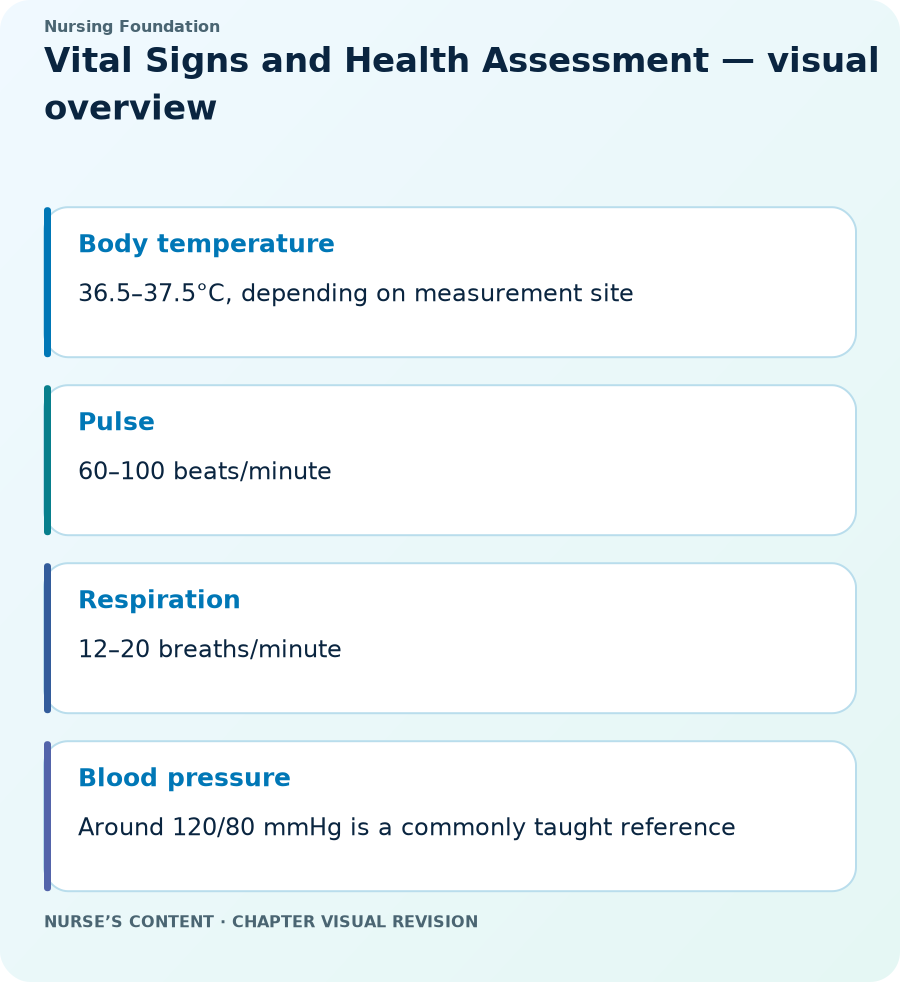
| Body temperature | 36.5–37.5°C, depending on measurement site |
| Pulse | 60–100 beats/minute |
| Respiration | 12–20 breaths/minute |
| Blood pressure | Around 120/80 mmHg is a commonly taught reference |
| SpO₂ | Commonly 95–100% at sea level |
| Pain | Assessed using an appropriate pain scale |
Normal values vary with age, clinical condition, altitude, medications and measurement methods.
3. Body Temperature
Temperature represents the balance between heat production and heat loss.
Measurement Sites
- Oral.
- Axillary.
- Tympanic.
- Temporal.
- Rectal, when appropriate.
Abnormalities
- Fever or pyrexia.
- Hyperthermia.
- Hypothermia.
Hypothermia generally refers to core temperature below 35°C.
Nursing Responsibilities
Measure using an appropriate device, select a suitable site, assess associated symptoms and document the measurement site.
4. Pulse
Pulse is the palpable pressure wave produced by cardiac contraction.
Pulse Sites
- Temporal.
- Carotid.
- Apical.
- Brachial.
- Radial.
- Femoral.
- Popliteal.
- Posterior tibial.
- Dorsalis pedis.
Characteristics
- Rate.
- Rhythm.
- Volume or amplitude.
- Equality where appropriate.
Tachycardia: Resting adult heart rate above 100/min.
Bradycardia: Resting adult heart rate below 60/min, interpreted in clinical context.
Pulse Procedure
Locate the artery, palpate with fingertips, assess rhythm and count the pulse. Count for a full minute when irregular or clinically indicated.
5. Respiration
Respiration involves ventilation and gas exchange.
Assess:
- Respiratory rate.
- Depth.
- Rhythm.
- Effort.
- Chest movement.
- Abnormal respiratory sounds.
Abnormalities
- Tachypnoea: Increased respiratory rate.
- Bradypnoea: Decreased respiratory rate.
- Apnoea: Absence of breathing.
- Dyspnoea: Subjective breathing difficulty.
- Orthopnoea: Breathlessness when lying flat.
6. Blood Pressure
Blood pressure is the force exerted by circulating blood against arterial walls.
- Systolic pressure: Pressure during ventricular contraction.
- Diastolic pressure: Pressure during ventricular relaxation.
Articles Required
- Validated sphygmomanometer.
- Appropriate-sized cuff.
- Stethoscope for manual measurement.
- Recording sheet.
Measurement Procedure
- Allow the patient to rest when circumstances permit.
- Position the patient with back and arm supported.
- Keep the cuff at heart level.
- Select the correct cuff size.
- Measure using the validated device and procedure.
- Repeat readings when indicated.
- Document the arm, position and result.
Hypertension should not ordinarily be diagnosed from one isolated routine reading.
7. Oxygen Saturation
SpO₂ is an estimate of arterial oxygen saturation obtained using a pulse oximeter.
Factors Affecting Readings
- Patient movement.
- Poor peripheral perfusion.
- Cold extremities.
- Nail coatings.
- Device limitations.
- Skin pigmentation-related measurement bias.
Assess symptoms and other clinical findings rather than relying on SpO₂ alone.
8. Pain Assessment
Pain is a personal sensory and emotional experience.
Pain Scales
- Numerical Rating Scale: 0–10.
- Visual Analogue Scale.
- Verbal Descriptor Scale.
- Faces Pain Scale.
- FLACC for appropriate non-verbal paediatric assessments.
9. General Physical Examination
Four Main Techniques
| Technique | Meaning |
|---|---|
| Inspection | Visual observation |
| Palpation | Examination using touch |
| Percussion | Tapping to assess underlying structures |
| Auscultation | Listening to body sounds |
For abdominal examination, inspection and auscultation generally precede percussion and palpation.
10. Head-to-Toe Assessment
- General appearance and consciousness.
- Head, eyes, ears, nose and throat.
- Respiratory system.
- Cardiovascular system.
- Abdomen.
- Skin integrity.
- Musculoskeletal system.
- Neurological status.
- Elimination needs.
- Pain and psychological status.
11. Recording and Reporting
Document date, time, measurements, relevant circumstances and interventions. Report significant deviations from baseline or signs of deterioration promptly.
Important Examination Questions
- Define vital signs and state normal adult values.
- Describe temperature and pulse measurement.
- Explain blood pressure measurement.
- Discuss respiratory assessment.
- Describe physical examination techniques.
- Explain pain assessment scales.
Conclusion
Accurate measurement, interpretation and documentation of vital signs are fundamental to early detection of patient deterioration and safe nursing practice.
Chapter reference images