Nursing Foundation
Perioperative Nursing Care
Preoperative assessment, preparation for surgery, informed consent, intraoperative nursing responsibilities, postoperative care and prevention of surgical complications.
Open quizzes and study tools Download PDF
CHAPTER 22 Perioperative Nursing Care
B.Sc. Nursing | Nursing Foundation I & II
Definition and phases
Perioperative nursing provides coordinated care before, during and after surgery: preoperative (decision/preparation to theatre transfer), intraoperative (entry into operating area through procedure and transfer to recovery), postoperative (recovery through rehabilitation/discharge). Purposes are safety, infection prevention, comfort, continuity and recovery.
Preoperative assessment and preparation
• Verify planned operation, identity, surgical site, allergies, medical/surgical and anaesthesia history, current medicines, relevant investigations and baseline observations.
• Assess airway/respiratory status, cardiovascular health, nutritional status, mobility, skin, infection risk, pain, anxiety and VTE risk. Communicate concerns to surgical/anaesthesia team.
• Confirm informed consent: the clinician responsible explains nature, risks, benefits and alternatives; nurse verifies documentation and escalates uncertainties. Do not sign on patient's behalf or substitute for required consent discussion.
• Follow individualized fasting and medication instructions from anaesthesia team. Avoid blanket prolonged fasting; clarify diabetes, anticoagulant and other medicine instructions. Prepare skin per protocol; clip hair only if necessary, avoid shaving with a razor. Remove or manage prostheses, valuables and cosmetics according to procedure.
• Teach postoperative breathing, mobility, pain reporting and equipment as appropriate; provide emotional support, prescribed prophylaxis and safe transfer with handover.
Intraoperative care
The scrub nurse maintains sterile field, organizes instruments and supplies, anticipates needs and participates in counts. The circulating nurse coordinates nonsterile activities, documentation, equipment, specimens and team communication. Support safe positioning, skin protection, asepsis, temperature maintenance and monitoring in collaboration with anaesthesia. Verify labels and surgical counts; promptly address discrepancies before closure according to policy.
Surgical safety checklist
| Phase | Focus |
|---|---|
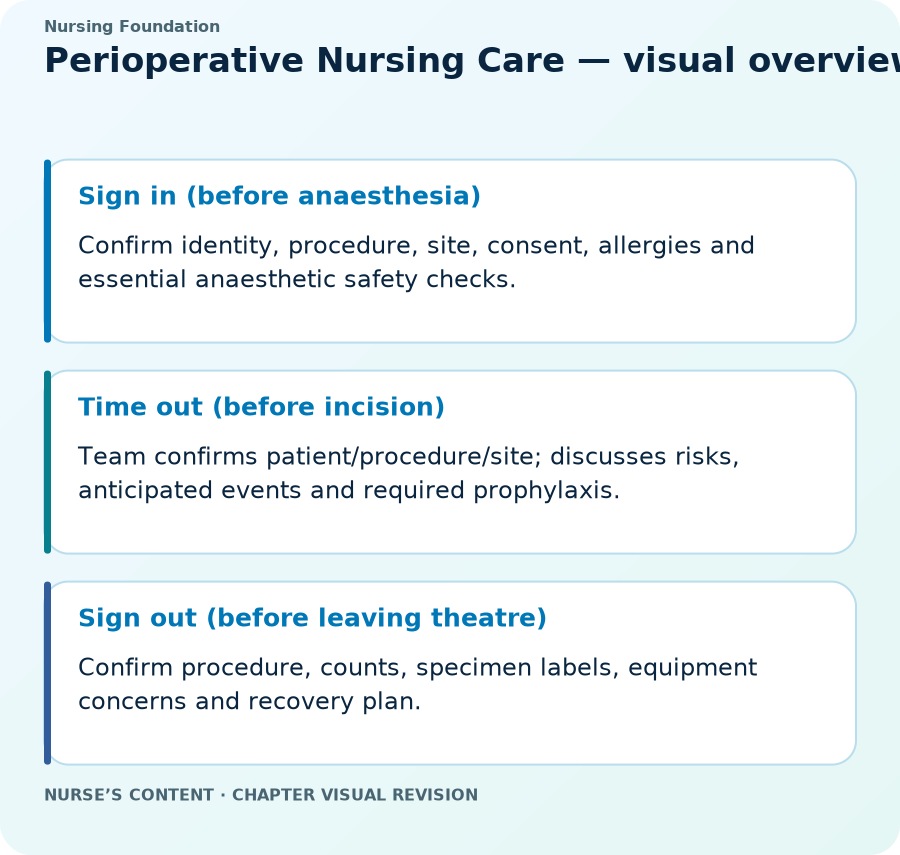
| Sign in (before anaesthesia) | Confirm identity, procedure, site, consent, allergies and essential anaesthetic safety checks. |
| Time out (before incision) | Team confirms patient/procedure/site; discusses risks, anticipated events and required prophylaxis. |
| Sign out (before leaving theatre) | Confirm procedure, counts, specimen labels, equipment concerns and recovery plan. |
Postoperative care
Receive SBAR handover (procedure, anaesthesia, blood loss, fluids, medicines, drains, risks). Assess airway, breathing, circulation, consciousness, vital signs, oxygenation, pain and nausea. Monitor bleeding, wound, drains, urine output and temperature. Maintain positioning as ordered and prescribed analgesia/fluids; monitor sedation and respiratory status. Support nutrition, breathing exercises and safe early mobilization according to plan. Discharge from recovery requires authorized criteria and assessment.
Complications and prevention
Airway obstruction, aspiration, hypoxia, haemorrhage/shock, infection, VTE, urinary retention, ileus, wound separation and delirium. Prevent through timely monitoring, asepsis, prophylaxis, mobilization, appropriate hydration and pain management. New severe breathlessness, hypotension, active bleeding, reduced consciousness or acute neurological change requires urgent escalation.
Exam revision
- 1. Describe preoperative assessment and preparation.
- 2. Explain scrub/circulating nurse roles and WHO surgical safety checklist.
- 3. Discuss postoperative assessment and complication prevention.
Reference
WHO. Surgical safety checklist and resources. https://www.who.int/teams/integrated-health-services/patient-safety/research/safe-surgery/tool-and-resources
Educational notes. Clinical skills require supervision, authorized orders and current facility protocols.
Chapter reference images