Nursing Foundation
Patient Safety and Infection Prevention
Medical asepsis, surgical asepsis, hand hygiene, standard precautions, transmission-based precautions, personal protective equipment, biomedical waste management and prevention of healthcare-associated infections.
Open quizzes and study tools Download PDF
09. PATIENT SAFETY AND INFECTION PREVENTION
1. Patient Safety
Patient safety refers to reducing preventable harm associated with healthcare.
Common Patient Safety Risks
- Medication errors.
- Falls.
- Healthcare-associated infections.
- Pressure injuries.
- Incorrect patient identification.
- Communication errors.
- Equipment-related injuries.
2. Infection
Infection occurs when microorganisms invade the body and multiply, potentially causing tissue damage or disease.
3. Chain of Infection
- Infectious agent.
- Reservoir.
- Portal of exit.
- Mode of transmission.
- Portal of entry.
- Susceptible host.
Breaking any link can reduce infection transmission.
4. Types of Asepsis
| Medical asepsis | Surgical asepsis |
|---|---|
| Clean technique | Sterile technique |
| Reduces microorganisms and their spread | Maintains a field or articles free of viable microorganisms |
| Routine hygiene and selected patient care | Invasive procedures requiring sterility |
5. Important Terminology
- Cleaning: Physical removal of dirt and organic material.
- Disinfection: Elimination of many pathogenic microorganisms from inanimate objects.
- Sterilization: Elimination of all viable microorganisms, including bacterial spores.
- Antisepsis: Use of appropriate antimicrobial agents on living tissue.
6. Hand Hygiene
The WHO Five Moments for Hand Hygiene are:
- Before touching a patient.
- Before a clean or aseptic procedure.
- After body-fluid exposure risk.
- After touching a patient.
- After touching patient surroundings.
Duration
- Alcohol-based hand rub: Approximately 20–30 seconds.
- Soap and water: Approximately 40–60 seconds using the healthcare handwashing technique.
Use soap and water when hands are visibly soiled and in other situations specified by infection-control protocols.
Gloves do not replace hand hygiene.
7. Standard Precautions
Apply to every patient, regardless of known infection status.
- Hand hygiene.
- Risk-based PPE use.
- Respiratory hygiene.
- Safe injection practices.
- Sharps safety.
- Environmental cleaning.
- Safe handling of linen and waste.
- Appropriate equipment reprocessing.
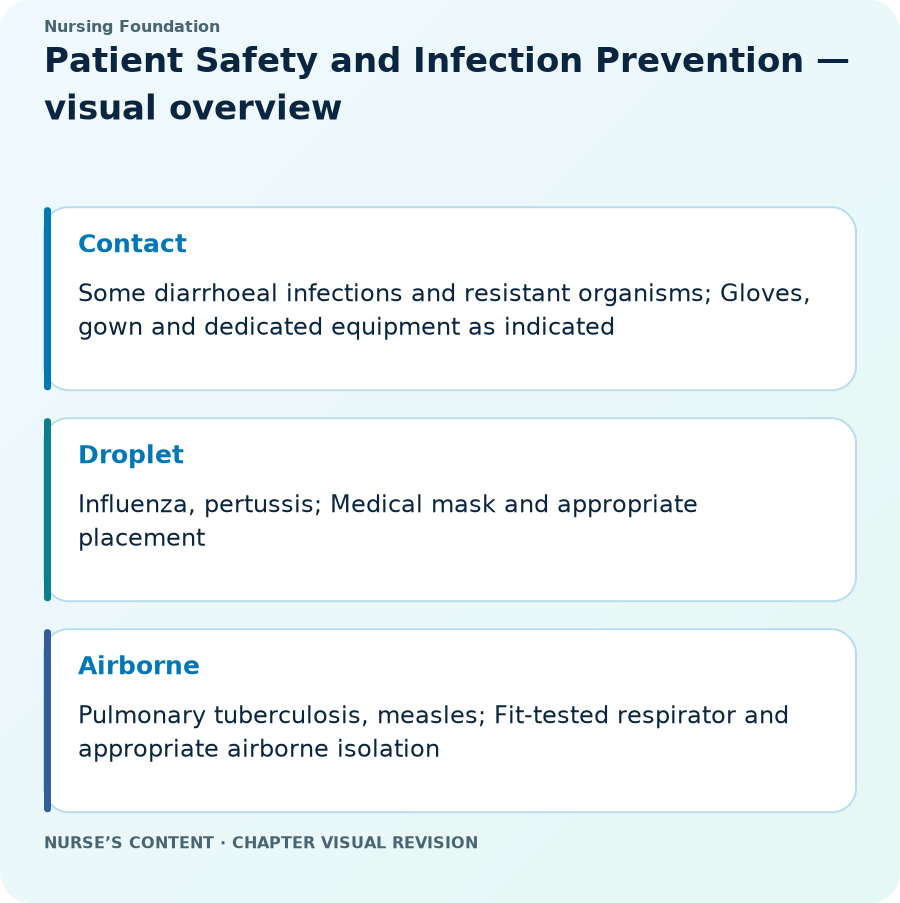
8. Transmission-Based Precautions
| Precaution | Examples | Measures |
|---|---|---|
| Contact | Some diarrhoeal infections and resistant organisms | Gloves, gown and dedicated equipment as indicated |
| Droplet | Influenza, pertussis | Medical mask and appropriate placement |
| Airborne | Pulmonary tuberculosis, measles | Fit-tested respirator and appropriate airborne isolation |
Additional precautions depend on the infectious agent and institutional policy.
9. Personal Protective Equipment (PPE)
- Gloves.
- Gown or apron.
- Medical mask.
- Respirator.
- Goggles.
- Face shield.
Common Donning Sequence
Hand hygiene → Gown → Mask or respirator → Eye protection → Gloves.
Remove contaminated PPE safely according to the applicable protocol and perform hand hygiene.
10. Biomedical Waste Management in India
| Colour | Waste examples |
|---|---|
| Yellow | Anatomical waste, blood-soiled dressings, selected expired medicines |
| Red | Contaminated recyclable plastics, such as tubing, gloves and needle-free syringes |
| White translucent | Contaminated metal sharps, including needles and scalpels |
| Blue | Contaminated glassware and metallic body implants |
Segregate waste at the point of generation using authorized containers and applicable rules.
11. Healthcare-Associated Infections (HAIs)
Infections associated with receiving healthcare.
Examples:
- Catheter-associated urinary tract infection (CAUTI).
- Surgical site infection (SSI).
- Central line-associated bloodstream infection (CLABSI).
- Ventilator-associated pneumonia (VAP).
Prevention
- Hand hygiene.
- Appropriate aseptic technique.
- Device insertion only when indicated.
- Daily review of invasive device necessity.
- Environmental cleaning.
- Safe medication administration.
- Appropriate antimicrobial use.
- Infection surveillance.
12. Needle-Stick Injury Management
- Wash the affected skin with soap and water.
- Flush exposed mucous membranes with water.
- Report the exposure immediately.
- Obtain urgent occupational health assessment.
- Follow exposure testing and post-exposure prophylaxis protocols.
Do not squeeze the wound aggressively or apply corrosive chemicals.
Important Examination Questions
- Explain the chain of infection.
- Differentiate medical and surgical asepsis.
- Describe the Five Moments for Hand Hygiene.
- Explain standard and transmission-based precautions.
- Describe biomedical waste segregation.
- Explain prevention of healthcare-associated infections.
Conclusion
Infection prevention and patient safety require consistent application of standard precautions, hand hygiene, aseptic practices, appropriate waste management and safe clinical care.
Chapter reference images