Nursing Foundation
Oxygenation and Respiratory Care
Oxygen therapy, oxygen delivery devices, nebulisation, suctioning, deep breathing exercises, coughing techniques, chest physiotherapy and respiratory nursing care.
Open quizzes and study tools Download PDF
CHAPTER 15 Oxygenation and Respiratory Care
B.Sc. Nursing | Nursing Foundation I & II
Meaning and assessment
Oxygenation provides oxygen to blood and tissues. Ventilation moves air, diffusion exchanges gases, perfusion supplies blood and oxygen transport delivers oxygen to cells. Causes of impairment include airway obstruction, respiratory/cardiac disease, anaemia, immobility and neuromuscular weakness. Assess respiratory rate, effort, breath sounds, SpO₂, mental status and work of breathing. Cyanosis may be a late sign; escalate acute distress immediately.
Oxygen therapy and devices
Oxygen is administered to an individualized target, under authorized orders or emergency protocol. Typical adult devices:
| Device | Usual flow and delivery |
|---|---|
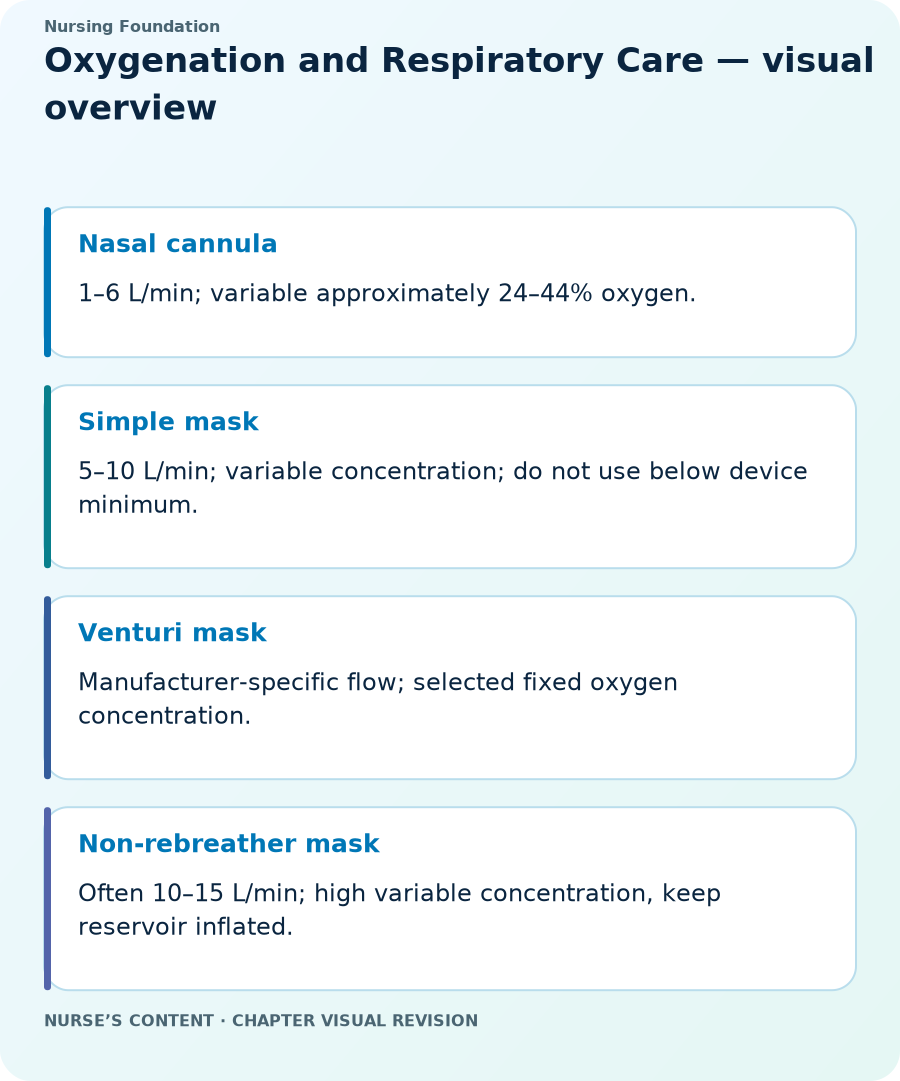
| Nasal cannula | 1–6 L/min; variable approximately 24–44% oxygen. |
| Simple mask | 5–10 L/min; variable concentration; do not use below device minimum. |
| Venturi mask | Manufacturer-specific flow; selected fixed oxygen concentration. |
| Non-rebreather mask | Often 10–15 L/min; high variable concentration, keep reservoir inflated. |
| High-flow nasal cannula | Specialized heated humidified system; prescribed settings. |
BTS guidance commonly targets 94–98% in many acutely ill adults and 88–92% in those at risk of hypercapnic respiratory failure pending assessment. Local/individual targets take precedence. Verify supply and device, explain, apply correctly, titrate within authorized protocol, monitor saturation and response, inspect pressure areas and record settings. Oxygen supports combustion: no smoking/flames, secure cylinders and use compatible products.
Nebulization
Converts prescribed medication into aerosol. Verify medicine, dose and device, assess breathing, position upright if possible, administer per manufacturer/order, monitor response/adverse effects and clean or dispose of equipment correctly. Follow infection precautions for aerosol-generating procedures where indicated.
Suctioning
Removes secretions when cough is inadequate. Routes include oral, nasopharyngeal, endotracheal and tracheostomy. Perform only when indicated and trained; assess oxygenation, use appropriate catheter and suction settings, sterile technique for open artificial-airway suction, preoxygenate when indicated, minimize pass duration (generally no more than 15 seconds for artificial-airway suction in adults), monitor heart rate/SpO₂ and stop if deterioration. Do not routinely instill saline into artificial airways.
Breathing, coughing and chest physiotherapy
Encourage controlled deep breaths, effective cough/huff cough and rest; support incision when appropriate. Incentive spirometry may be used when prescribed, combined with mobilization and analgesia. Chest physiotherapy includes selected postural drainage, percussion, vibration and breathing techniques; assess indications and contraindications with physiotherapy/clinical team.
Nursing responsibilities and exam revision
Maintain airway, assess changes, support positioning/clearance, administer authorized treatment, prevent infection and escalate deterioration. Document device, flow, target and response.
- 1. Describe oxygen delivery devices and oxygen safety.
- 2. Explain nebulization, suctioning and airway clearance.
- 3. Discuss respiratory assessment and nursing responsibilities.
Reference
British Thoracic Society. Guideline for oxygen use in adults. https://thorax.bmj.com/content/72/Suppl_1/ii1
Educational notes. Clinical skills require supervision, authorized orders and current facility protocols.
Chapter reference images