Nursing Foundation
Fluid, Electrolyte and Acid–Base Balance
Body fluid compartments, fluid balance, dehydration, fluid overload, electrolyte imbalances, intravenous fluid therapy and acid–base disturbances.
Open quizzes and study tools Download PDF
CHAPTER 21 Fluid, Electrolyte and Acid–Base Balance
B.Sc. Nursing | Nursing Foundation I & II
Body fluids and regulation
Total body water is approximately 50–60% of adult body weight, varying with age and composition. Intracellular fluid is roughly two-thirds of body water; extracellular fluid one-third, principally interstitial fluid and plasma. Diffusion: solute moves down concentration gradient; osmosis: water movement across selectively permeable membrane; filtration: pressure-driven movement; active transport: energy-dependent transport. Kidneys, ADH, thirst, RAAS/aldosterone and natriuretic peptides regulate fluid balance.
Fluid imbalance
Volume deficit may follow vomiting, diarrhoea, bleeding, burns, sweating or low intake; signs include thirst, dry mucosa, tachycardia, reduced output, dizziness and hypotension. Dehydration specifically means water deficit and may coexist with volume depletion. Excess volume occurs with heart/kidney disease or excessive fluids; signs include oedema, weight gain, dyspnoea, crackles and raised venous pressure. Assess perfusion, respiratory status, daily weights, intake/output and clinical history; escalate deterioration.
Electrolyte reference ranges and problems
| Electrolyte | Typical adult laboratory range and abnormality |
|---|---|
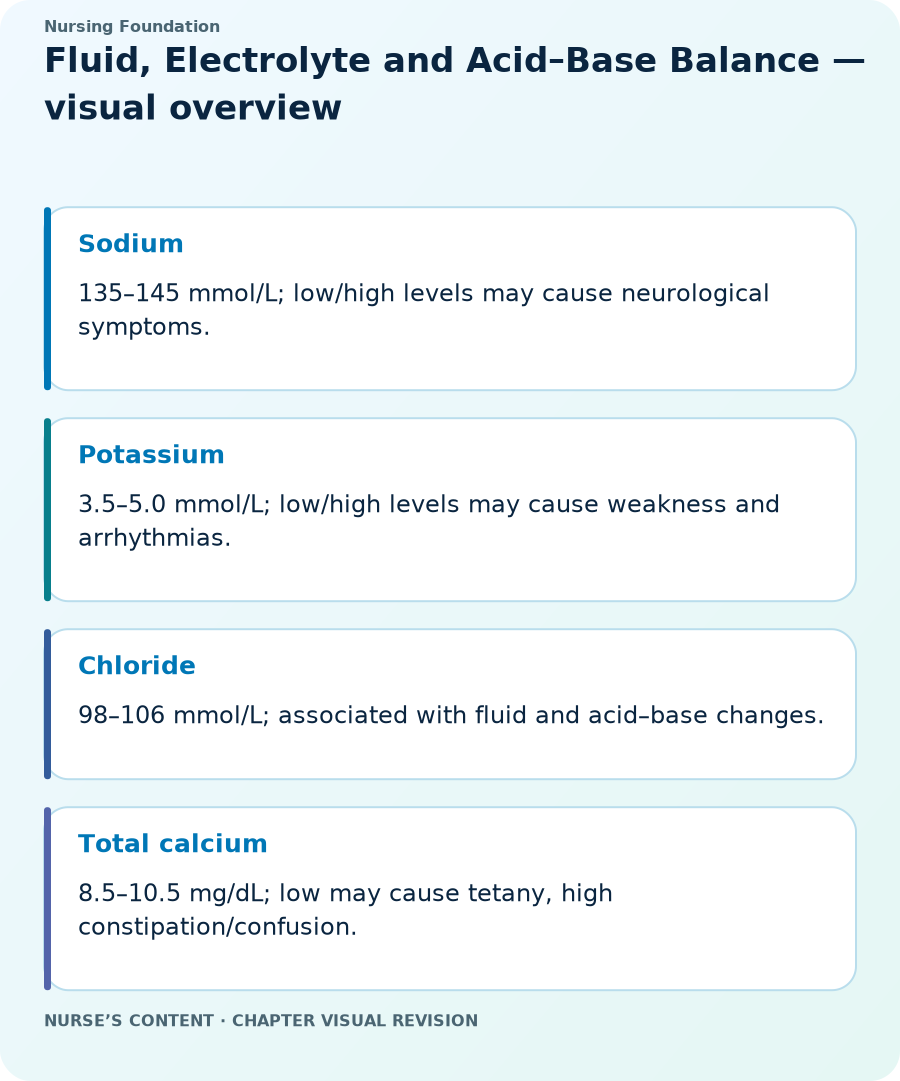
| Sodium | 135–145 mmol/L; low/high levels may cause neurological symptoms. |
| Potassium | 3.5–5.0 mmol/L; low/high levels may cause weakness and arrhythmias. |
| Chloride | 98–106 mmol/L; associated with fluid and acid–base changes. |
| Total calcium | 8.5–10.5 mg/dL; low may cause tetany, high constipation/confusion. |
| Magnesium | 1.7–2.2 mg/dL; low may cause tremor and arrhythmias. |
| Phosphate | 2.5–4.5 mg/dL; severe low levels can cause muscle weakness. |
Use local ranges, assess trends, ECG and symptoms where indicated. Electrolyte replacement requires authorized prescription and monitoring; never administer potassium chloride as direct IV push.
Intravenous fluids and complications
| Solution | Characteristics |
|---|---|
| 0.9% normal saline | Isotonic crystalloid. |
| Ringer's lactate | Balanced, approximately isotonic crystalloid. |
| 0.45% sodium chloride | Hypotonic crystalloid. |
| 3% sodium chloride | Hypertonic; specialized indication and monitoring. |
| 5% dextrose in water | Approximately isotonic in bag; acts as free water after glucose metabolism. |
| Albumin | Colloid used for selected indications. |
Verify prescription, solution, rate, access, compatibility and pump settings. Monitor for infiltration (non-vesicant leakage), extravasation (vesicant leakage), phlebitis, infection, overload and electrolyte changes. Stop suspected extravasation and follow drug-specific protocol; do not flush. Assess IV site and balance regularly.
Acid–base balance and ABG
Typical arterial pH 7.35–7.45; PaCO₂ 35–45 mmHg; HCO₃⁻ 22–26 mmol/L. Respiratory disturbances primarily change PaCO₂; metabolic disturbances primarily change bicarbonate.
| Disorder | Primary change; common cause |
|---|---|
| Respiratory acidosis | PaCO₂ increased; hypoventilation. |
| Respiratory alkalosis | PaCO₂ decreased; hyperventilation. |
| Metabolic acidosis | HCO₃⁻ decreased; ketoacidosis, selected renal/GI causes. |
| Metabolic alkalosis | HCO₃⁻ increased; vomiting, selected diuretics. |
Interpret pH, PaCO₂ and bicarbonate, identify primary process, evaluate expected compensation and mixed disorders with clinical context. Example: pH 7.28, PaCO₂ 55, HCO₃⁻ 25 suggests primary respiratory acidosis. Treatment targets the underlying cause and requires clinical assessment.
Exam revision
- 1. Explain fluid compartments and fluid balance.
- 2. Describe electrolyte imbalances and IV solutions.
- 3. Classify acid–base disorders and explain basic ABG interpretation.
Educational notes. Clinical skills require supervision, authorized orders and current facility protocols.
Chapter reference images