Nursing Foundation
Elimination Needs
Normal bowel and urinary elimination, bedpan and urinal use, catheter care, urinary catheterisation, bowel care, enema administration, stoma care and management of elimination problems.
Open quizzes and study tools Download PDF
CHAPTER 14 Elimination Needs
B.Sc. Nursing | Nursing Foundation I & II
Normal elimination and factors
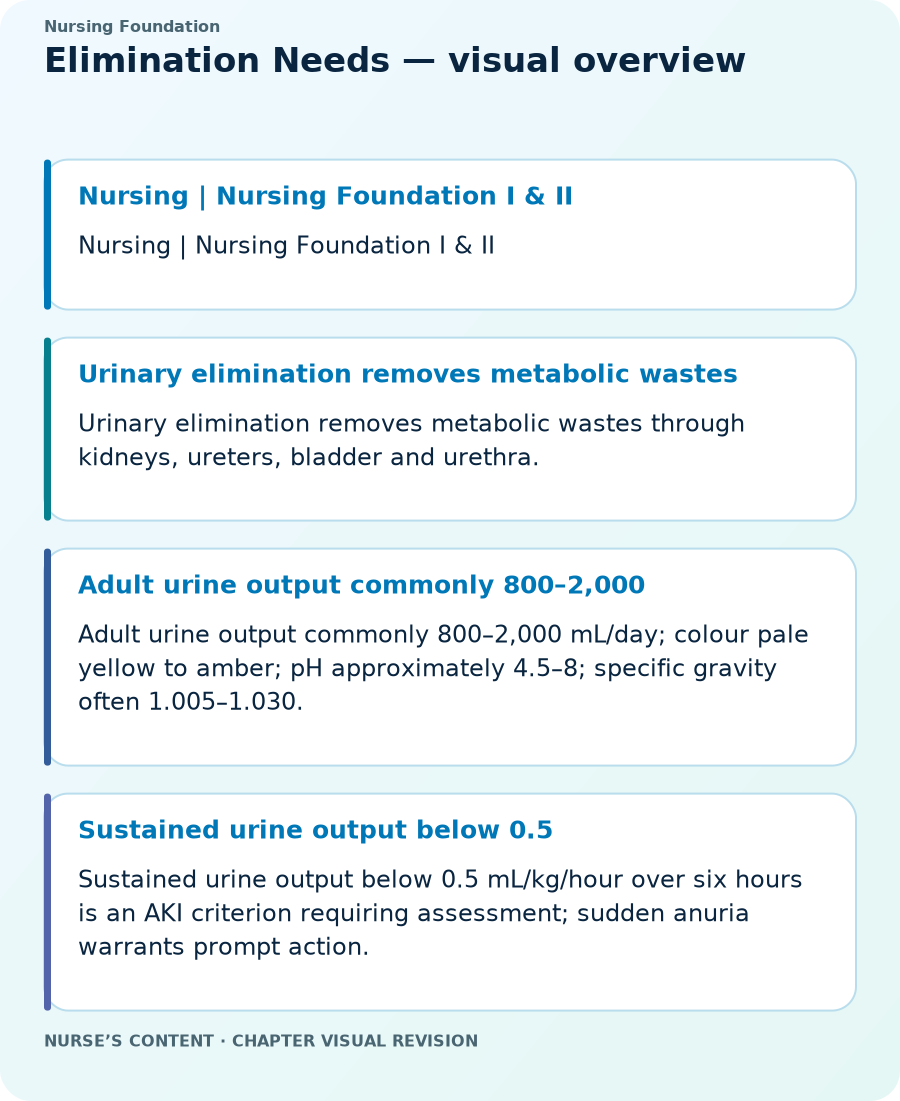
Urinary elimination removes metabolic wastes through kidneys, ureters, bladder and urethra. Adult urine output commonly 800–2,000 mL/day; colour pale yellow to amber; pH approximately 4.5–8; specific gravity often 1.005–1.030. Values vary. Sustained urine output below 0.5 mL/kg/hour over six hours is an AKI criterion requiring assessment; sudden anuria warrants prompt action. Bowel frequency varies individually. Factors include diet, fluids, mobility, age, medication, neurological disease, surgery, privacy and stress.
Common elimination problems
Dysuria: painful urination; polyuria: excessive urine volume (often >3 L/day in adults); oliguria: low output; nocturia: waking to void; haematuria: blood in urine; retention: inadequate emptying; incontinence: involuntary leakage. Bowel problems include constipation, diarrhoea, faecal impaction, incontinence, flatulence and GI bleeding. Assess pattern, hydration, discomfort, medicines and signs of acute disease; follow prescribed management.
Bedpan and urinal use
Explain, offer privacy, assist safe positioning, provide device and call bell, measure/observe output if needed, clean perineum, perform hand hygiene, reprocess equipment and record findings.
Urinary catheterization
Types: intermittent, indwelling Foley and suprapubic drainage. Indications include acute retention, accurate output monitoring in selected critically ill patients and selected operations; avoid for convenience or uncomplicated incontinence. Articles: appropriate sterile catheter, lubricant, gloves, drape, antiseptic/cleansing materials per policy, prescribed balloon fluid and closed drainage system. Verify indication, identity, consent and allergies; maintain sterile technique. Insert gently without force following anatomy-specific procedure; confirm bladder placement and urine drainage before inflating balloon per manufacturer. Stop and escalate resistance, pain, bleeding or suspected urethral trauma. Secure catheter, maintain closed drainage and document indication, size, balloon volume and findings. Students require supervision.
Catheter care
Keep bag below bladder and off floor; avoid kinks/disconnections; routine meatal hygiene; collect specimens aseptically from sampling port, not the bag for culture. Review necessity daily and remove promptly when no longer indicated. Monitor for obstruction, leakage, discomfort and symptomatic infection.
Bowel care and enema
Encourage appropriate fluids, fibre, activity and regular toileting; assess restrictions and underlying causes. An enema introduces prescribed fluid into rectum for cleansing, retention, medication or diagnostic purpose. Verify indication, product, contraindications and order; provide privacy, use prescribed position and safe insertion depth/rate according to device/policy. Do not force insertion or continue with severe pain, resistance or bleeding. Suspected obstruction, perforation or recent rectal surgery requires clinical review.
Stoma care
Colostomy drains colon, ileostomy drains small bowel, urostomy drains urine. Assess colour (usually pink/red and moist), output, surrounding skin and appliance fit. Empty/replace pouch, protect skin, monitor fluid balance and teach self-care. Dusky/black stoma, severe pain, unexpected absent output or signs of dehydration require urgent assessment.
Exam revision
- 1. Explain normal and abnormal urinary/bowel elimination.
- 2. Describe catheterization, CAUTI prevention and enema principles.
- 3. Discuss stoma care and nursing responsibilities.
Reference
CDC. CAUTI prevention. https://www.cdc.gov/uti/hcp/clinical-safety/
Educational notes. Clinical skills require supervision, authorized orders and current facility protocols.
Chapter reference images