Midwifery & Obstetrical Nursing
High-Risk Newborn and Neonatal Emergencies
Prematurity, low birth weight, birth asphyxia, neonatal jaundice, neonatal sepsis, respiratory distress, hypothermia, hypoglycaemia and neonatal intensive care.
Open quizzes and study tools Download PDF
CHAPTER 22 / MIDWIFERY AND OBSTETRICAL NURSING 22. High-Risk Newborn and Neonatal Emergencies
1. Risk categories and assessment
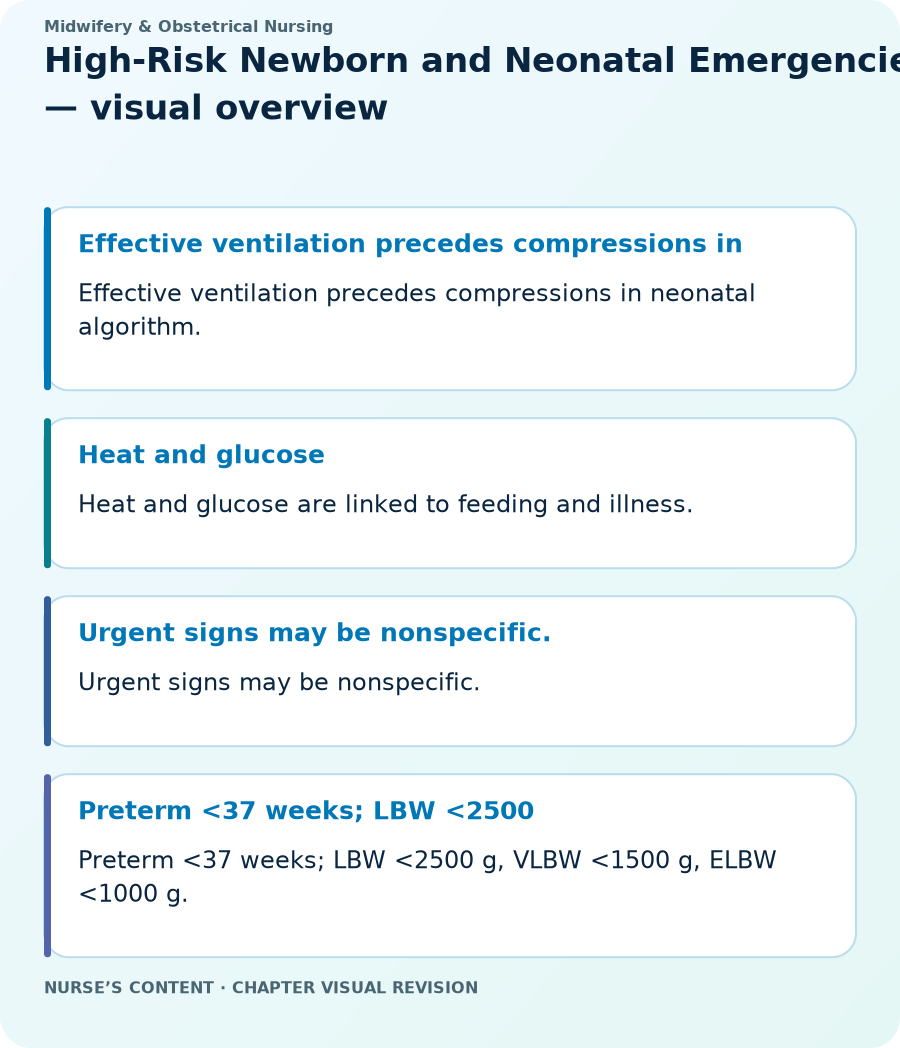
Preterm <37 weeks; LBW <2500 g, VLBW <1500 g, ELBW <1000 g. Assess gestation, birth complications, maternal infection/diabetes, size, breathing, glucose, temperature, feeding, jaundice and perfusion. Conditions may be subtle; poor feeding, lethargy, apnoea or temperature instability warrant prompt evaluation.
Prematurity and LBW
Definition and pathophysiology: Immature lung, immune, temperature, feeding and metabolic function.
Clinical features and investigations: Apnoea, RDS, hypothermia, hypoglycaemia, poor growth and infection risk.
Management and nursing care: Kangaroo mother care as early as appropriate with monitoring, breast milk support, incubator/warmer if indicated, respiratory and glucose care, neurodevelopmental/hearing/eye follow-up.
Birth asphyxia and neonatal resuscitation
Definition and pathophysiology: Inadequate gas exchange at birth may cause hypoxic-ischaemic encephalopathy.
Clinical features and investigations: Apnoea/gasping, bradycardia, reduced tone; assess HR and effective ventilation.
Management and nursing care: Trained neonatal algorithm: warm, position airway, dry/stimulate as indicated, start PPV promptly if apnoea/gasping or HR <100 after initial steps. Correct ventilation; if HR <60 despite 30 s effective PPV, coordinated 3:1 chest compressions/ventilation per protocol. Specialist postresuscitation monitoring; therapeutic hypothermia selected cases only.
Neonatal jaundice
Definition and pathophysiology: Unconjugated bilirubin accumulation due to physiological transition, haemolysis or other conditions; conjugated jaundice may indicate cholestasis.
Clinical features and investigations: Jaundice first 24 h or marked/progressive jaundice urgent; bilirubin age in hours and risk-specific assessment.
Management and nursing care: Feeding support, prescribed phototherapy with eye protection/temperature and hydration monitoring, selected exchange transfusion. Pale stools/dark urine need cholestasis evaluation; sunlight not substitute.
Neonatal sepsis and RDS
Definition and pathophysiology: Infection may be early/late; RDS commonly surfactant deficiency in premature lung.
Clinical features and investigations: Sepsis: poor feed, unstable temperature, lethargy, respiratory/apnoea; RDS: grunting, tachypnoea, retractions, hypoxaemia.
Management and nursing care: Prompt neonatal assessment/cultures and prescribed antibiotics when sepsis suspected; CPAP/oxygen/surfactant and ventilation as indicated for RDS; serial monitoring and asepsis.
Hypothermia and hypoglycaemia
Definition and pathophysiology: Heat loss and immature metabolic control common in small/sick newborns; maternal diabetes increases glucose risk.
Clinical features and investigations: Temperature <36.5°C indicates low temperature; hypoglycaemia may cause jitteriness, poor feeding, apnoea/seizure or no symptoms; thresholds depend on age/risk/protocol.
Management and nursing care: Warm safely and evaluate causes, monitor glucose in at-risk infants, early feeding when safe, prescribed dextrose gel/IV glucose where indicated. Symptomatic or persistent abnormalities urgent; do not delay care awaiting routine checks.
2. NICU responsibilities
Cardiorespiratory monitoring, prescribed oxygen targets and ventilation, incubator/skin-to-skin thermal care, accurately measured feeds/fluids and medications, infection prevention, pain assessment, developmental support and parents' involvement. Document trends, procedures and escalation. Maintain discharge readiness, feeding/growth plan and community/specialist follow-up.
3. Important Examination Questions
Long Answer Questions
- 1. Discuss high-risk newborn care and neonatal resuscitation.
Short Answer Questions
- 1. Explain jaundice/phototherapy
- 2. discuss RDS, sepsis and hypoglycaemia
- 3. define prematurity/LBW.
Very Short Answer Questions (with answers)
- 1. Neonatal resuscitation compression:ventilation ratio? — 3:1 when indicated.
- 2. Is normal newborn bilirubin threshold one fixed value? — No, age/gestation/risk specific.
4. Quick Revision
- • Effective ventilation precedes compressions in neonatal algorithm.
- • Heat and glucose are linked to feeding and illness.
- • Urgent signs may be nonspecific.
5. Conclusion
Effective ventilation precedes compressions in neonatal algorithm. Heat and glucose are linked to feeding and illness. Urgent signs may be nonspecific.
Chapter reference images