Midwifery & Obstetrical Nursing
Physiology and Management of Lactation
Breast anatomy, hormonal regulation of lactation, colostrum, breast milk composition, initiation of breastfeeding, positioning, attachment, exclusive breastfeeding and management of breastfeeding problems.
Open quizzes and study tools Download PDF
CHAPTER 20 / MIDWIFERY AND OBSTETRICAL NURSING 20. Physiology and Management of Lactation
1. Breast anatomy and hormones
Mammary lobules contain alveoli with milk-producing epithelial cells and myoepithelial cells surrounding them; ducts transport milk to nipple. Pregnancy oestrogen/progesterone support gland development. After placental delivery falling progesterone enables increased milk secretion (lactogenesis II). Suckling stimulates prolactin (milk synthesis) and oxytocin (milk ejection/let-down). Frequent effective milk removal maintains supply; stress/pain may affect let-down. Supply depends on transfer and removal, not breast size.
2. Milk and breastfeeding recommendations
Colostrum early concentrated milk contains immune and nutritional factors; transitional milk follows, mature milk adapts over time and contains water, lactose, fat, proteins, vitamins/minerals and bioactive factors. WHO recommends breastfeeding within first hour when stable, exclusive for six months, appropriate complementary foods at six months and continued breastfeeding to two years or beyond. Exclusive allows indicated medications, ORS and vitamin/mineral drops. Avoid prelacteal feeds unless medically indicated.
3. Positioning and attachment
Support mother comfortably, baby close, body/head aligned, nose near nipple, allow wide mouth and deep latch, chin touching breast, rounded cheeks and audible swallowing. Signs of effective feeding include comfortable latch, milk transfer, age-appropriate output and weight trend. Common positions cradle, cross-cradle, football and side-lying when safely supported; avoid unsafe sleep after side-lying feeds. Feed responsively day and night, avoid rigid time limits.
4. Common problems
| Problem | Nursing management |
|---|---|
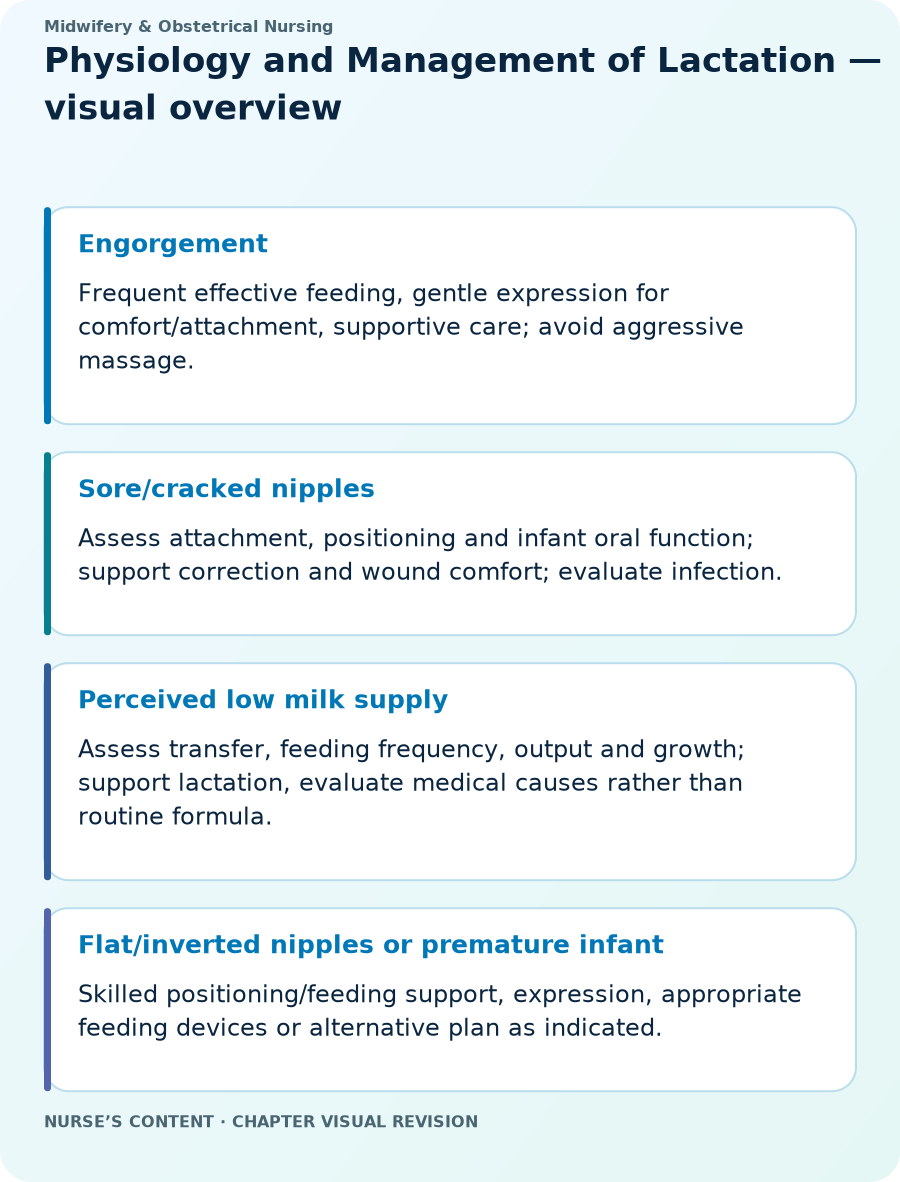
| Engorgement | Frequent effective feeding, gentle expression for comfort/attachment, supportive care; avoid aggressive massage. |
| Sore/cracked nipples | Assess attachment, positioning and infant oral function; support correction and wound comfort; evaluate infection. |
| Perceived low milk supply | Assess transfer, feeding frequency, output and growth; support lactation, evaluate medical causes rather than routine formula. |
| Mastitis spectrum | Painful focal swelling, possible fever/systemic symptoms; seek clinical assessment, continue physiological milk removal as advised, avoid excessive pumping/deep massage; prescribed treatment if indicated. |
| Flat/inverted nipples or premature infant | Skilled positioning/feeding support, expression, appropriate feeding devices or alternative plan as indicated. |
5. Nursing responsibilities
Observe actual feed with consent, explain milk expression/storage according to local guidance and infant needs, support mothers with caesarean/prematurity and individualized feeding plans; safe formula preparation if chosen/needed. Certain medications or infections require specialist assessment, not blanket prohibition. Monitor neonatal jaundice, poor output, dehydration or inadequate weight gain, refer promptly. Respect informed feeding decisions without guilt.
6. Important Examination Questions
Long Answer Questions
- 1. Describe physiology of lactation and breastfeeding technique and management of problems.
Short Answer Questions
- 1. Explain colostrum
- 2. differentiate prolactin and oxytocin
- 3. describe exclusive breastfeeding.
Very Short Answer Questions (with answers)
- 1. Hormone responsible for milk ejection? — Oxytocin.
- 2. When start complementary feeding? — Around six months.
7. Quick Revision
- • Effective milk removal supports supply.
- • Assess latch and growth, not assumptions.
- • Support the mother's informed feeding choice.
8. Conclusion
Effective milk removal supports supply. Assess latch and growth, not assumptions. Support the mother's informed feeding choice.
Chapter reference images