Midwifery & Obstetrical Nursing
Postpartum Complications
Postpartum haemorrhage, puerperal sepsis, retained placental tissue, thromboembolic complications, postpartum hypertension, urinary complications and postpartum mental health conditions.
Open quizzes and study tools Download PDF
CHAPTER 19 / MIDWIFERY AND OBSTETRICAL NURSING 19. Postpartum Complications
1. Postpartum haemorrhage (PPH)
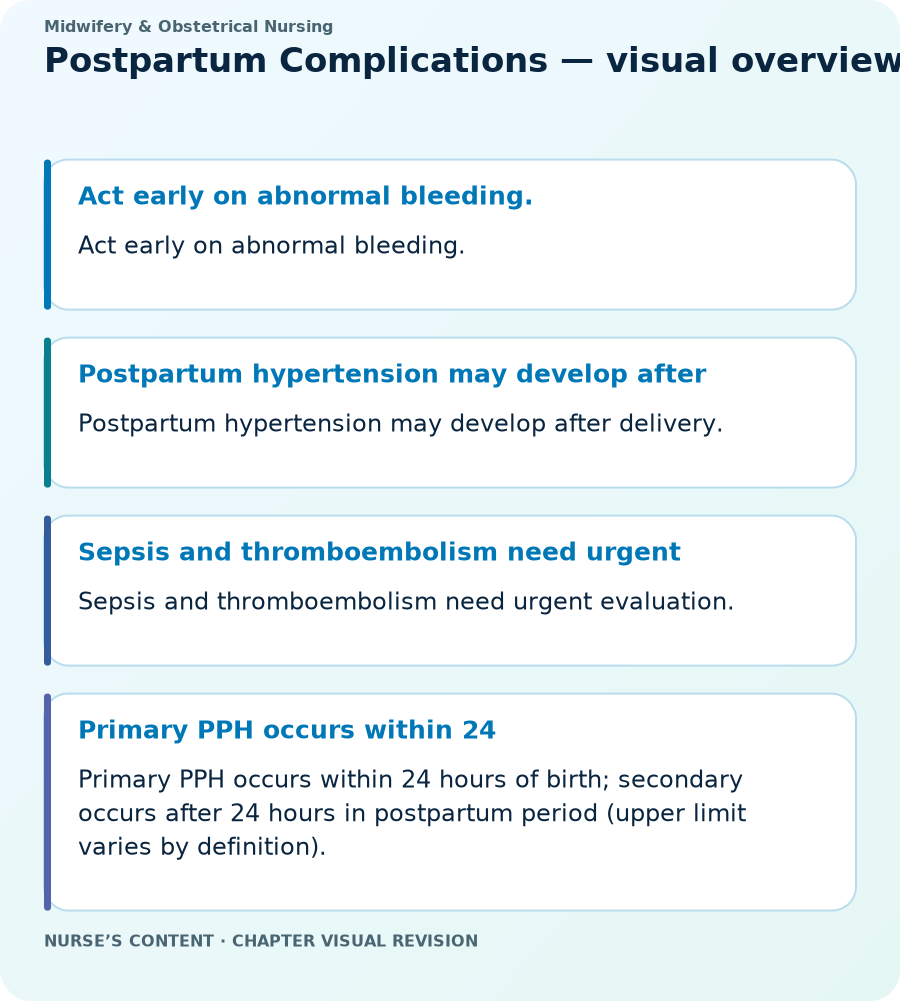
Primary PPH occurs within 24 hours of birth; secondary occurs after 24 hours in postpartum period (upper limit varies by definition). Traditional threshold ≥500 mL, severe ≥1000 mL; WHO 2025 recommends activating treatment at measured ≥300 mL plus abnormal haemodynamic sign or ≥500 mL, and earlier when clinically concerning. Four Ts: Tone uterine atony; Trauma tears/rupture/inversion; Tissue retained placenta/membranes; Thrombin coagulation disorder. Assess measured bleeding, pulse/BP, perfusion, fundal tone, pain and consciousness; concealed bleeding possible.
2. Emergency PPH response (WHO approach)
Activate obstetric emergency team, ABC assessment, quantify blood loss, obtain IV access and blood investigations, monitor maternal vitals, urine and fetal/newborn support as appropriate. First-response bundle includes uterine Massage for atony, Oxytocic/uterotonic drugs, Tranexamic acid (early, within 3 h of birth when indicated), IV fluids, Vaginal/genital tract examination by authorized clinician and Escalation (MOTIVE). Use prescribed agents and doses/protocol; avoid ergometrine with hypertensive disorders and carboprost in asthma where contraindicated. Prepare blood products, balloon tamponade or surgery by specialist if ongoing bleeding. Never wait for exact measured threshold when unstable; monitor for shock/coagulopathy.
Puerperal sepsis
Definition and pathophysiology: Genital tract or other postpartum infection with possible organ dysfunction.
Clinical features and investigations: Fever, uterine tenderness, foul lochia, wound symptoms, tachycardia, hypotension/confusion; cultures and labs as indicated.
Management and nursing care: Timely sepsis assessment, prescribed antimicrobials, source control, fluids adjusted to condition and monitoring; infection prevention and urgent referral.
Retained placental tissue and subinvolution
Definition and pathophysiology: Placental fragments or impaired uterine recovery may prolong bleeding and infection.
Clinical features and investigations: Persistent/heavy bleeding, enlarged/tender uterus, fever; ultrasound/clinical assessment.
Management and nursing care: Urgent evaluation, prescribed treatment or evacuation by trained clinician; monitor bleeding and infection.
Thromboembolism
Definition and pathophysiology: Postpartum hypercoagulability increases DVT/PE risk.
Clinical features and investigations: Unilateral leg swelling/pain; sudden chest pain, dyspnoea, syncope or hypoxia.
Management and nursing care: Emergency assessment for possible PE, no massage of suspected DVT; prescribed anticoagulation, risk-based prophylaxis and safe mobilization.
Postpartum hypertension/pre-eclampsia
Definition and pathophysiology: Hypertensive disease may persist or first appear postpartum.
Clinical features and investigations: High BP, severe headache, visual symptoms, RUQ pain, breathlessness or seizure.
Management and nursing care: Urgent assessment, prescribed antihypertensives/magnesium when indicated and follow-up BP; do not assume birth resolves risk immediately.
Urinary complications
Definition and pathophysiology: Retention, UTI, incontinence or injury can follow childbirth.
Clinical features and investigations: Inability to void, suprapubic pain, dysuria, fever or abnormal output.
Management and nursing care: Bladder assessment, prescribed catheterization or treatment as needed, fluid monitoring and pelvic floor/referral care.
Postpartum depression and psychosis
Definition and pathophysiology: Mood disorders may emerge after childbirth; postpartum psychosis is severe emergency.
Clinical features and investigations: Persistent sadness/anhedonia/anxiety or thoughts of self-harm; psychosis may include confusion, delusions and severe insomnia/mood change.
Management and nursing care: Nonjudgmental assessment, urgent safety response for self/baby harm or psychosis, specialist treatment and support, family involvement with consent. Do not leave imminent-risk patient unsupported.
3. Nursing responsibilities
Record onset, trends, blood loss, assessment findings, administered drugs, response, emergency calls and transfer. Ensure continuity after apparent stabilization; teach warning signs and referrals before discharge.
4. Important Examination Questions
Long Answer Questions
- 1. Explain causes, signs and emergency nursing management of PPH
- 2. discuss other postpartum complications.
Short Answer Questions
- 1. Write 4 Ts and MOTIVE
- 2. describe puerperal sepsis and postpartum hypertension
- 3. list VTE warning signs.
Very Short Answer Questions (with answers)
- 1. What does tone in 4 Ts refer to? — Uterine atony.
- 2. Is postpartum psychosis an emergency? — Yes.
5. Quick Revision
- • Act early on abnormal bleeding.
- • Postpartum hypertension may develop after delivery.
- • Sepsis and thromboembolism need urgent evaluation.
6. Conclusion
Act early on abnormal bleeding. Postpartum hypertension may develop after delivery. Sepsis and thromboembolism need urgent evaluation.
Chapter reference images