Midwifery & Obstetrical Nursing
Postnatal Care of the Mother
Physiological changes during puerperium, uterine involution, lochia, perineal care, breast care, nutrition, hygiene, emotional support, postnatal assessment and discharge education.
Open quizzes and study tools Download PDF
CHAPTER 18 / MIDWIFERY AND OBSTETRICAL NURSING 18. Postnatal Care of the Mother
1. Puerperium and physiological changes
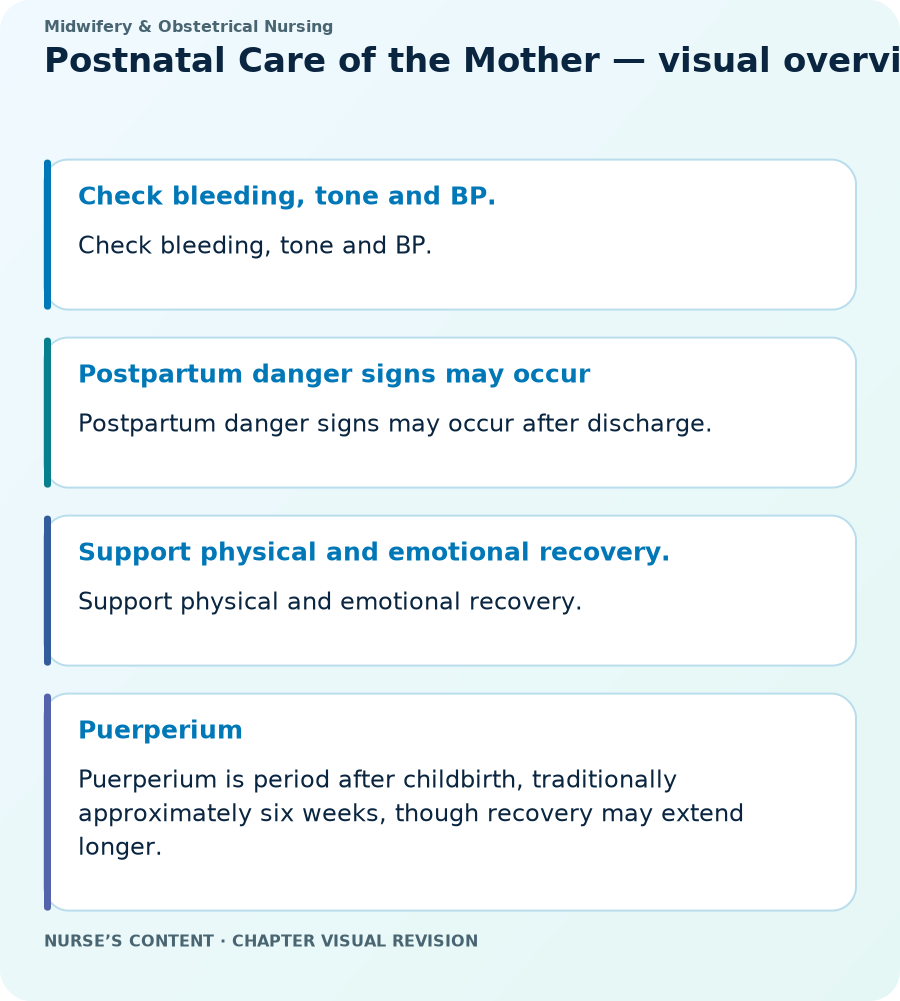
Puerperium is period after childbirth, traditionally approximately six weeks, though recovery may extend longer. Uterus contracts and gradually involutes; fundus generally descends about 1 cm/day initially with variation. Lochia changes from rubra (blood/red, first few days) to serosa (pink/brown, following days) to alba (whitish/yellow, later); duration varies. Heavy bleeding, foul odour, fever or increasing pain abnormal. Cervical/perineal healing, diuresis, lactation, hormonal shifts and bowel/bladder changes occur. Ovulation can precede first menses.
2. Postnatal assessment
Assess vital signs, uterine tone/fundal position, lochia amount/odour, perineum or caesarean wound, pain, bladder/bowel, breasts/feeding, legs for thromboembolic symptoms, mobility, anaemia, nutrition and mental health. BUBBLE-type mnemonics (breasts, uterus, bladder, bowel, lochia, perineum, legs/emotions) organize assessment but do not replace early warning chart.
3. Nursing management
- • Maintain hygiene and handwashing; perineal care front-to-back, clean pads, inspect sutures/wound, prescribed analgesia and comfort measures.
- • Support early safe mobilization, hydration, fibre, nutrition and prescribed IFA/calcium according to programme; assess VTE risk and prescribed prophylaxis.
- • Breastfeeding positioning/attachment, responsive feeding and breast comfort; avoid harsh cleansers. Review urinary retention, constipation and pelvic floor exercises when suitable.
- • Provide rest, family support and mental health assessment; respect preferences and privacy.
4. Follow-up and discharge education
WHO routine postnatal contacts recommended within 24 hours, 48–72 h, 7–14 days and at six weeks, with extra visits per risk/local programme. Teach danger signs: heavy bleeding, fever/foul lochia, severe headache/vision changes, chest pain/dyspnoea, unilateral leg swelling, severe abdominal/wound pain, inability to void, thoughts of self-harm or harming baby and psychotic symptoms. Arrange urgent care for these. Discuss contraception and sexual health, immunization/newborn follow-up and contact numbers; use teach-back, document discharge readiness and referrals.
5. Psychological adjustment
Transient baby blues often resolves within about two weeks; persistent low mood/anxiety or impairment warrants assessment for postpartum depression. Postpartum psychosis (confusion, delusions, hallucinations, severe mood change) is an emergency needing immediate assessment for parent/baby safety and treatment.
6. Important Examination Questions
Long Answer Questions
- 1. Explain puerperium, postnatal assessment and nursing management of mother.
Short Answer Questions
- 1. Describe lochia
- 2. discuss perineal care and postpartum follow-up
- 3. differentiate baby blues and depression.
Very Short Answer Questions (with answers)
- 1. What is involution? — Uterine return towards nonpregnant state.
- 2. Can ovulation occur before first postpartum period? — Yes.
7. Quick Revision
- • Check bleeding, tone and BP.
- • Postpartum danger signs may occur after discharge.
- • Support physical and emotional recovery.
8. Conclusion
Check bleeding, tone and BP. Postpartum danger signs may occur after discharge. Support physical and emotional recovery.
Chapter reference images