Midwifery & Obstetrical Nursing
Management of Third and Fourth Stages of Labour
Placental separation and expulsion, active management of the third stage of labour (AMTSL), uterine contraction, assessment of blood loss, prevention of postpartum haemorrhage and immediate post-delivery monitoring.
Open quizzes and study tools Download PDF
CHAPTER 15 / MIDWIFERY AND OBSTETRICAL NURSING 15. Management of Third and Fourth Stages of Labour
1. Placental separation and expulsion
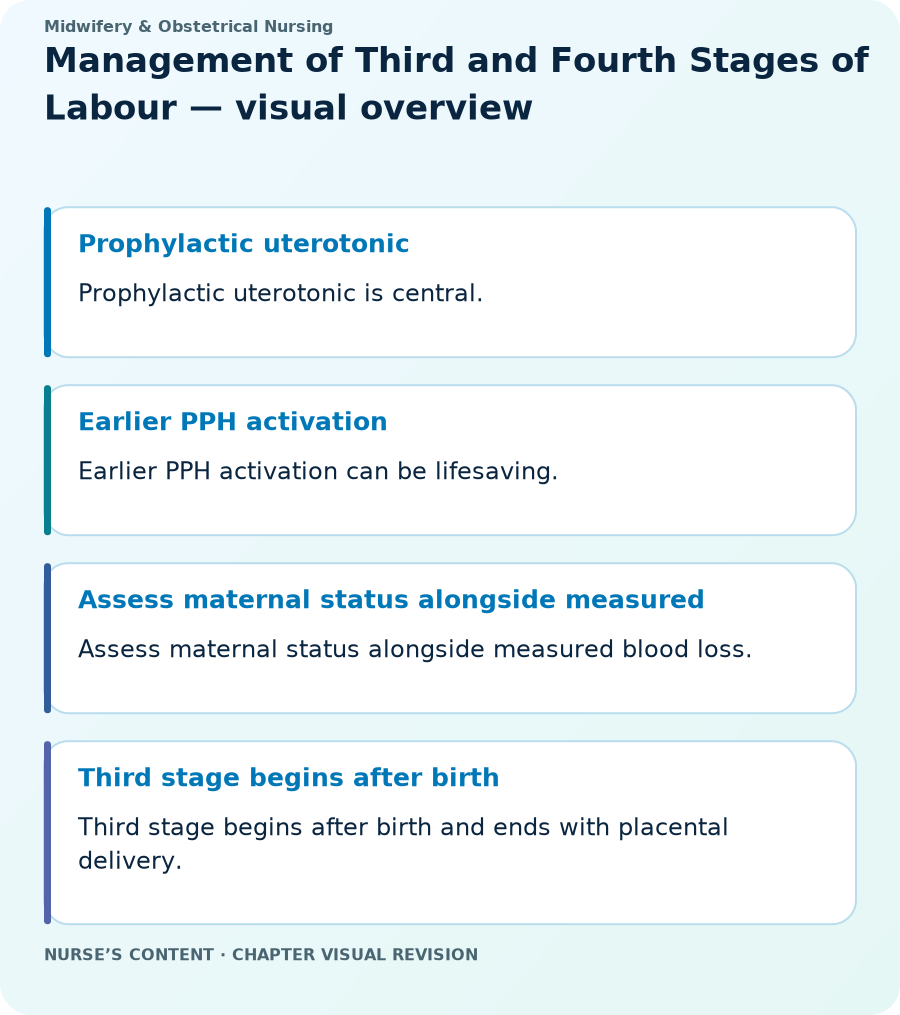
Third stage begins after birth and ends with placental delivery. Uterine contraction/retraction separates placenta and compresses vessels. Signs may include lengthening cord, small gush of blood and firm globular rising uterus; assess bleeding and maternal status. Placenta and membranes inspected for completeness, cord vessels and abnormalities. Retained placenta, excessive bleeding or suspected inversion requires urgent specialist care; avoid uncontrolled cord traction.
2. Active management of third stage (AMTSL)
Purpose: reduce postpartum haemorrhage. Components in modern practice include prophylactic uterotonic (oxytocin 10 IU IM/IV is common WHO recommendation; route/rate and alternatives per protocol), appropriately timed cord clamping, controlled cord traction by trained attendant when indicated/appropriate and assessment of uterine tone. Sustained routine uterine massage is not recommended for prevention when prophylactic oxytocin given, but assess tone regularly and massage an atonic uterus as indicated. Never apply traction before appropriate signs/technique and uterine support. Delay cord clamping when stable (usually ≥1 min) unless immediate resuscitation needs dictate otherwise.
3. Quantification and prevention of PPH
Measure blood loss objectively where possible (calibrated drape/weighing), track cumulative volume with vital signs. Traditional ≥500 mL within 24 h defines PPH; WHO 2025 recommends early action at ≥300 mL with abnormal haemodynamic signs or ≥500 mL, whichever first, and clinical judgment if concerning bleeding/instability. Do not wait for threshold in shock. Causes: 4 Ts — tone (atony), trauma, tissue (retained), thrombin (coagulation).
4. Fourth stage: immediate recovery
Often first 1–2 h after placental birth in nursing teaching. Monitor pulse, BP, respiration, consciousness, uterine tone/fundal position, measured bleeding, bladder, perineum, pain and temperature as appropriate. Assess newborn breathing, warmth, feeding and identification; support skin-to-skin if both stable. Observe frequently under protocol, report boggy uterus, heavy bleeding, tachycardia, hypotension, severe pain or collapse promptly. Encourage bladder emptying where safe; maintain privacy, nutrition/hydration as appropriate and companionship.
5. Nursing responsibilities
Prepare uterotonic, emergency supplies, documentation, blood readiness and trained team. If haemorrhage develops, activate PPH pathway, assess ABC and bleeding causes, support prescribed uterine massage/uterotonic, tranexamic acid and fluids/exam/escalation as indicated; document times, loss, medicines and response. Do not leave unstable patient unattended.
6. Important Examination Questions
Long Answer Questions
- 1. Explain AMTSL, placental separation and immediate postpartum monitoring.
Short Answer Questions
- 1. Describe 4 Ts of PPH
- 2. explain objective blood loss
- 3. list signs of placental separation.
Very Short Answer Questions (with answers)
- 1. Preferred prophylactic uterotonic commonly? — Oxytocin.
- 2. What is the fourth stage in nursing teaching? — Immediate postpartum recovery period.
7. Quick Revision
- • Prophylactic uterotonic is central.
- • Earlier PPH activation can be lifesaving.
- • Assess maternal status alongside measured blood loss.
8. Conclusion
Prophylactic uterotonic is central. Earlier PPH activation can be lifesaving. Assess maternal status alongside measured blood loss.
Chapter reference images