Midwifery & Obstetrical Nursing
Obstetrical Emergencies and Complications
Abortion, ectopic pregnancy, molar pregnancy, antepartum haemorrhage, placenta previa, placental abruption, pre-eclampsia, eclampsia, preterm labour and premature rupture of membranes.
Open quizzes and study tools Download PDF
CHAPTER 11 / MIDWIFERY AND OBSTETRICAL NURSING 11. Obstetrical Emergencies and Complications
1. Emergency assessment
Obstetric emergencies threaten maternal or fetal health. Assess ABCDE, gestation, bleeding/fluid loss, pain, BP/pulse, consciousness, fetal status when appropriate and available team. Call help early, establish monitoring/access and prepare referral/resuscitation per authorized protocol; maternal stabilization is central. Avoid dangerous examinations in suspected placenta previa and do not delay transfer for nonessential tests.
Abortion / pregnancy loss
Definition and pathophysiology: Loss or termination of pregnancy before viability definition used locally; threatened, inevitable, incomplete, complete, missed and septic miscarriage are traditional types.
Clinical features and investigations: Bleeding/cramps, cervical findings and ultrasound/hCG; fever/foul discharge and shock suggest sepsis or haemorrhage.
Management and nursing care: Urgent evaluation when heavy bleeding, pain, fever or instability; expectant, medical or surgical care according to clinical indication, preference and law. Rh prophylaxis when indicated. Provide grief support and confidential reproductive care; MTP services by authorized providers under law.
Ectopic pregnancy
Definition and pathophysiology: Implantation outside uterine cavity, usually tubal; rupture causes internal haemorrhage.
Clinical features and investigations: Abdominal/pelvic pain, vaginal bleeding, shoulder pain, syncope; positive pregnancy test, ultrasound and serial hCG in appropriate cases.
Management and nursing care: Emergency surgical assessment for instability/rupture; selected stable cases medical/surgical/expectant management under specialist. Monitor shock, pain and follow-up hCG as indicated.
Molar pregnancy
Definition and pathophysiology: Gestational trophoblastic disease, complete or partial mole.
Clinical features and investigations: Bleeding, excessive hCG, variable uterine size, severe vomiting or early pre-eclampsia; ultrasound and pathology.
Management and nursing care: Specialist uterine evacuation and hCG surveillance; counsel follow-up and contraception during required monitoring, assess haemorrhage and emotional impact.
Antepartum haemorrhage: placenta previa
Definition and pathophysiology: Placenta overlies or lies near internal os; classic painless bleeding but presentations vary.
Clinical features and investigations: Bleeding later pregnancy, ultrasound placental localization.
Management and nursing care: Urgent assessment and stabilization; no digital vaginal examination until previa excluded. Prepare appropriate delivery/referral, blood availability and fetal assessment.
Placental abruption
Definition and pathophysiology: Premature separation of normally implanted placenta.
Clinical features and investigations: Painful bleeding, tender/tense uterus, fetal compromise; bleeding may be concealed; clinical diagnosis supported by assessment.
Management and nursing care: Urgent maternal resuscitation, coagulation/blood assessment, fetal monitoring and delivery plan. Visible bleeding may underestimate severity.
Pre-eclampsia and eclampsia
Definition and pathophysiology: New hypertension after 20 weeks with proteinuria or specified organ dysfunction (proteinuria not mandatory). Eclampsia is seizures associated with pre-eclampsia not explained by another cause.
Clinical features and investigations: BP ≥140/90 on appropriate repeated readings; severe ≥160 systolic or ≥110 diastolic merits urgent confirmation/treatment; headache, visual change, RUQ pain, thrombocytopenia, renal/liver dysfunction.
Management and nursing care: Urgent specialist assessment, prescribed antihypertensive and magnesium sulfate for indications, monitor respiration, reflexes, urine and toxicity; calcium gluconate antidote available per protocol. During seizure protect airway/injury, lateral position when safe, no objects in mouth; plan delivery after stabilization.
Preterm labour and PROM/PPROM
Definition and pathophysiology: Labour before 37 weeks; prelabour rupture of membranes before contractions, PPROM before 37 weeks.
Clinical features and investigations: Contractions, pressure, fluid leakage; assess maternal temperature, fetal status and membrane status with approved methods.
Management and nursing care: Urgent obstetric assessment, avoid unnecessary digital exams with ruptured membranes; selected corticosteroids, antibiotics, tocolysis or magnesium for neuroprotection according to gestation/indication. Monitor infection/cord prolapse and determine timing of birth with team.
2. Nursing responsibilities
Record time/onset, measured blood loss and trends, vital signs, fetal assessment, interventions/drugs, response and referral. Support privacy, communication and informed decisions. Ensure emergency drugs, oxygen/ventilation equipment, IV supplies, blood readiness and trained team. Avoid assuming painless bleeding is harmless or seizures always psychiatric/epileptic.
3. Important Examination Questions
Long Answer Questions
- 1. Discuss placenta previa, abruption and hypertensive emergencies with nursing management.
Short Answer Questions
- 1. Explain ectopic pregnancy, molar pregnancy and PPROM
- 2. differentiate types of miscarriage.
Very Short Answer Questions (with answers)
- 1. Is digital vaginal exam safe before excluding placenta previa in APH? — No.
- 2. First-line anticonvulsant for eclampsia? — Magnesium sulfate under protocol.
4. Quick Revision
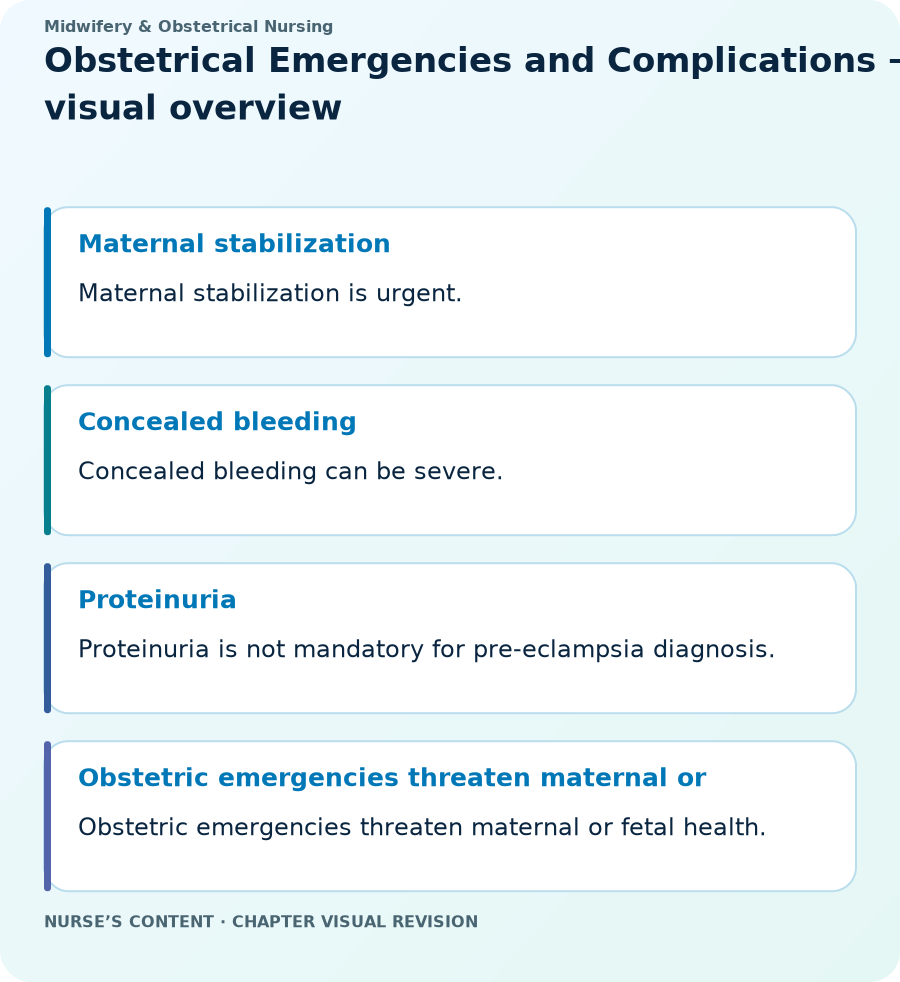
- • Maternal stabilization is urgent.
- • Concealed bleeding can be severe.
- • Proteinuria is not mandatory for pre-eclampsia diagnosis.
5. Conclusion
Maternal stabilization is urgent. Concealed bleeding can be severe. Proteinuria is not mandatory for pre-eclampsia diagnosis.
Chapter reference images