Midwifery & Obstetrical Nursing
Minor Disorders and Complications of Pregnancy
Nausea and vomiting, heartburn, constipation, backache, oedema, urinary frequency, vaginal discharge and other common pregnancy discomforts; nursing management and health education.
Open quizzes and study tools Download PDF
CHAPTER 10 / MIDWIFERY AND OBSTETRICAL NURSING 10. Minor Disorders and Complications of Pregnancy
1. Assessment principles
Common pregnancy discomforts arise from hormones, altered anatomy and physiology. Assess onset, severity, associated symptoms, vital signs, hydration, gestation and impact. Reassure only after serious conditions are reasonably excluded; distinguish physiological changes from illness.
| Discomfort | Typical measures and warning signs |
|---|---|
| Nausea/vomiting | Small frequent meals, avoid triggers, fluids in tolerated portions; prescribed antiemetic if indicated. Persistent inability to drink, weight loss, dizziness or reduced urine suggests hyperemesis/dehydration requiring assessment. |
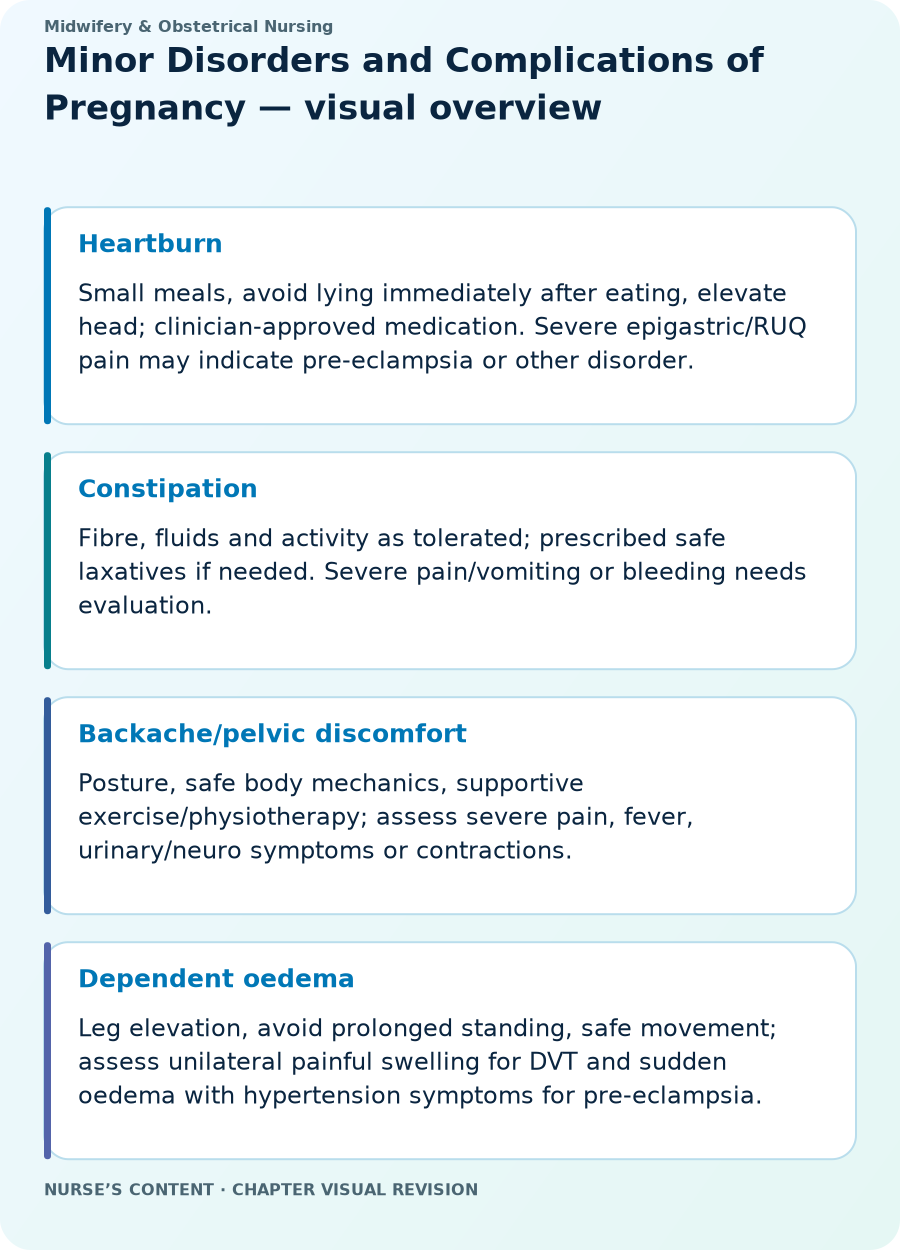
| Heartburn | Small meals, avoid lying immediately after eating, elevate head; clinician-approved medication. Severe epigastric/RUQ pain may indicate pre-eclampsia or other disorder. |
| Constipation | Fibre, fluids and activity as tolerated; prescribed safe laxatives if needed. Severe pain/vomiting or bleeding needs evaluation. |
| Backache/pelvic discomfort | Posture, safe body mechanics, supportive exercise/physiotherapy; assess severe pain, fever, urinary/neuro symptoms or contractions. |
| Dependent oedema | Leg elevation, avoid prolonged standing, safe movement; assess unilateral painful swelling for DVT and sudden oedema with hypertension symptoms for pre-eclampsia. |
| Urinary frequency | Normal increased renal flow/uterine pressure; maintain hydration, assess dysuria, fever or flank pain for UTI. |
| Vaginal discharge | Clear/white non-offensive discharge may increase; odor, itching, pain, blood or watery leakage requires assessment. |
| Leg cramps/varicosities | Stretching, comfortable positioning and mobility, compression only if suitable; calf pain/swelling may be thrombosis. |
| Fatigue and sleep difficulty | Rest, nutrition, sleep habits, support; evaluate anaemia, thyroid, mood or respiratory symptoms if persistent/severe. |
2. Nursing management and education
Listen to concerns, assess symptoms systematically and provide individualized lifestyle advice, medication safety and follow-up. Do not recommend unapproved herbal remedies or OTC drugs without pregnancy safety review. For severe vomiting monitor weight, fluids/electrolytes and prescribed care; thiamine may be required before carbohydrate-containing IV therapy in prolonged vomiting according to medical protocol. Document advice and return precautions.
3. Important Examination Questions
Long Answer Questions
- 1. Explain common minor disorders of pregnancy and appropriate nursing management.
Short Answer Questions
- 1. Differentiate nausea and hyperemesis
- 2. discuss urinary frequency and oedema
- 3. list red flags.
Very Short Answer Questions (with answers)
- 1. Is unilateral painful leg swelling normal? — No, assess for thrombosis.
- 2. Should heartburn-like severe epigastric pain in hypertension be ignored? — No.
4. Quick Revision
- • Evaluate warning signs first.
- • Many discomforts respond to supportive care.
- • Pregnancy medicine safety is individualized.
5. Conclusion
Evaluate warning signs first. Many discomforts respond to supportive care. Pregnancy medicine safety is individualized.
Chapter reference images