Midwifery & Obstetrical Nursing
High-Risk Pregnancy
Definition, risk factors, identification and management of high-risk pregnancy; teenage pregnancy, advanced maternal age, multiple pregnancy, anaemia, hypertension, diabetes and Rh incompatibility.
Open quizzes and study tools Download PDF
CHAPTER 09 / MIDWIFERY AND OBSTETRICAL NURSING 09. High-Risk Pregnancy
1. Definition and assessment
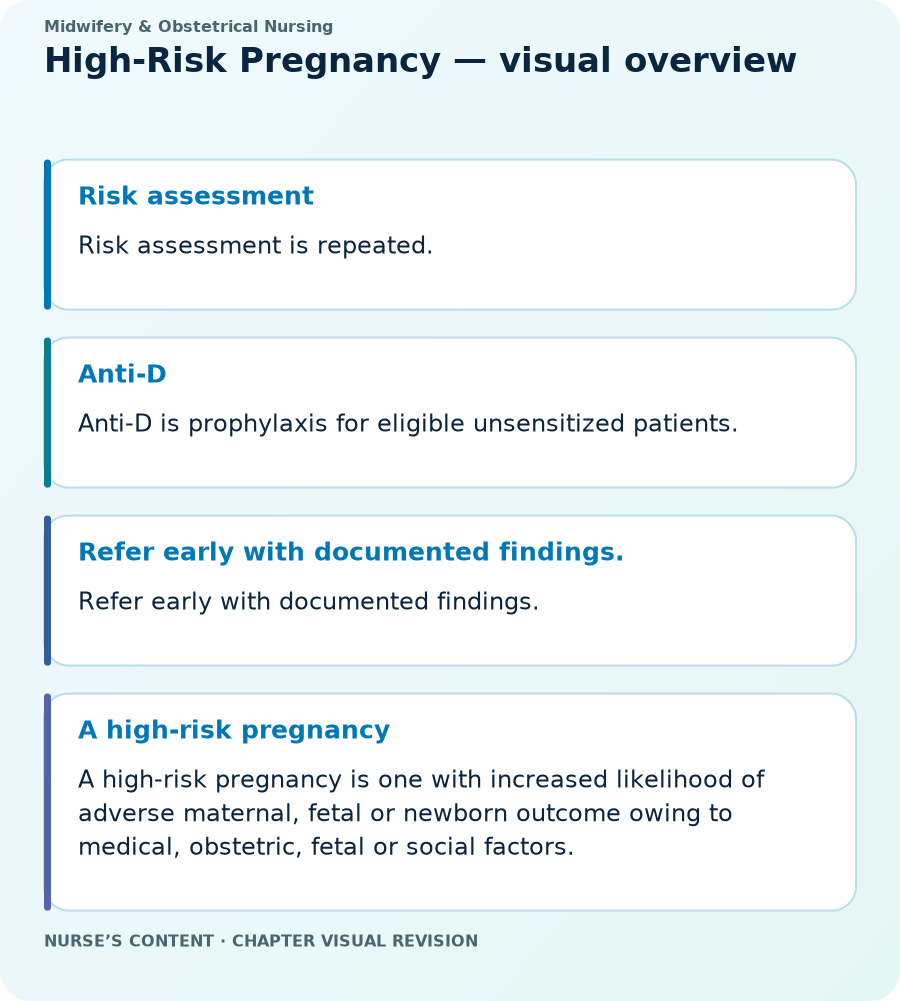
A high-risk pregnancy is one with increased likelihood of adverse maternal, fetal or newborn outcome owing to medical, obstetric, fetal or social factors. Risk may develop at any gestation; normal booking does not guarantee later low risk. Assess previous complications/caesarean, chronic illness, extremes of age, multiple gestation, socioeconomic or access barriers, examination, tests and fetal growth.
Adolescent pregnancy and advanced maternal age
Definition and pathophysiology: Adolescent pregnancy may involve nutritional, social, safeguarding and obstetric risks; age ≥35 at expected birth is a commonly used advanced age marker, with increasing chromosomal and medical risks as age rises.
Clinical features and investigations: Assess nutrition, BP, diabetes, support, consent/safeguarding and fetal evaluation; individual risk varies.
Management and nursing care: Provide nonjudgmental care, age-appropriate information, nutrition and specialist review/screening choices; plan delivery and follow-up.
Multiple pregnancy
Definition and pathophysiology: More than one fetus; chorionicity and amnionicity influence risks.
Clinical features and investigations: Uterine size, ultrasound; increased preterm birth, hypertensive disease, growth discordance; monochorionic-specific complications.
Management and nursing care: Early ultrasound, specialist surveillance, symptom education, anaemia/nutrition assessment and planned delivery in suitable facility.
Anaemia
Definition and pathophysiology: Reduced Hb from iron deficiency, other nutrient deficiency, haemoglobinopathy or disease; pregnancy thresholds depend on trimester/guideline.
Clinical features and investigations: Pallor, fatigue, breathlessness or asymptomatic; Hb and cause evaluation.
Management and nursing care: Prescribed iron/other treatment according to cause and severity, nutrition, follow-up Hb; severe symptomatic anaemia needs urgent specialist care and delivery planning.
Hypertensive disorders
Definition and pathophysiology: Chronic hypertension, gestational hypertension, pre-eclampsia/eclampsia and superimposed disease.
Clinical features and investigations: BP elevation; severe headache, visual change, epigastric pain, proteinuria or organ dysfunction; fetal growth risks.
Management and nursing care: Repeat accurate BP, evaluate labs/protein/fetal well-being; prescribed antihypertensives, magnesium sulfate for indicated severe disease/eclampsia, urgent referral and delivery plan.
Diabetes in pregnancy
Definition and pathophysiology: Pre-existing diabetes or GDM causes maternal/fetal risks including macrosomia, neonatal hypoglycaemia and other complications.
Clinical features and investigations: Screen glucose per protocol, assess control, growth and comorbidities.
Management and nursing care: Dietary education, monitoring, prescribed medication/insulin, specialist follow-up, delivery plan and newborn glucose assessment; postpartum diabetes testing for GDM.
Rh incompatibility and alloimmunization
Definition and pathophysiology: RhD-negative woman may develop antibodies against fetal RhD-positive cells, causing haemolytic disease; other antibodies also important.
Clinical features and investigations: Blood group, antibody screen and fetal monitoring if sensitized.
Management and nursing care: Anti-D immunoglobulin prophylaxis for eligible unsensitized women at indicated gestations/events/postpartum per protocol; sensitized cases require specialist monitoring. Verify product and documentation.
2. High-risk tracking and referral
Classify risk, communicate to woman/family with consent, ensure indicated investigations and timely obstetric assessment. Link PMSMA/e-PMSMA tracking, arrange nearest appropriate higher-level facility and transport. Record findings, actions, referral completion and safety plan; emergencies bypass routine appointments.
3. Important Examination Questions
Long Answer Questions
- 1. Define high-risk pregnancy and explain assessment and management of major risk factors.
Short Answer Questions
- 1. Discuss Rh incompatibility
- 2. describe GDM and multiple pregnancy risks
- 3. explain high-risk referral.
Very Short Answer Questions (with answers)
- 1. What is alloimmunization? — Antibody formation against foreign blood group antigens.
- 2. Can high risk arise after normal booking? — Yes.
4. Quick Revision
- • Risk assessment is repeated.
- • Anti-D is prophylaxis for eligible unsensitized patients.
- • Refer early with documented findings.
5. Conclusion
Risk assessment is repeated. Anti-D is prophylaxis for eligible unsensitized patients. Refer early with documented findings.
Chapter reference images