Midwifery & Obstetrical Nursing
Normal Pregnancy and Antenatal Management
Nutrition during pregnancy, antenatal education, supplements, immunisation, exercise, personal hygiene, birth preparedness, danger signs and antenatal nursing care.
Open quizzes and study tools Download PDF
CHAPTER 08 / MIDWIFERY AND OBSTETRICAL NURSING 08. Normal Pregnancy and Antenatal Management
1. Nutrition, supplements and immunisation
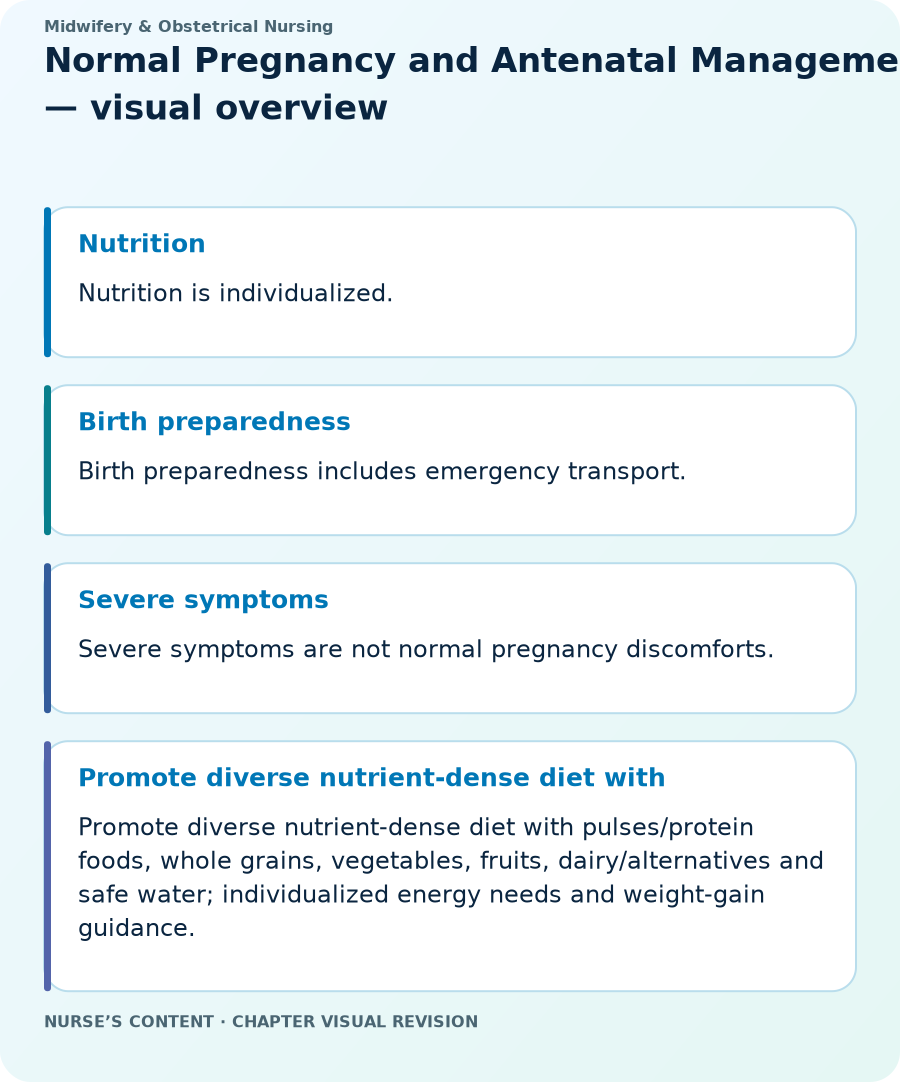
Promote diverse nutrient-dense diet with pulses/protein foods, whole grains, vegetables, fruits, dairy/alternatives and safe water; individualized energy needs and weight-gain guidance. Avoid alcohol, tobacco, unsafe foods and nonprescribed medicines. Indian routine prevention commonly provides iron-folic acid (IFA; 60 mg elemental iron + 500 mcg folic acid daily after first trimester for at least 180 days in pregnancy and 180 days postpartum) and calcium (commonly 500 mg elemental calcium plus vitamin D twice daily from 14 weeks through six months postpartum) per programme; anaemia treatment differs. Separate iron and calcium doses by at least two hours. Preconception/early pregnancy folic acid supports neural tube prevention; higher doses only for selected risk under advice.
Td vaccination in India: first dose early in pregnancy, second at least four weeks later; booster for women with appropriate two-dose vaccination during pregnancy within previous three years as programme specifies. Review records and current local guidance. Other vaccines depend on indication and policy; some live vaccines contraindicated in pregnancy.
2. Exercise, hygiene and daily care
For uncomplicated pregnancy encourage appropriate moderate activity as advised, avoid activities with trauma/fall risks, support rest and posture. Maintain oral, personal and hand hygiene, safe food/water, comfortable footwear and clothing. Seek advice for bleeding, dizziness, contractions, fluid leakage or severe pain during activity. No routine bed rest without indication. Discuss sexuality respectfully; restrictions only for clinical indications.
3. Antenatal education and birth preparedness
Choose delivery facility, arrange transport/backup and emergency contacts, save relevant records and identification, plan companion and support, discuss newborn supplies and breastfeeding. Explain labour signs, pain relief options, informed consent and postpartum family planning. High-risk pregnancies need designated referral facility and individualized plan. Encourage family involvement only with woman's consent.
4. Danger signs and action
| Sign | Concern and response |
|---|---|
| Vaginal bleeding, fainting or severe abdominal pain | Urgent maternity/emergency assessment |
| Severe headache, visual changes, epigastric/RUQ pain, seizures | Possible hypertensive emergency; urgent referral |
| Reduced fetal movements or fluid leakage | Prompt maternity assessment |
| Fever, foul discharge, severe vomiting or inability to drink | Possible infection/dehydration or complications |
| Chest pain, sudden dyspnoea, unilateral leg swelling | Possible thromboembolism or other emergency |
5. Nursing care
At each contact assess BP, symptoms, growth and fetal well-being as appropriate, review investigation results and supplementation tolerance; support mental health and screen safety. Teach using accessible language and teach-back, document plan and referral. Do not advise home treatment for emergency symptoms.
6. Important Examination Questions
Long Answer Questions
- 1. Describe nutritional requirements, supplementation, immunisation and birth preparedness.
Short Answer Questions
- 1. Explain ANC danger signs
- 2. list health education topics
- 3. describe Td schedule.
Very Short Answer Questions (with answers)
- 1. Why separate calcium and iron? — Calcium can reduce iron absorption.
- 2. When should reduced fetal movements be assessed? — Promptly.
7. Quick Revision
- • Nutrition is individualized.
- • Birth preparedness includes emergency transport.
- • Severe symptoms are not normal pregnancy discomforts.
8. Conclusion
Nutrition is individualized. Birth preparedness includes emergency transport. Severe symptoms are not normal pregnancy discomforts.
Chapter reference images