Midwifery & Obstetrical Nursing
Diagnosis of Pregnancy and Antenatal Care
Signs and symptoms of pregnancy, presumptive, probable and positive signs, pregnancy tests, antenatal registration, history taking, physical examination and antenatal visits.
Open quizzes and study tools Download PDF
CHAPTER 06 / MIDWIFERY AND OBSTETRICAL NURSING 06. Diagnosis of Pregnancy and Antenatal Care
1. Signs of pregnancy
| Category | Examples |
|---|---|
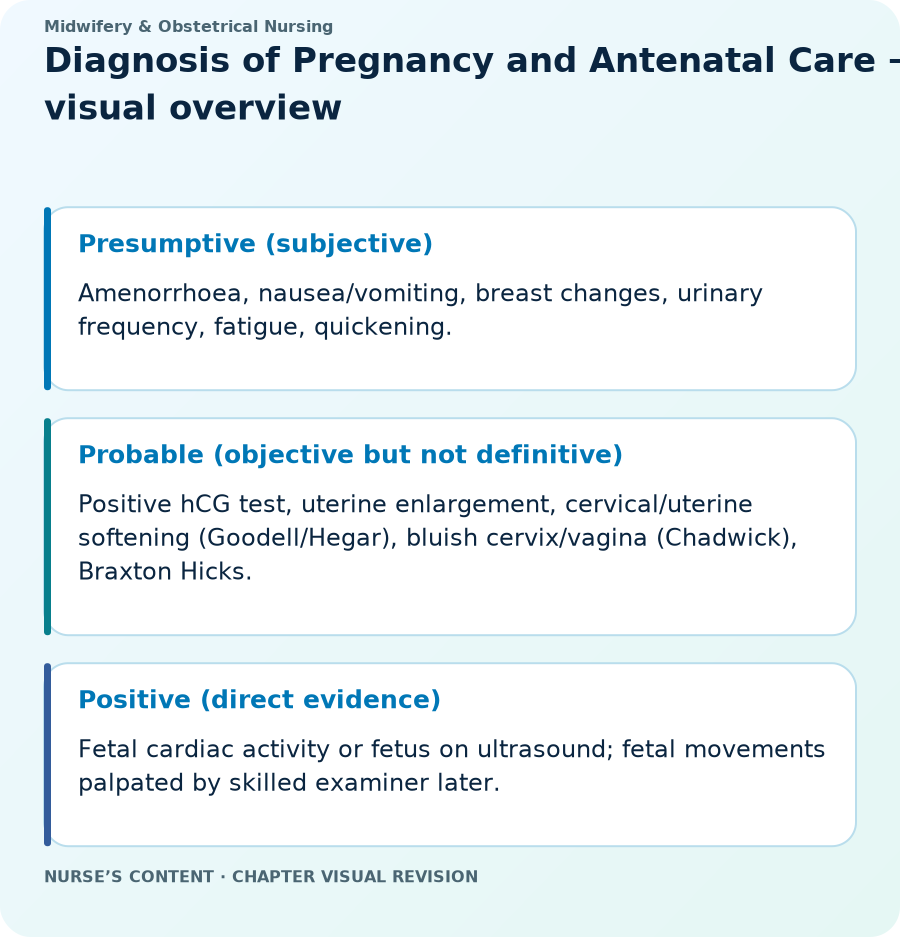
| Presumptive (subjective) | Amenorrhoea, nausea/vomiting, breast changes, urinary frequency, fatigue, quickening. |
| Probable (objective but not definitive) | Positive hCG test, uterine enlargement, cervical/uterine softening (Goodell/Hegar), bluish cervix/vagina (Chadwick), Braxton Hicks. |
| Positive (direct evidence) | Fetal cardiac activity or fetus on ultrasound; fetal movements palpated by skilled examiner later. |
Urine/serum hCG tests detect pregnancy hormone but do not establish location or viability alone. Pain, bleeding or syncope with pregnancy requires prompt ectopic pregnancy assessment. Ultrasound confirms location/viability and estimates gestation when indicated; early timing affects findings.
2. Antenatal registration and history
Register early (ideally first trimester); record identification, LMP and cycle regularity, obstetric history (gravida/parity and outcomes), past surgery/caesarean, complications, medical/family history, medicines/allergies, immunization, nutrition, psychosocial and safety needs. Assess BP, pulse, weight, pallor, oedema, physical findings, gestation and investigations. Provide due date and care plan, referrals and documentation in maternal record.
3. EDD and gestational age
Naegele's rule for regular 28-day cycle: EDD = first day LMP + 7 days − 3 months + 1 year (equivalent approximately 280 days). Example LMP 10 February 2026 → EDD 17 November 2026. Cycle variation/unreliable LMP may require early ultrasound dating; use agreed clinical dating rather than repeatedly changing EDD. Gravida counts pregnancies including current; parity counts births reaching specified gestational threshold (local definition).
4. ANC contact schedules
WHO recommends at least eight contacts: by 12 weeks, then 20, 26, 30, 34, 36, 38 and 40 weeks. India has traditionally reported a minimum four ANC visits (early registration and subsequent trimesters), with additional contacts and PMSMA; recent NHM materials also describe five visits including PMSMA for normal pregnancy. Use current local protocol, ensure early booking and more visits for high risk rather than treating four as optimum. PMSMA provides fixed-day ANC on 9th of each month in designated facilities during second/third trimesters.
5. Objectives and nursing role
Prevent/detect complications, assess maternal/fetal growth and well-being, provide recommended tests, supplements, Td and education, prepare delivery and emergency plan, support mental health and family planning. Review danger signs and referral transport with each contact; maintain privacy and follow-up missed visits.
6. Important Examination Questions
Long Answer Questions
- 1. Describe diagnosis of pregnancy, antenatal registration and ANC schedule.
Short Answer Questions
- 1. Classify signs of pregnancy
- 2. explain EDD calculation
- 3. describe PMSMA.
Very Short Answer Questions (with answers)
- 1. How many WHO ANC contacts minimum? — Eight.
- 2. Is positive hCG proof of intrauterine pregnancy? — No.
7. Quick Revision
- • First ANC contact by 12 weeks is preferred.
- • Dating uses reliable LMP/early ultrasound.
- • High-risk pregnancies need individualized follow-up.
8. Conclusion
First ANC contact by 12 weeks is preferred. Dating uses reliable LMP/early ultrasound. High-risk pregnancies need individualized follow-up.
Chapter reference images