Midwifery & Obstetrical Nursing
Introduction to Midwifery and Obstetrical Nursing
Definition, concepts, scope, principles and objectives of midwifery; history of midwifery; role and responsibilities of a midwife; ethical and legal aspects of maternity nursing.
Open quizzes and study tools Download PDF
CHAPTER 01 / MIDWIFERY AND OBSTETRICAL NURSING 01. Introduction to Midwifery and Obstetrical Nursing
1. Definition and concepts
Midwifery is the professional care of women and newborns throughout pregnancy, labour, birth, postpartum and the reproductive life course, supporting physiological processes and recognizing complications. Obstetrical nursing encompasses nursing assessment, prevention, monitoring, treatment support and rehabilitation during maternity. Midwives provide care within their education, authorization, professional scope and referral arrangements; they collaborate with obstetric, neonatal, anaesthesia and community teams.
2. Scope, aims and principles
- • Promote maternal and newborn survival, health, dignity and positive birth experience.
- • Provide antenatal assessment, birth preparedness, labour support, safe childbirth and postnatal care.
- • Identify high-risk conditions and emergencies early, initiate authorized care and coordinate timely referral.
- • Support breastfeeding, reproductive health, voluntary family planning and parent education.
- • Respect autonomy, informed consent, cultural preferences, confidentiality and non-discrimination; use evidence-informed care and appropriate infection prevention.
3. Historical development
Historically birth support was provided by experienced women and traditional birth attendants. Formal education and scientific obstetrics expanded infection prevention, surgical and emergency capability. Florence Nightingale influenced nursing professionalization; midwifery developed as a distinct professional field. India expanded ANM and institutional maternity services, skilled birth attendance, nurse-midwifery education and referral facilities. NHM's midwifery services initiative supports trained Nurse Practitioners in Midwifery and midwifery-led care within defined systems. Verify local scope and applicable regulatory framework.
4. Roles and responsibilities
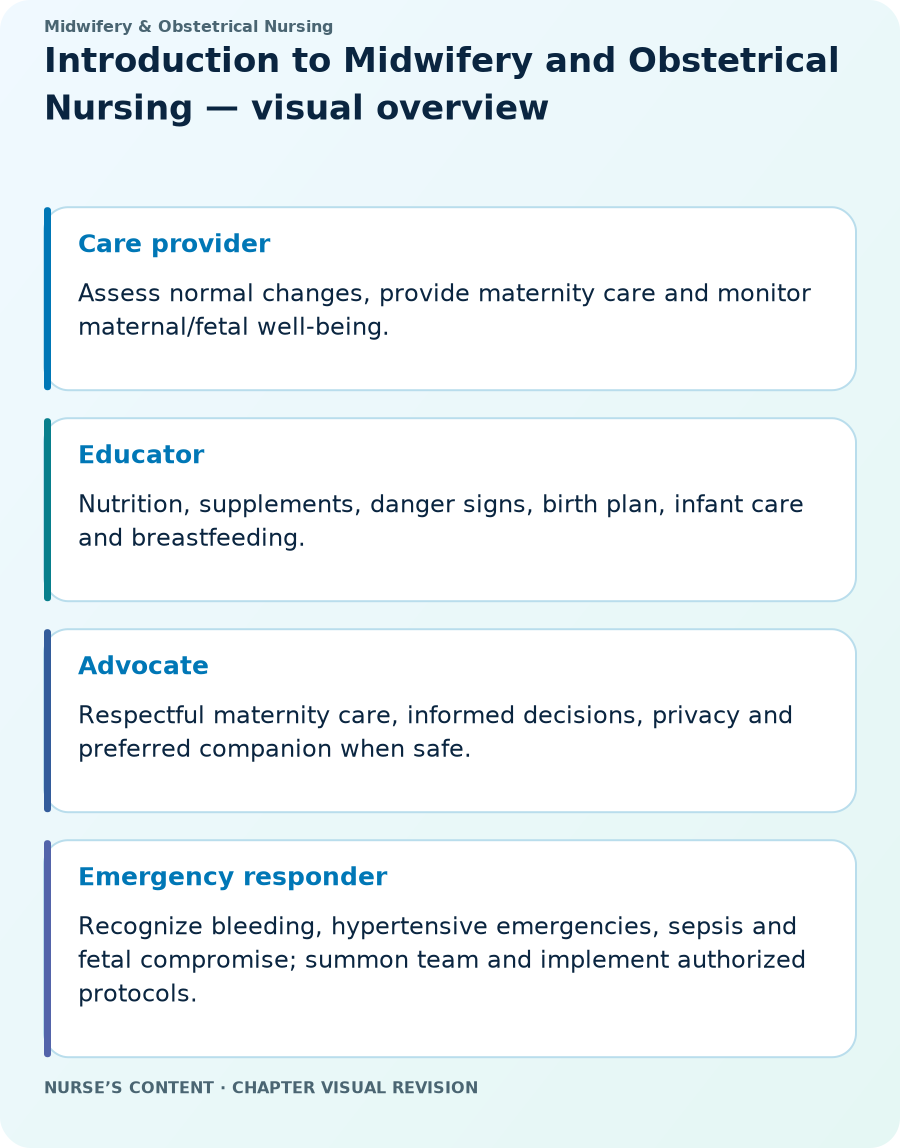
| Role | Application |
|---|---|
| Care provider | Assess normal changes, provide maternity care and monitor maternal/fetal well-being. |
| Educator | Nutrition, supplements, danger signs, birth plan, infant care and breastfeeding. |
| Advocate | Respectful maternity care, informed decisions, privacy and preferred companion when safe. |
| Emergency responder | Recognize bleeding, hypertensive emergencies, sepsis and fetal compromise; summon team and implement authorized protocols. |
| Coordinator | Link ASHA/ANM, primary care, delivery facility and referral services. |
| Documenter | Accurate ANC, labour, birth, neonatal and postnatal records. |
5. Ethics and legal responsibilities
Obtain valid consent and respect refusal, avoid unnecessary procedures and abusive conduct, maintain confidentiality, protect newborn identification, practice within scope, report safeguarding and medico-legal matters according to applicable law. Do not perform invasive procedures without training and authorization. Treat the woman as the principal decision-maker with appropriate support, not simply a patient accompanying a fetus.
6. Important Examination Questions
Long Answer Questions
- 1. Define midwifery and describe scope, principles and professional responsibilities.
Short Answer Questions
- 1. Explain respectful maternity care
- 2. describe historical development
- 3. write a note on referral.
Very Short Answer Questions (with answers)
- 1. Who is the principal decision-maker for her maternity care when she has capacity? — The woman.
- 2. What is ANC? — Antenatal care.
7. Quick Revision
- • Support physiological birth and recognize risk.
- • Maternal autonomy and neonatal safety are both important.
- • Timely referral saves lives.
8. Conclusion
Support physiological birth and recognize risk. Maternal autonomy and neonatal safety are both important. Timely referral saves lives.
Chapter reference images