Mental Health Nursing
Psychiatric Nursing Documentation and Clinical Practice
Psychiatric case history, MSE recording, nursing care plans, therapeutic communication records, patient observation charts, clinical case presentations and psychiatric nursing reports.
Open quizzes and study tools Download PDF
CHAPTER 27 / MENTAL HEALTH NURSING 27. Psychiatric Nursing Documentation and Clinical Practice
1. Purpose and principles
Records support continuity, treatment evaluation, communication, accountability, safety and lawful reporting. Documentation must be timely, accurate, objective, relevant, signed/attributed and confidential. Distinguish observed facts, patient quotes, collateral source and clinical interpretation. Use approved abbreviations, correct errors according to policy, never erase or backdate or copy unverified findings.
2. Psychiatric case history format
Identification; referral source/reason; chief complaints and duration; history of present illness (onset, course, symptoms, stressors, treatment, function); past psychiatric/medical history, medications, allergies, substance use; personal/developmental/family/social history; premorbid functioning as relevant; physical examination, MSE, risk, investigations and formulation; medical diagnosis as documented by clinician, nursing assessment and care plan. Avoid unnecessary intimate detail and stigmatizing labels.
3. MSE and observation recording
| Record | Example or essential fields |
|---|---|
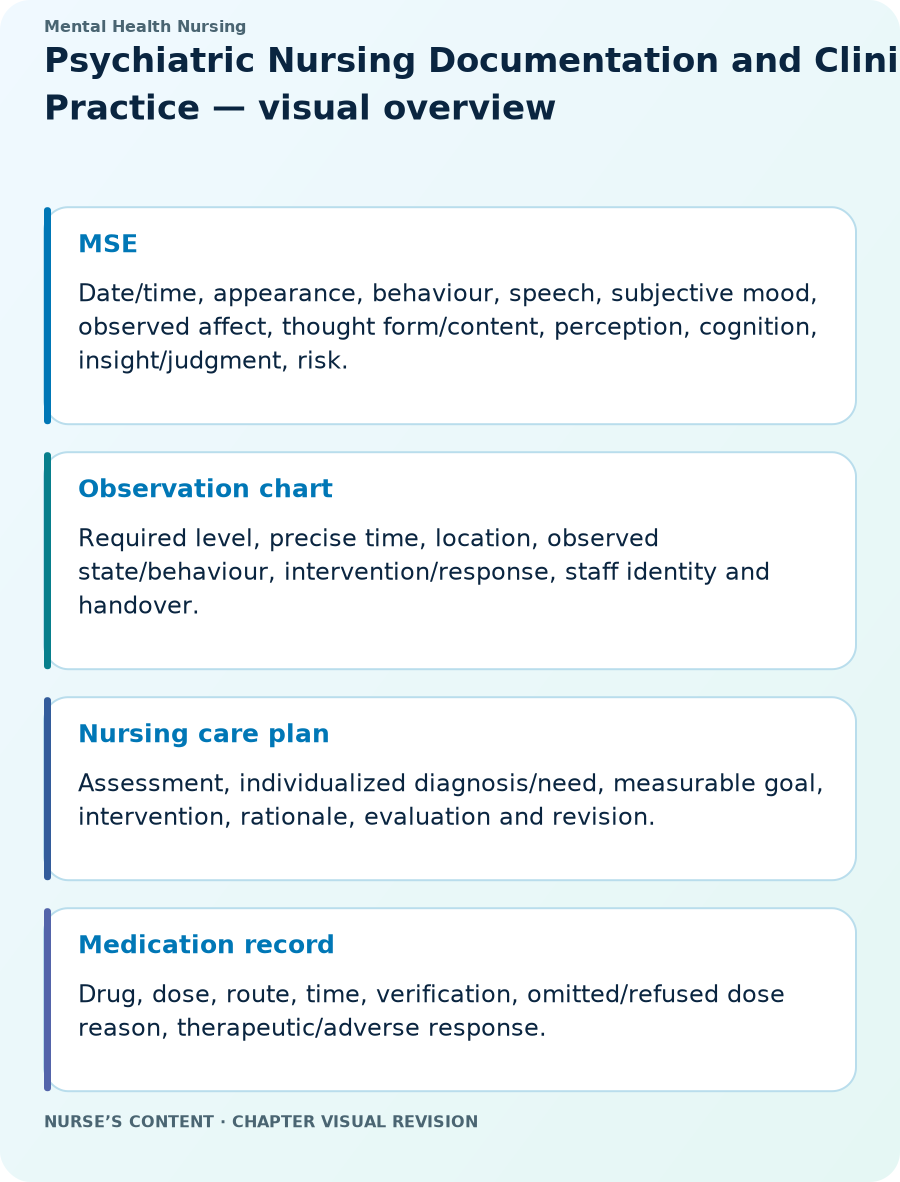
| MSE | Date/time, appearance, behaviour, speech, subjective mood, observed affect, thought form/content, perception, cognition, insight/judgment, risk. |
| Observation chart | Required level, precise time, location, observed state/behaviour, intervention/response, staff identity and handover. |
| Nursing care plan | Assessment, individualized diagnosis/need, measurable goal, intervention, rationale, evaluation and revision. |
| Medication record | Drug, dose, route, time, verification, omitted/refused dose reason, therapeutic/adverse response. |
| Incident report | Objective event, time, immediate care, people notified, facts and follow-up; separate approved reporting system. |
| Discharge/transfer | Current condition, medication reconciliation, safety/relapse plan, referrals, appointments, education and consent. |
4. Therapeutic communication record (process recording)
Student learning record may contain interaction context, nurse's statement, patient response, observed nonverbal behaviour, technique/analysis and evaluation/alternative response. Use de-identified material and institutional consent requirements; do not create imagined patient quotes as real documentation. Example: nurse asks “What worries you about going home?” Patient says “I may not sleep.” Technique: open question; follow-up assess sleep plan and warning signs.
5. Case presentation and clinical practice
Present concise history, priority findings, MSE, diagnosis/differential from team, risks, care plan, treatment, response, discharge/follow-up and learning points. Protect identifiers, don’t post patient information/photos online. Use SBAR to report deterioration: current concern, relevant background, assessment, requested action. Document the escalation and response time. Review supervised skills and professional boundaries, report mistakes transparently.
6. Important Examination Questions
Long Answer Questions
- 1. Describe psychiatric case history, MSE and nursing documentation with an example.
Short Answer Questions
- 1. Explain process recording
- 2. describe observation chart
- 3. discuss handover and incident reporting.
Very Short Answer Questions (with answers)
- 1. What is SBAR? — Situation, background, assessment, recommendation.
- 2. Can unobserved checks be documented as completed? — No.
7. Quick Revision
- • Documentation must be factual and timely.
- • Maintain confidentiality and legal safeguards.
- • Record risk, actions and actual outcomes.
8. Conclusion
Documentation must be factual and timely. Maintain confidentiality and legal safeguards. Record risk, actions and actual outcomes.
Chapter reference images