Mental Health Nursing
Family Care and Psychoeducation
Family assessment, caregiver burden, family counselling, psychoeducation, family involvement in treatment, support systems and relapse prevention.
Open quizzes and study tools Download PDF
CHAPTER 26 / MENTAL HEALTH NURSING 26. Family Care and Psychoeducation
1. Family assessment
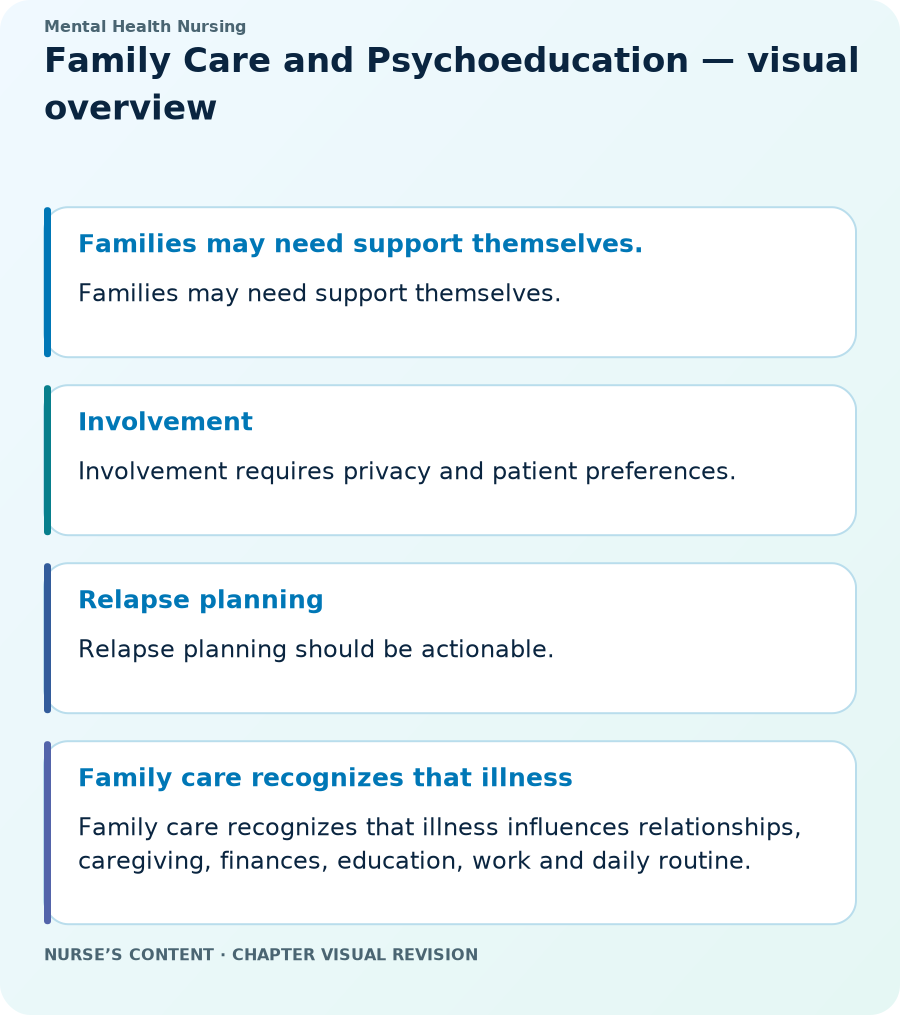
Family care recognizes that illness influences relationships, caregiving, finances, education, work and daily routine. Assess family composition, roles, communication, beliefs, resources, strengths, burden and safety with patient consent. Do not assume every family relationship is supportive; assess abuse, privacy, conflict and caregiver needs separately when appropriate.
2. Caregiver burden
Objective burden includes time, cost, disrupted work and practical responsibilities; subjective burden includes worry, exhaustion, grief and distress. Assess sleep, physical health, emotional well-being, social isolation and respite needs. High expressed emotion (criticism, hostility or emotional overinvolvement) has been studied in relapse contexts; use this concept to improve supportive communication, not blame families for illness.
3. Psychoeducation components
- • Explain condition and variability, common symptoms, treatment purpose and realistic recovery goals.
- • Discuss prescribed medicines, adverse effects, monitoring and how to seek review; avoid abrupt changes.
- • Identify personal relapse signs and triggers, plan response and emergency contacts.
- • Teach active listening, simple communication, collaborative problem-solving, boundaries and stress management.
- • Address stigma, healthy routines, substance-use risks, access to community services and caregiver self-care.
4. Family counselling and support
Use collaborative sessions according to competence; develop achievable goals and shared care plan. Encourage family to support autonomy rather than control, and avoid coercive treatment or punitive reactions. With consent share relevant information and involve nominated representative when lawful. Offer peer/family groups, respite, social work, financial or educational resources. Provide accessible language and teach-back. In abusive/unsafe contexts prioritize safety and separate support instead of joint sessions that increase risk.
5. Evaluation example
For spouse caring for patient with recurrent bipolar disorder, assess sleep and stress, agree warning signs (changes in sleep/activity), verify follow-up and crisis contacts, create respite plan and medication review with team. Evaluate caregiver strain, patient preferences, understanding and feasibility; revise as needed.
6. Important Examination Questions
Long Answer Questions
- 1. Explain family assessment, caregiver burden and psychoeducation with relapse prevention.
Short Answer Questions
- 1. Differentiate objective/subjective burden
- 2. describe family counselling
- 3. list psychoeducation content.
Very Short Answer Questions (with answers)
- 1. What is psychoeducation? — Structured information and skills support about illness and care.
- 2. Is family automatically entitled to confidential records? — No.
7. Quick Revision
- • Families may need support themselves.
- • Involvement requires privacy and patient preferences.
- • Relapse planning should be actionable.
8. Conclusion
Families may need support themselves. Involvement requires privacy and patient preferences. Relapse planning should be actionable.
Chapter reference images