Mental Health Nursing
Psychiatric Nursing Procedures and Therapeutic Activities
Milieu therapy, activity therapy, recreational therapy, occupational therapy, therapeutic groups, patient observation and management of psychiatric wards.
Open quizzes and study tools Download PDF
CHAPTER 23 / MENTAL HEALTH NURSING 23. Psychiatric Nursing Procedures and Therapeutic Activities
1. Milieu therapy
Milieu therapy uses the therapeutic environment, relationships, structure and activities to support safety, recovery and learning. Maintain predictable schedules, collaborative rules, privacy, respectful communication, safe space, access to meaningful activity and participation in decisions. Rules must be justified by care/safety, not punishment. Environmental risk review includes ligature hazards, access to dangerous items and emergency readiness according to setting.
2. Therapeutic activities
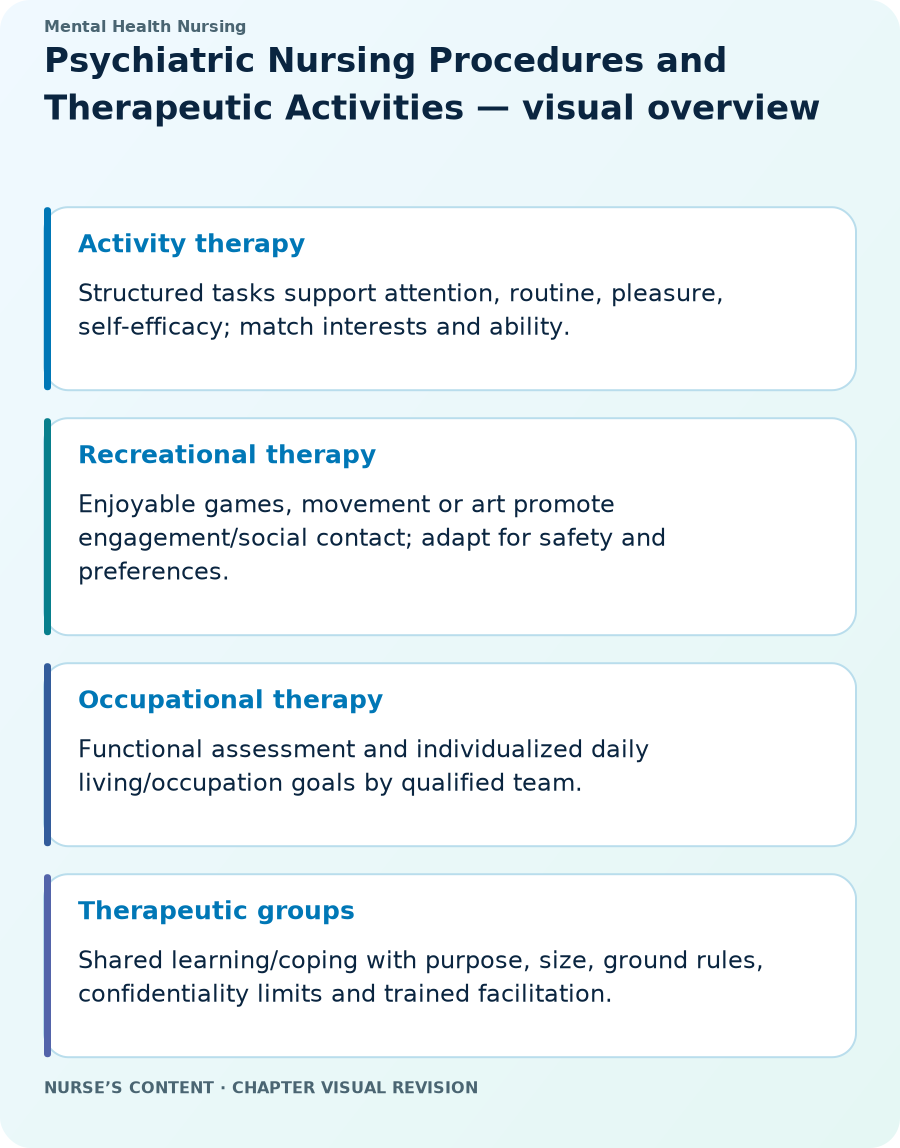
| Activity | Purpose and precautions |
|---|---|
| Activity therapy | Structured tasks support attention, routine, pleasure, self-efficacy; match interests and ability. |
| Recreational therapy | Enjoyable games, movement or art promote engagement/social contact; adapt for safety and preferences. |
| Occupational therapy | Functional assessment and individualized daily living/occupation goals by qualified team. |
| Therapeutic groups | Shared learning/coping with purpose, size, ground rules, confidentiality limits and trained facilitation. |
| Relaxation and social skills practice | Support emotion regulation, communication and structured practice; voluntary participation. |
3. Patient observation
Observation level depends on current individual risk and clinical plan, ranging from routine checks to continuous direct observation when required. Conduct therapeutically, preserve dignity/privacy while meeting safety needs, ensure handover and coverage, document time, observed behaviour, location, mental/physical state, action and response. Reassess whenever condition changes. Do not chart retrospective assumed observations or leave an at-risk patient without agreed coverage.
4. Ward management and procedures
Admission assessment, safe storage of belongings according to lawful policy, medication checks, vital signs, physical care and infection prevention. Schedule treatment, activity, sleep and meals; support respectful ward community meetings. Use multidisciplinary handover, emergency equipment checks and incident reporting. Assess each patient before group activity (distress, mobility, safety, consent). De-escalate agitation using least restrictive approaches; seclusion is prohibited under Indian MHCA, restraint only with strict statutory safeguards.
5. Clinical example
For a patient withdrawn with depression, agree a brief preferred activity, offer support without forcing participation, document engagement and distress, gradually increase based on preference and function. If sudden agitation or suicidality emerges, pause group participation and conduct individualized assessment.
6. Important Examination Questions
Long Answer Questions
- 1. Explain milieu therapy and therapeutic activities and role of nurse.
Short Answer Questions
- 1. Describe observation levels
- 2. explain recreational/occupational therapy
- 3. discuss safe ward management.
Very Short Answer Questions (with answers)
- 1. What is milieu therapy? — Therapeutic use of environment and relationships.
- 2. Is activity participation forced routinely? — No.
7. Quick Revision
- • Observation is active therapeutic care.
- • Activities must be purposeful and individualized.
- • Maintain rights and safety in the ward.
8. Conclusion
Observation is active therapeutic care. Activities must be purposeful and individualized. Maintain rights and safety in the ward.
Chapter reference images