Mental Health Nursing
Psychotherapies and Counselling
Individual psychotherapy, group therapy, cognitive behavioural therapy (CBT), behaviour therapy, family therapy, supportive therapy, counselling and nursing responsibilities.
Open quizzes and study tools Download PDF
CHAPTER 20 / MENTAL HEALTH NURSING 20. Psychotherapies and Counselling
1. Concepts
Psychotherapy uses structured psychological methods and a therapeutic relationship to improve symptoms, functioning or coping. Counselling assists individuals in exploring concerns, choices and adjustment. Both require competence, informed consent, clear goals, privacy and appropriate boundaries. Nurses may deliver authorized supportive or structured interventions according to training; specialized psychotherapy requires qualified practitioners.
| Therapy | Core approach and example |
|---|---|
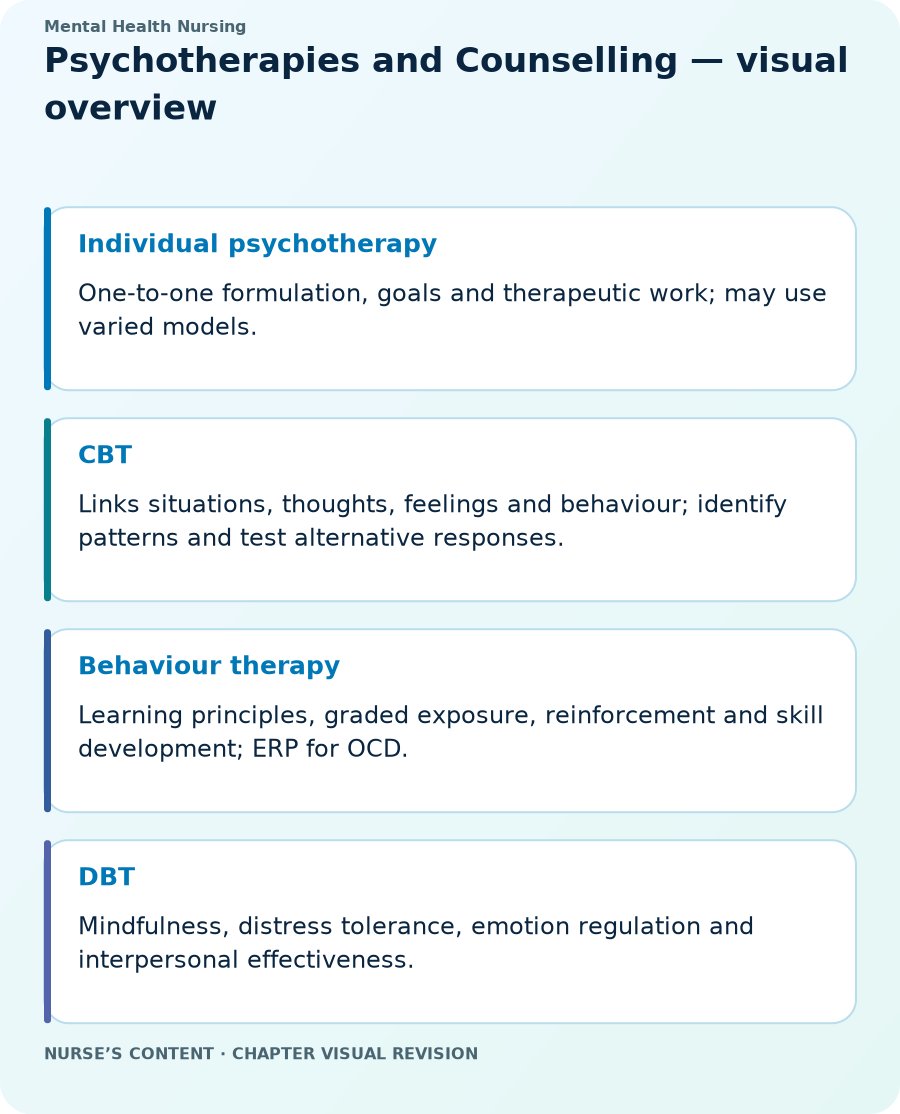
| Individual psychotherapy | One-to-one formulation, goals and therapeutic work; may use varied models. |
| CBT | Links situations, thoughts, feelings and behaviour; identify patterns and test alternative responses. |
| Behaviour therapy | Learning principles, graded exposure, reinforcement and skill development; ERP for OCD. |
| DBT | Mindfulness, distress tolerance, emotion regulation and interpersonal effectiveness. |
| Psychodynamic | Explores relational patterns, meanings and unconscious processes within professional framework. |
| Group therapy | Therapeutic group goals, peer learning and support; agreed confidentiality and safety. |
| Family therapy | Explores interaction patterns, communication, problem-solving and family resources. |
| Supportive psychotherapy | Encourages coping, reality-based problem-solving, strengths and support. |
2. CBT example and behavioural approaches
Situation: upcoming clinical interview. Automatic thought: “I will fail at everything.” Emotion: anxiety; behaviour: avoidance. Collaborative CBT identifies evidence, considers a more balanced thought, and develops graded practice. Behavioural activation schedules meaningful achievable activities for depression. Exposure is planned and consensual, not forced. Reinforcement increases desired behaviour; negative reinforcement is not punishment. Relaxation and problem-solving may support treatment but do not replace disorder-specific therapy.
3. Counselling process
Establish rapport and consent, assess concerns/safety, clarify goals, explore options and strengths, implement agreed plan, summarize/review and refer when needs exceed competence. For groups evaluate readiness, purpose, membership and confidentiality limits. In family sessions respect patient privacy and avoid assigning blame; separate safety needs in abusive relationships. Monitor distress, outcomes and discontinuation issues.
4. Nursing role
Encourage attendance, reinforce skills in daily activities, coordinate team, assess barriers, document goals and observable participation, support homework where agreed and report risk or deterioration. Avoid promising cure or imposing beliefs. Use professional supervision and evidence-based practice.
5. Important Examination Questions
Long Answer Questions
- 1. Explain types of psychotherapy and counselling and role of nurse.
Short Answer Questions
- 1. Describe CBT and ERP
- 2. explain group/family therapy
- 3. differentiate counselling and advice-giving.
Very Short Answer Questions (with answers)
- 1. What is CBT? — Cognitive behavioural therapy.
- 2. What is behavioural activation? — Planned engagement in meaningful activities.
6. Quick Revision
- • Therapy is collaborative.
- • Respect consent and competence.
- • Evaluate functioning and patient-defined goals.
7. Conclusion
Therapy is collaborative. Respect consent and competence. Evaluate functioning and patient-defined goals.
Chapter reference images