Mental Health Nursing
Psychopharmacology and Psychiatric Medications
Antipsychotics, antidepressants, mood stabilizers, anxiolytics, sedatives, hypnotics and drugs used in substance dependence; indications, adverse effects and nursing responsibilities.
Open quizzes and study tools Download PDF
CHAPTER 18 / MENTAL HEALTH NURSING 18. Psychopharmacology and Psychiatric Medications
1. Principles
Psychotropic medicines influence neurotransmission and neural systems. Choice depends on diagnosis, symptom profile, prior response, comorbidity, reproductive considerations, interactions and patient preferences. Nurses verify orders, allergies, dose/route, baseline observations and required tests; explain expected effects and monitor adverse effects. Never independently initiate or abruptly stop psychiatric medicines beyond authorized scope.
2. Major drug classes
| Class and examples | Common indications/mechanism | Important adverse effects/monitoring |
|---|---|---|
| First-generation antipsychotics: haloperidol, chlorpromazine | D2 antagonism; psychosis, selected acute indications | EPS, dystonia, akathisia, tardive dyskinesia, sedation, QT prolongation, NMS. |
| Second-generation: risperidone, olanzapine, quetiapine, aripiprazole | Dopamine/serotonin receptor effects vary | Weight/metabolic changes, orthostasis, EPS/prolactin effects vary. Monitor weight, glucose, lipids and BP. |
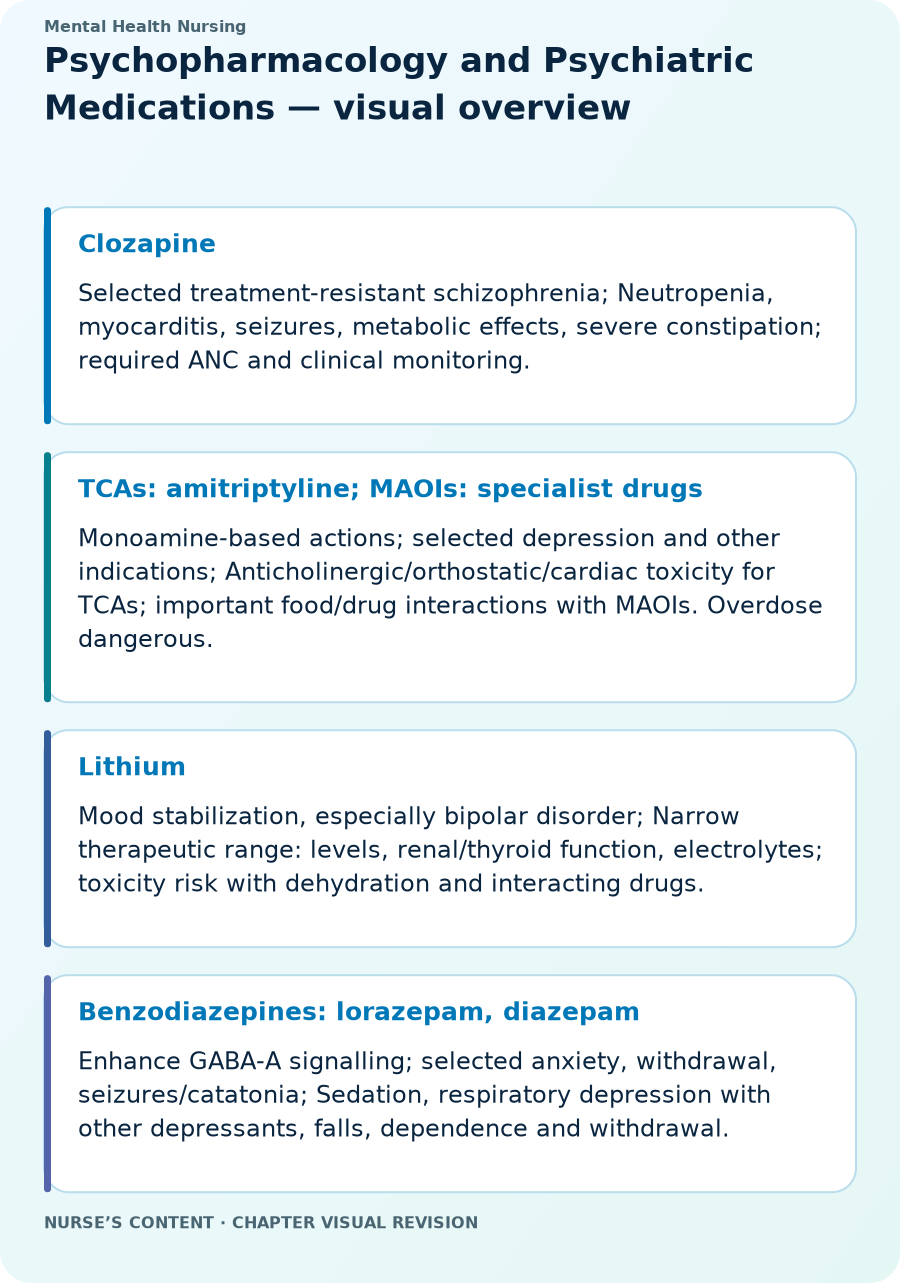
| Clozapine | Selected treatment-resistant schizophrenia | Neutropenia, myocarditis, seizures, metabolic effects, severe constipation; required ANC and clinical monitoring. |
| SSRIs: sertraline, fluoxetine; SNRIs: venlafaxine, duloxetine | Serotonin or serotonin/noradrenaline reuptake inhibition; depression/anxiety/OCD depending drug | GI effects, sexual dysfunction, activation, hyponatraemia, withdrawal on abrupt cessation, serotonin toxicity. |
| TCAs: amitriptyline; MAOIs: specialist drugs | Monoamine-based actions; selected depression and other indications | Anticholinergic/orthostatic/cardiac toxicity for TCAs; important food/drug interactions with MAOIs. Overdose dangerous. |
| Lithium | Mood stabilization, especially bipolar disorder | Narrow therapeutic range: levels, renal/thyroid function, electrolytes; toxicity risk with dehydration and interacting drugs. |
| Valproate, carbamazepine, lamotrigine | Selected mood stabilization/antiepileptic therapy | Agent-specific liver/blood monitoring, interactions; serious rash with lamotrigine/carbamazepine. Valproate has major fetal risks and strict reproductive safeguards. |
| Benzodiazepines: lorazepam, diazepam | Enhance GABA-A signalling; selected anxiety, withdrawal, seizures/catatonia | Sedation, respiratory depression with other depressants, falls, dependence and withdrawal. |
| Hypnotics and other anxiolytics | Selected short-term insomnia/anxiety indications | Sedation, impairment, interactions; prefer evidence-based psychological approaches where appropriate. |
| Substance-use medicines | Methadone/buprenorphine for opioid disorder; naltrexone, acamprosate or selected others for alcohol disorder; naloxone for overdose | Specialist protocols, interactions, withdrawal/overdose risk, adherence and liver/renal monitoring as drug-specific. |
3. Serious reactions and nursing response
EPS include acute dystonia, parkinsonism and akathisia; tardive dyskinesia is often persistent involuntary movement. NMS: fever, severe rigidity, altered mental state and autonomic changes; serotonin toxicity: neuromuscular hyperactivity (clonus/hyperreflexia), agitation and autonomic findings. Both require urgent medical review. Lithium toxicity may present with vomiting, coarse tremor, ataxia and confusion; hold further dose pending urgent authorized clinical advice and assess levels/renal function. Fever/sore throat on clozapine or severe constipation urgent. Monitor suicide risk and activation when starting/changing antidepressants.
4. Patient education
Discuss expected time course, common effects, serious warning signs, missed-dose instructions from prescription, avoidance of alcohol/unsafe combinations, pregnancy planning, monitoring and follow-up. Encourage shared decisions and adherence without coercion. Document drug, dose, time, response, adverse effects and escalation. Use approved product information/local formulary for exact doses.
5. Important Examination Questions
Long Answer Questions
- 1. Classify psychiatric medicines and discuss actions, adverse effects and nursing responsibilities.
Short Answer Questions
- 1. Explain lithium monitoring
- 2. distinguish NMS and serotonin toxicity
- 3. describe clozapine precautions.
Very Short Answer Questions (with answers)
- 1. What is EPS? — Extrapyramidal symptoms.
- 2. Why monitor lithium levels? — Narrow therapeutic range.
6. Quick Revision
- • Psychotropics need physical health monitoring.
- • Do not stop medicines abruptly without advice.
- • Fever, rigidity or severe confusion are urgent.
7. Conclusion
Psychotropics need physical health monitoring. Do not stop medicines abruptly without advice. Fever, rigidity or severe confusion are urgent.
Chapter reference images