Mental Health Nursing
Psychiatric Emergencies and Crisis Intervention
Suicidal behaviour, self-harm, violence and aggression, acute psychosis, panic attacks, severe withdrawal, crisis intervention, de-escalation and emergency nursing care.
Open quizzes and study tools Download PDF
CHAPTER 17 / MENTAL HEALTH NURSING 17. Psychiatric Emergencies and Crisis Intervention
1. Definition and initial priorities
A psychiatric emergency is an acute disturbance of behaviour, mood or thought with immediate safety, medical or functional risk. Crisis is a time-limited disruption of coping when usual supports are insufficient. Ensure scene safety, call trained staff, assess ABCDE, vital signs, glucose, injury, intoxication/withdrawal and delirium, then mental state and risk. Do not assume psychiatric origin of altered consciousness.
2. Immediate risk and emergency response
| Situation | Nursing actions |
|---|---|
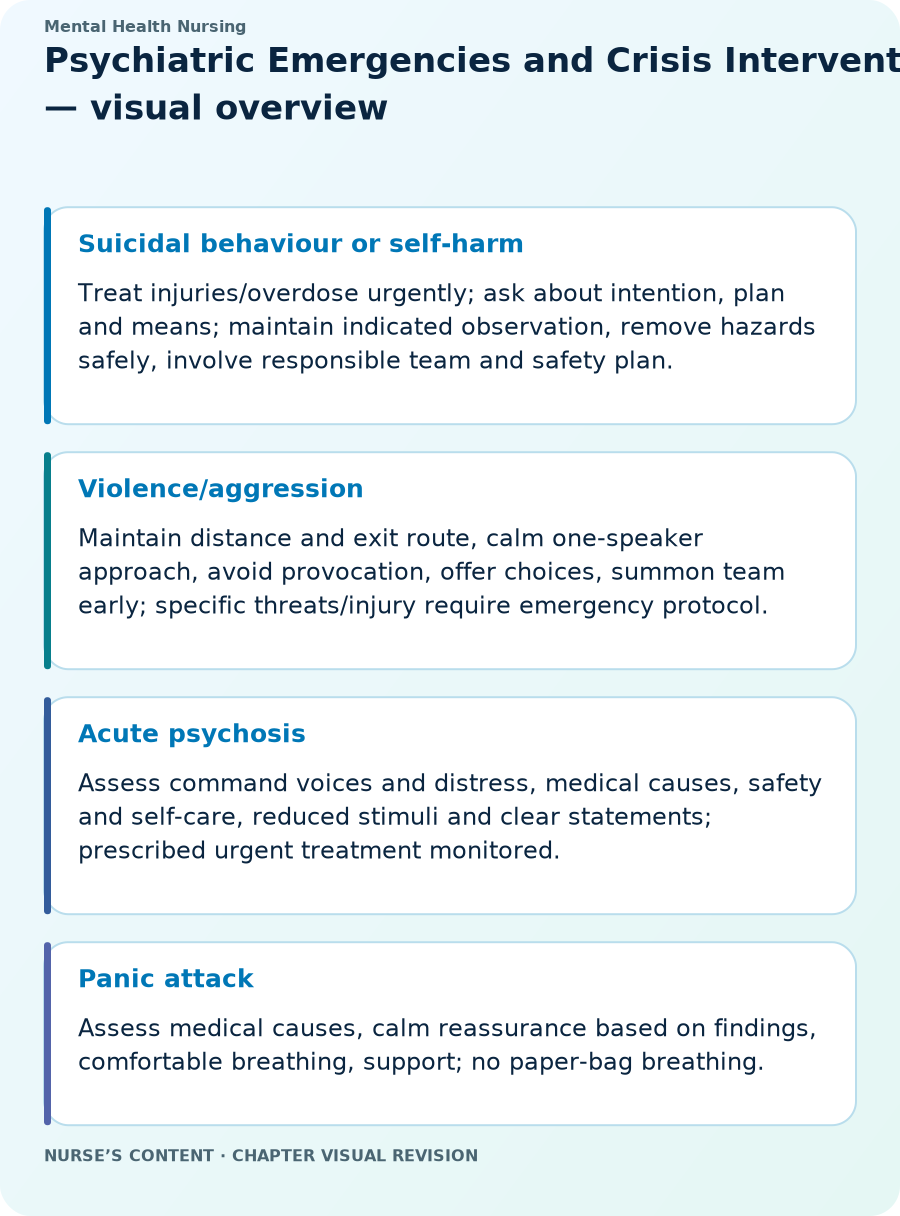
| Suicidal behaviour or self-harm | Treat injuries/overdose urgently; ask about intention, plan and means; maintain indicated observation, remove hazards safely, involve responsible team and safety plan. |
| Violence/aggression | Maintain distance and exit route, calm one-speaker approach, avoid provocation, offer choices, summon team early; specific threats/injury require emergency protocol. |
| Acute psychosis | Assess command voices and distress, medical causes, safety and self-care, reduced stimuli and clear statements; prescribed urgent treatment monitored. |
| Panic attack | Assess medical causes, calm reassurance based on findings, comfortable breathing, support; no paper-bag breathing. |
| Severe alcohol/sedative withdrawal | Urgent monitored medical protocol; assess seizures, delirium, vitals, glucose/electrolytes; medication per order. |
| Catatonia, NMS or serotonin toxicity | New immobility/mutism, fever/rigidity, autonomic instability, clonus or confusion may be emergencies; urgent clinician assessment and prescribed treatment. |
3. De-escalation and least restrictive care
Introduce yourself, respect personal space, use calm tone and brief statements, acknowledge feelings, assess needs (pain, hunger, fear), reduce stimulation, offer choices and clear limits. Do not corner, threaten or argue. Seek trained help; physical restraint only when lawful and necessary for imminent immediate harm, authorized and time-limited with monitoring. Under India's Mental Healthcare Act 2017, seclusion/solitary confinement and chaining are prohibited. Restraint never for punishment/staff convenience. Follow section 97 and institutional safety procedures.
4. Crisis intervention steps
Assess precipitating event, strengths, risks and medical needs; establish rapport; identify immediate problem; explore coping and supports; jointly develop practical short-term plan; implement/referral; reassess and arrange follow-up. The safety plan includes warning signs, internal coping, supportive people/services, emergency contacts and reducing access to lethal means. For imminent risk do not rely on helpline alone or written contract. Document times, risk formulation, actions, legal authorization and response.
5. Important Examination Questions
Long Answer Questions
- 1. Explain psychiatric emergencies, de-escalation and crisis intervention.
Short Answer Questions
- 1. Describe suicide assessment
- 2. list causes of acute agitation
- 3. explain restraint safeguards.
Very Short Answer Questions (with answers)
- 1. Is seclusion allowed in Indian mental health establishments under MHCA 2017? — No.
- 2. What is imminent risk? — Immediate credible risk of harm requiring protective action.
6. Quick Revision
- • Consider medical emergencies first.
- • Use least restrictive response.
- • Risk assessment and follow-up are dynamic.
7. Conclusion
Consider medical emergencies first. Use least restrictive response. Risk assessment and follow-up are dynamic.
Chapter reference images