Mental Health Nursing
Eating, Sleep and Sexual Disorders
Anorexia nervosa, bulimia nervosa, binge-eating disorder, insomnia, sleep disorders, sexual dysfunctions and related nursing interventions.
Open quizzes and study tools Download PDF
CHAPTER 16 / MENTAL HEALTH NURSING 16. Eating, Sleep and Sexual Disorders
1. Eating disorder assessment
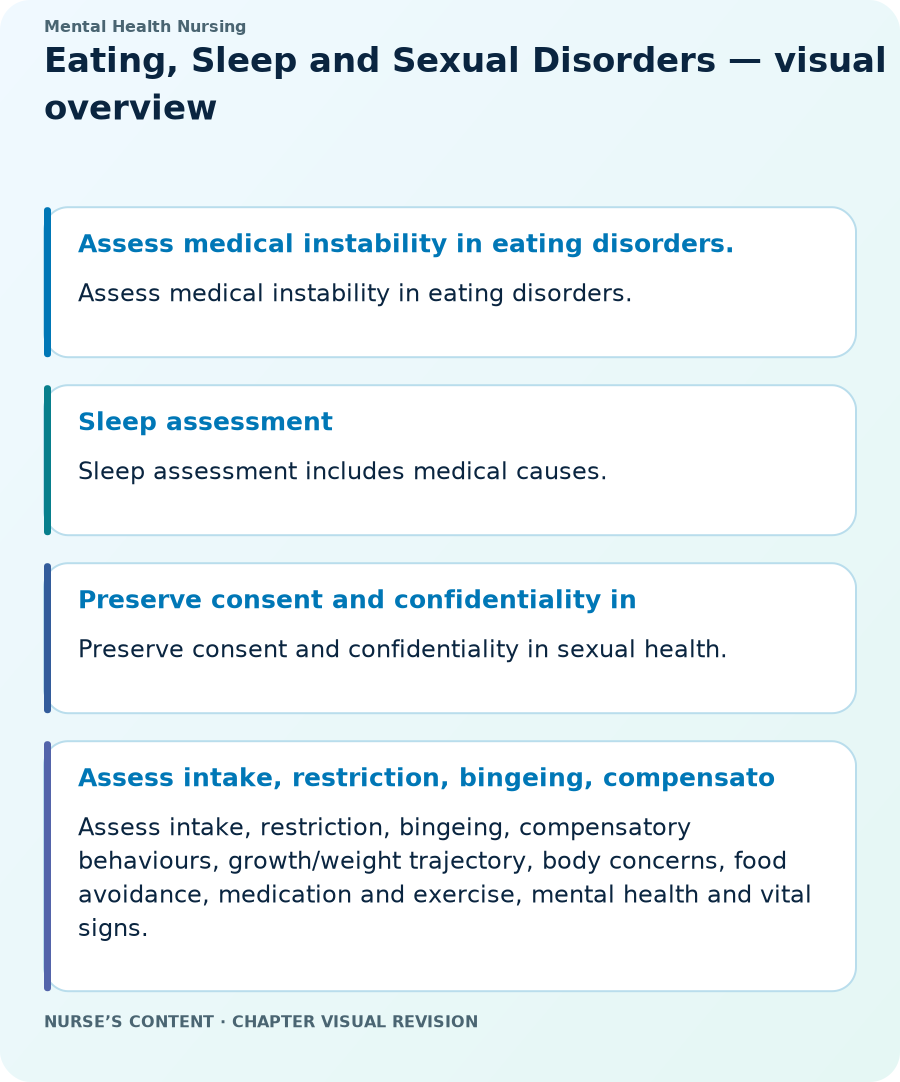
Assess intake, restriction, bingeing, compensatory behaviours, growth/weight trajectory, body concerns, food avoidance, medication and exercise, mental health and vital signs. All body sizes may have serious eating disorders; evaluate orthostasis, ECG, electrolytes, glucose and refeeding risk when indicated.
Anorexia nervosa
Definition and pathophysiology: Restriction leading to significantly low weight in developmental context, fear of weight gain or persistent weight-preventing behaviour, and disturbance of weight/shape experience or recognition of seriousness.
Clinical features and investigations: Malnutrition, bradycardia, dizziness, cold intolerance, amenorrhoea may occur but is not required; assess medical instability.
Management and nursing care: Specialist multidisciplinary treatment, prescribed nutrition with refeeding monitoring, psychological/family-based therapy as indicated, supportive meal supervision and nonjudgmental care.
Bulimia nervosa
Definition and pathophysiology: Recurrent binge eating with loss of control and compensatory behaviours, with weight/shape overvaluation.
Clinical features and investigations: Vomiting or other compensation, dental erosion, electrolyte disturbance, arrhythmia risk; weight may be typical.
Management and nursing care: CBT-based treatment and prescribed medication when indicated, assess electrolytes and cardiac symptoms, support structured eating and reduce shame.
Binge-eating disorder
Definition and pathophysiology: Recurrent loss-of-control binge episodes with distress, without regular compensatory behaviour characteristic of bulimia.
Clinical features and investigations: Eating rapidly, in secret or beyond fullness; assess psychological distress and metabolic health.
Management and nursing care: Psychological and nutritional support, individualized treatment; avoid stigmatizing or rigid restrictive advice.
2. Sleep disorders
Insomnia involves difficulty initiating/maintaining sleep or early awakening with daytime effect despite adequate opportunity. Chronic insomnia typically persists ≥3 months with frequent symptoms. Assess schedule, shift work, substances, sleep apnoea, restless legs, mood and medicines. CBT-I is first-line for chronic insomnia; consistent sleep schedule and appropriate environment support it. Sedatives carry falls/dependence risk and require prescription. Obstructive sleep apnoea presents with snoring, witnessed apnoeas and daytime sleepiness; referral and PAP when indicated. Narcolepsy involves excessive sleepiness, sometimes cataplexy; specialist care.
3. Sexual dysfunctions
Sexual dysfunction may involve desire/arousal, orgasm, erection, ejaculation or genito-pelvic pain, causing distress. Assess medication effects (including psychotropics), endocrine/vascular illness, relationship context, trauma, pain and consent. Do not pathologize consensual sexual orientation, identity or normal variation. Provide private, inclusive discussion, informed referral and treatment of contributors, avoid intrusive questions unrelated to care.
4. Important Examination Questions
Long Answer Questions
- 1. Discuss eating disorders and nursing management of medical and psychological risks.
Short Answer Questions
- 1. Differentiate anorexia/bulimia/binge-eating
- 2. explain insomnia care
- 3. describe nursing role in sexual health.
Very Short Answer Questions (with answers)
- 1. What is CBT-I? — Cognitive behavioural therapy for insomnia.
- 2. Can eating disorders occur without low BMI? — Yes.
5. Quick Revision
- • Assess medical instability in eating disorders.
- • Sleep assessment includes medical causes.
- • Preserve consent and confidentiality in sexual health.
6. Conclusion
Assess medical instability in eating disorders. Sleep assessment includes medical causes. Preserve consent and confidentiality in sexual health.
Chapter reference images