Medical Surgical Nursing
Geriatric Medical-Surgical Nursing
Age-related physiological changes, common geriatric disorders, falls, frailty, polypharmacy, dementia, rehabilitation and nursing care of older adults.
Open quizzes and study tools Download PDF
CHAPTER 23 / MEDICAL-SURGICAL NURSING 23. Geriatric Medical-Surgical Nursing
1. Ageing and physiological changes
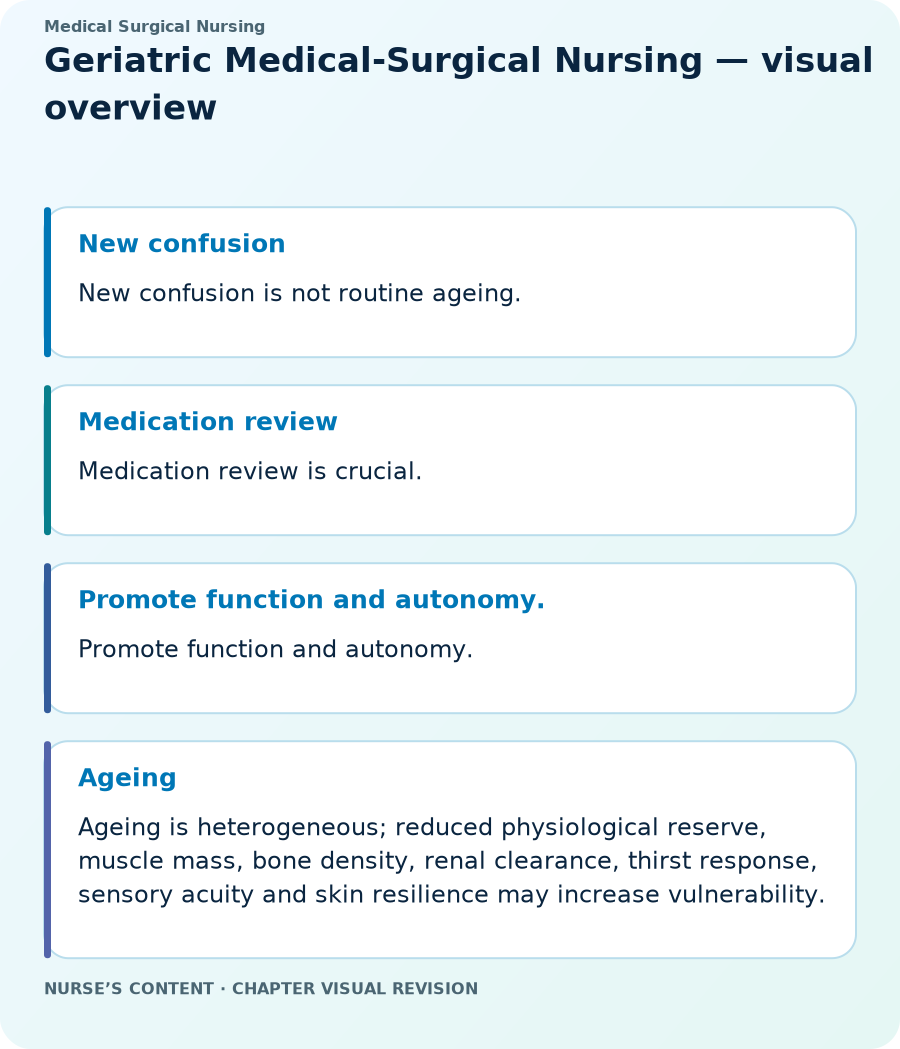
Ageing is heterogeneous; reduced physiological reserve, muscle mass, bone density, renal clearance, thirst response, sensory acuity and skin resilience may increase vulnerability. Disease and disability are not inevitable. Older adults may present atypically (e.g., infection without marked fever).
2. Comprehensive geriatric assessment
Physical illness, medications, cognition, mood, nutrition, mobility, frailty, continence, ADL/IADL, vision/hearing, social supports, goals and home safety. Use validated tools where appropriate (falls, cognition/delirium, frailty) with consent and clinical judgment.
Falls and frailty
Definition and pathophysiology: Falls are multifactorial; frailty denotes reduced resilience to stressors.
Clinical features and investigations: Prior falls, gait/balance impairment, weakness, orthostatic symptoms, medicines and environmental hazards.
Management and nursing care: Assess injury after fall, review medicines, strength/balance training, appropriate footwear/aids and environmental modification. Avoid routine restraints.
Polypharmacy
Definition and pathophysiology: Multiple medicines may increase interaction, adverse effects and treatment burden; number alone is not inappropriate.
Clinical features and investigations: Sedation, dizziness, falls, renal dysfunction, adherence difficulty.
Management and nursing care: Medication reconciliation, review indication, dose and renal function with prescriber; deprescribing when appropriate, simplified schedule and teach-back.
Dementia versus delirium
Definition and pathophysiology: Dementia is chronic cognitive decline; delirium acute fluctuating inattention/awareness disturbance.
Clinical features and investigations: New confusion, altered arousal, poor attention suggest delirium.
Management and nursing care: Urgent medical cause assessment, orientation, sleep, sensory aids, hydration and pain management, avoid unnecessary sedatives. Dementia care preserves routines, function, dignity and caregiver support.
Common geriatric conditions
Definition and pathophysiology: Osteoporosis, arthritis, cardiovascular disease, diabetes, urinary incontinence, constipation, sensory loss and depression often coexist.
Clinical features and investigations: Assess functional impact, nutrition and treatment burden, not only diagnoses.
Management and nursing care: Individualized prevention, rehabilitation, timely referral, shared decisions and social support; recognize elder abuse/neglect and safeguard per policy.
3. Rehabilitation and discharge
Promote early mobilization, nutrition, pressure prevention and ADLs; assess caregiver ability, equipment and home access. Plan medication reconciliation, follow-up and clear warning signs, involve patient in decisions. Palliative/supportive care based on preferences rather than age alone.
4. Important Examination Questions
Long Answer Questions
- 1. Describe comprehensive geriatric assessment and prevention of falls.
Short Answer Questions
- 1. Differentiate delirium and dementia
- 2. explain polypharmacy
- 3. list age-related changes.
Very Short Answer Questions (with answers)
- 1. Is dementia a normal part of ageing? — No.
- 2. What is frailty? — Reduced physiological reserve/resilience.
5. Quick Revision
- • New confusion is not routine ageing.
- • Medication review is crucial.
- • Promote function and autonomy.
6. Conclusion
New confusion is not routine ageing. Medication review is crucial. Promote function and autonomy.
Chapter reference images