Medical Surgical Nursing
Nursing Management of Patients with Disorders of the Endocrine System
Diabetes mellitus, diabetic ketoacidosis, hypoglycaemia, hypothyroidism, hyperthyroidism, goitre, Cushing's syndrome, Addison's disease, diabetes insipidus and SIADH.
Open quizzes and study tools Download PDF
CHAPTER 07 / MEDICAL-SURGICAL NURSING 07. Nursing Management of Patients with Disorders of the Endocrine System
1. Endocrine assessment
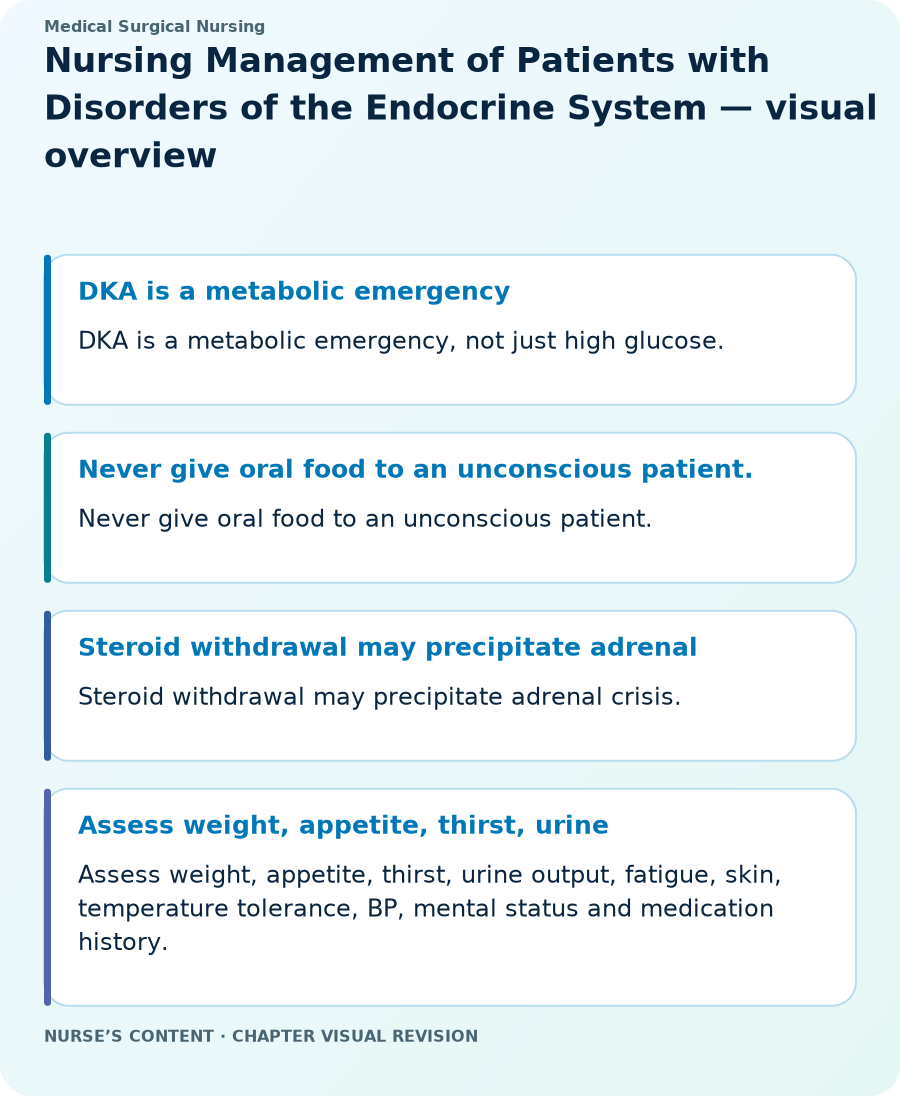
Assess weight, appetite, thirst, urine output, fatigue, skin, temperature tolerance, BP, mental status and medication history. Hormones regulate metabolism and homeostasis through feedback systems. Investigate targeted hormone levels, glucose, electrolytes and imaging.
Diabetes mellitus
Definition and pathophysiology: Type 1 involves autoimmune beta-cell destruction and absolute insulin deficiency; type 2 involves insulin resistance and progressive secretory impairment.
Clinical features and investigations: Polyuria, polydipsia, weight loss, fatigue or no symptoms. Diabetes criteria include fasting plasma glucose ≥126 mg/dL, HbA1c ≥6.5%, 2-hour OGTT ≥200 mg/dL or random glucose ≥200 with classic symptoms/crisis. Confirm if not unequivocal.
Management and nursing care: Individualized nutrition/activity, insulin essential in type 1, glucose-lowering agents chosen for type 2. Teach monitoring, foot care, sick-day plan and hypoglycaemia response; screen kidney, eye, neuropathy and cardiovascular complications.
Diabetic ketoacidosis (DKA)
Definition and pathophysiology: Insulin deficiency and counterregulatory hormones promote lipolysis, ketone formation and metabolic acidosis.
Clinical features and investigations: Vomiting, abdominal pain, dehydration, Kussmaul respirations, altered consciousness; glucose, blood ketones, pH/HCO3 and electrolytes. Euglycaemic DKA can occur.
Management and nursing care: Emergency protocol: fluids, insulin and potassium management, treat cause and monitor glucose, ketones, electrolytes and neurological state. Serum K may be normal/high despite total depletion. Insulin timing depends on K.
Hypoglycaemia
Definition and pathophysiology: Glucose <70 mg/dL is an alert threshold; severe episodes require assistance.
Clinical features and investigations: Sweating, tremor, hunger, confusion, seizure or coma; check glucose rapidly.
Management and nursing care: If awake and able to swallow, provide fast carbohydrate per protocol and recheck; if unsafe swallow, no oral intake, give authorized IV glucose or glucagon and escalate. Identify cause and prevent recurrence.
Hypothyroidism
Definition and pathophysiology: Deficient thyroid hormone, often autoimmune or post-treatment.
Clinical features and investigations: Fatigue, cold intolerance, constipation, bradycardia, dry skin; TSH/free T4.
Management and nursing care: Levothyroxine as prescribed, consistent administration and TSH monitoring. Severe hypothermia, hypoventilation or reduced consciousness suggests myxoedema emergency.
Hyperthyroidism
Definition and pathophysiology: Excess thyroid hormone; Graves disease, toxic nodules or thyroiditis.
Clinical features and investigations: Weight loss, tremor, palpitation, heat intolerance; low TSH with elevated T4/T3 in overt primary disease.
Management and nursing care: Antithyroid drugs, beta blockade, radioiodine or surgery as appropriate. Fever/sore throat on antithyroid drugs may indicate agranulocytosis; high fever, tachycardia and confusion may indicate thyroid storm.
Goitre
Definition and pathophysiology: Thyroid enlargement due to iodine deficiency, autoimmunity, nodules or other causes; may be euthyroid.
Clinical features and investigations: Neck swelling; assess dysphagia, stridor, TSH and ultrasound.
Management and nursing care: Treat cause; monitor airway and voice after thyroid surgery and signs of hypocalcaemia.
Cushing syndrome
Definition and pathophysiology: Excess glucocorticoids from exogenous steroids or endogenous secretion.
Clinical features and investigations: Central adiposity, proximal weakness, easy bruising, hypertension, hyperglycaemia; cortisol testing.
Management and nursing care: Treat cause, monitor infection, glucose, skin and bone risk. Do not abruptly stop long-term steroids without guidance.
Addison disease
Definition and pathophysiology: Primary adrenal insufficiency; cortisol and often aldosterone deficiency.
Clinical features and investigations: Weight loss, hypotension, hyperpigmentation, hyponatraemia/hyperkalaemia; cortisol/ACTH testing.
Management and nursing care: Hormone replacement, sick-day/stress-dose education and medical alert identification. Adrenal crisis requires emergency fluids and prescribed parenteral glucocorticoid.
Parathyroid disorders
Definition and pathophysiology: PTH excess often raises calcium; deficiency lowers calcium.
Clinical features and investigations: Hypercalcaemia with stones/bone symptoms; hypocalcaemia with tetany/tingling; calcium, phosphate, PTH, renal function.
Management and nursing care: Treat cause and monitor ECG, calcium and symptoms. After neck surgery report stridor or tetany promptly.
Diabetes insipidus and SIADH
Definition and pathophysiology: DI reflects deficient vasopressin action causing dilute polyuria; SIADH causes inappropriate water retention and dilutional hyponatraemia.
Clinical features and investigations: DI: thirst, high/normal Na and dilute urine; SIADH: low serum osmolality with inappropriately concentrated urine after exclusions.
Management and nursing care: Strict fluid balance, serial sodium and osmolality; desmopressin for selected central DI, fluid management for SIADH. Rapid sodium correction is dangerous.
2. Nursing care plan
For a patient on insulin with unstable glucose, document intake, glucose trends, medication timing and symptoms. Coordinate meal/insulin timing, ensure hypoglycaemia supplies, teach monitoring and follow-up. Evaluate safe glucose control without hypoglycaemia rather than a single ideal number.
3. Important Examination Questions
Long Answer Questions
- 1. Discuss diabetes mellitus, DKA and nursing management.
Short Answer Questions
- 1. Compare hyperthyroidism and hypothyroidism
- 2. explain adrenal crisis
- 3. differentiate DI and SIADH.
Very Short Answer Questions (with answers)
- 1. What is HbA1c? — Glycated haemoglobin.
- 2. What is the key treatment in type 1 diabetes? — Insulin.
4. Quick Revision
- • DKA is a metabolic emergency, not just high glucose.
- • Never give oral food to an unconscious patient.
- • Steroid withdrawal may precipitate adrenal crisis.
5. Conclusion
DKA is a metabolic emergency, not just high glucose. Never give oral food to an unconscious patient. Steroid withdrawal may precipitate adrenal crisis.
Chapter reference images