Medical Surgical Nursing
Nursing Management of Patients with Disorders of the Liver, Gallbladder and Pancreas
Hepatitis, cirrhosis, portal hypertension, liver failure, cholelithiasis, cholecystitis, pancreatitis and pancreatic disorders.
Open quizzes and study tools Download PDF
CHAPTER 06 / MEDICAL-SURGICAL NURSING 06. Nursing Management of Patients with Disorders of the Liver, Gallbladder and Pancreas
1. Assessment and functions
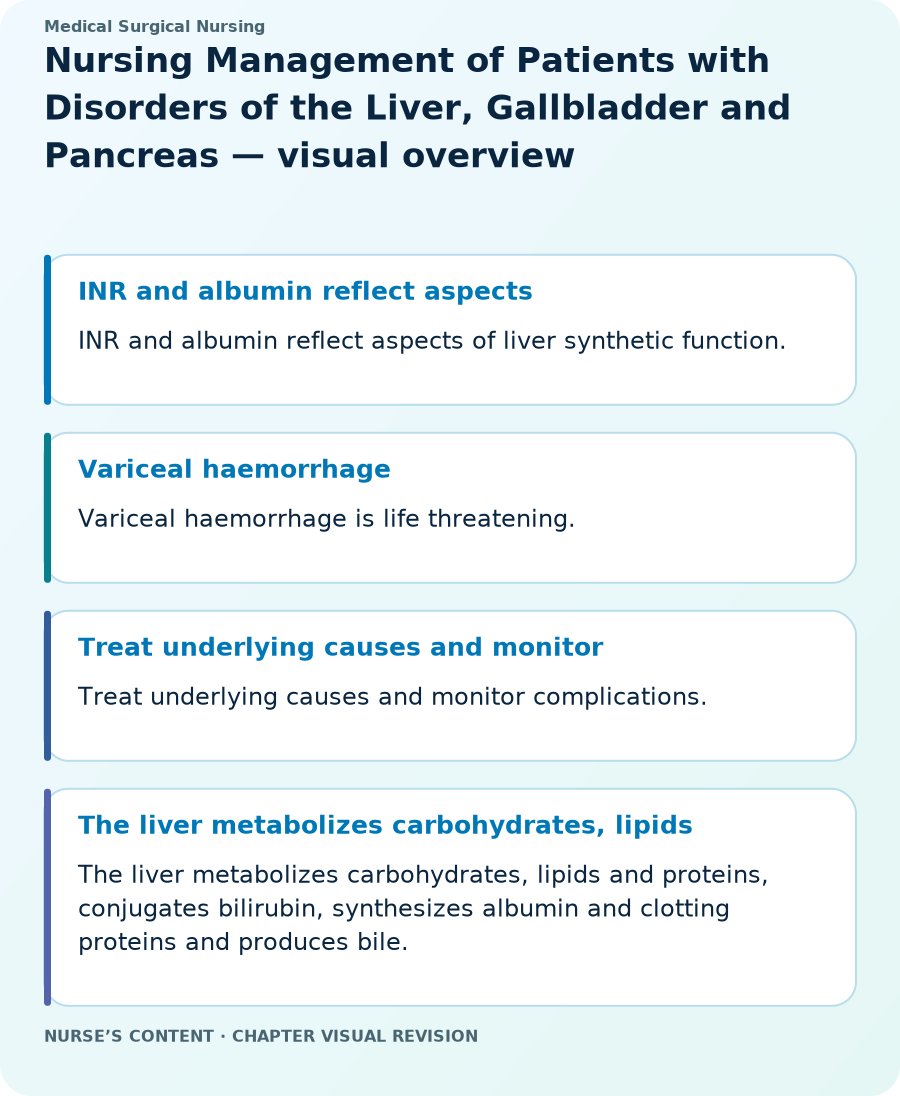
The liver metabolizes carbohydrates, lipids and proteins, conjugates bilirubin, synthesizes albumin and clotting proteins and produces bile. Assess jaundice, ascites, pruritus, confusion, bleeding, stool/urine colour and abdominal pain. Tests include ALT/AST (injury), ALP/GGT (cholestasis), bilirubin, albumin and INR (synthetic function), ultrasound and disease-specific serology.
Hepatitis
Definition and pathophysiology: Inflammation from viruses, alcohol, drugs, autoimmune or metabolic causes. A/E spread mostly faeco-orally; B/C mainly blood/body-fluid pathways.
Clinical features and investigations: Fatigue, anorexia, nausea, jaundice; viral serology, liver tests, exposure history.
Management and nursing care: Provide supportive or antiviral therapy as indicated, avoid hepatotoxic exposures, educate on vaccination for A/B where appropriate and transmission prevention. Jaundice with confusion or coagulopathy needs urgent review.
Cirrhosis
Definition and pathophysiology: Chronic fibrosis and nodular regeneration distort liver architecture.
Clinical features and investigations: Ascites, jaundice, oedema, spider angiomas, coagulopathy and encephalopathy; imaging, labs and fibrosis assessment.
Management and nursing care: Treat aetiology, nutrition support, monitor sodium/fluid strategy, ascites, infection, bleeding and mental status. Alcohol cessation support; surveillance for hepatocellular carcinoma.
Portal hypertension
Definition and pathophysiology: Increased portal venous pressure, often due to cirrhosis; collateral vessels and ascites develop.
Clinical features and investigations: Varices, splenomegaly, thrombocytopenia; endoscopy/imaging. Variceal bleeding may cause shock.
Management and nursing care: Monitor bleeding; prescribed beta-blocker or endoscopic strategies in selected patients; emergency resuscitation and endoscopy for acute variceal bleeding.
Liver failure and hepatic encephalopathy
Definition and pathophysiology: Loss of synthetic/detoxification function; encephalopathy may arise from toxins and precipitating infection, bleeding or constipation.
Clinical features and investigations: Confusion, asterixis, jaundice, elevated INR, possible hypoglycaemia; assess glucose, infection and medication causes.
Management and nursing care: Urgent specialist evaluation for acute liver failure; monitor airway, cognition and glucose, treat precipitant and prescribed lactulose/rifaximin where appropriate. Do not restrict protein indiscriminately.
Cholelithiasis and cholecystitis
Definition and pathophysiology: Gallstones may obstruct cystic duct; sustained obstruction can cause gallbladder inflammation.
Clinical features and investigations: Biliary colic after meals, right upper quadrant pain, fever, Murphy sign; ultrasound and liver tests.
Management and nursing care: Analgesia, fluids and antibiotics when indicated; prepare cholecystectomy or other intervention. Fever with jaundice and pain suggests cholangitis needing urgent drainage assessment.
Pancreatitis
Definition and pathophysiology: Pancreatic inflammation due to gallstones, alcohol, triglycerides or other causes.
Clinical features and investigations: Severe epigastric pain radiating to back, vomiting; lipase and imaging if needed.
Management and nursing care: Early assessment, individualized fluids, analgesia and early oral/enteral nutrition when tolerated; monitor respiratory failure, renal injury and infection. Routine prophylactic antibiotics not indicated for sterile pancreatitis.
Pancreatic cancer
Definition and pathophysiology: Malignancy, commonly ductal adenocarcinoma.
Clinical features and investigations: Weight loss, painless jaundice in head tumours, back pain; CT/MRI and tissue evaluation.
Management and nursing care: Support surgery when resectable, systemic therapy, biliary drainage or palliative care; nutrition, pancreatic enzyme replacement as prescribed and pain management.
2. Nursing responsibilities
Track abdominal girth and weight in ascites, assess respiratory comfort, skin and nutrition, avoid unnecessary trauma in bleeding risk, document stool and urine characteristics. Urgent escalation for haematemesis, fever with ascites, new confusion, severe abdominal pain, hypotension or hypoglycaemia.
3. Important Examination Questions
Long Answer Questions
- 1. Explain cirrhosis and its complications with nursing management.
Short Answer Questions
- 1. Describe bilirubin-related jaundice
- 2. differentiate gallstones and cholecystitis
- 3. explain pancreatitis.
Very Short Answer Questions (with answers)
- 1. Which enzyme commonly assists pancreatitis diagnosis? — Lipase.
- 2. What is ascites? — Fluid in the peritoneal cavity.
4. Quick Revision
- • INR and albumin reflect aspects of liver synthetic function.
- • Variceal haemorrhage is life threatening.
- • Treat underlying causes and monitor complications.
5. Conclusion
INR and albumin reflect aspects of liver synthetic function. Variceal haemorrhage is life threatening. Treat underlying causes and monitor complications.
Chapter reference images