Medical Surgical Nursing
Nursing Management of Patients with Disorders of the Blood and Lymphatic System
Anaemia, iron-deficiency anaemia, megaloblastic anaemia, haemolytic anaemia, thalassemia, sickle cell disease, leukaemia, lymphoma, haemophilia and thrombocytopenia.
Open quizzes and study tools Download PDF
CHAPTER 04 / MEDICAL-SURGICAL NURSING 04. Nursing Management of Patients with Disorders of the Blood and Lymphatic System
1. Assessment and investigations
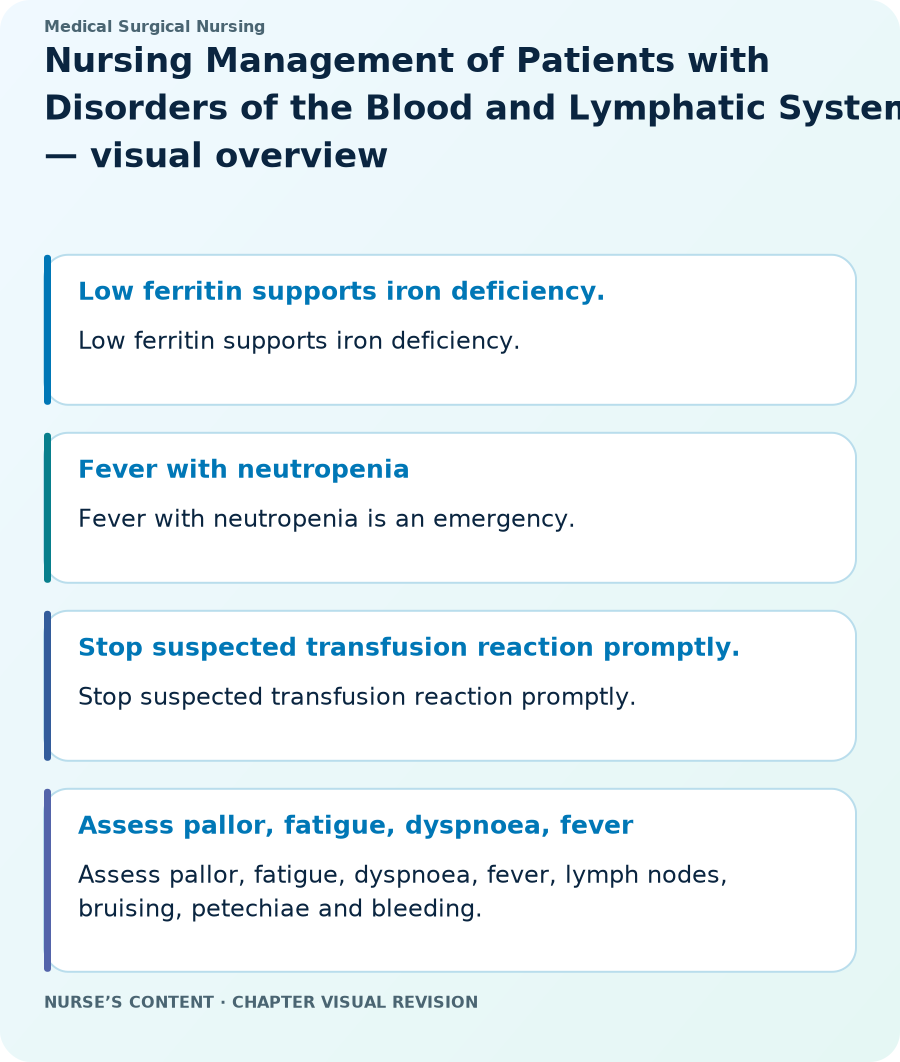
Assess pallor, fatigue, dyspnoea, fever, lymph nodes, bruising, petechiae and bleeding. CBC gives haemoglobin, cell counts and indices such as MCV; reticulocytes estimate marrow response. Peripheral smear, ferritin, B12/folate, coagulation tests, haemolysis studies, marrow examination and immunophenotyping are selected according to findings.
2. Anaemias
Iron-deficiency anaemia
Definition and pathophysiology: Iron depletion from blood loss, increased needs, poor intake or malabsorption; typically microcytic hypochromic cells.
Clinical features and investigations: Fatigue, pallor, pica, brittle nails; low ferritin often supports diagnosis, but inflammation can elevate ferritin.
Management and nursing care: Identify cause, especially occult blood loss; prescribed iron replacement, nutrition teaching, monitor Hb and tolerance. IV iron requires monitoring for reactions.
Megaloblastic anaemia
Definition and pathophysiology: Impaired DNA synthesis, commonly B12 or folate deficiency, with macrocytosis.
Clinical features and investigations: Glossitis, pallor, fatigue; neurological signs suggest B12 deficiency; CBC, B12/folate and selected confirmatory tests.
Management and nursing care: Replace deficient nutrient and address cause. Exclude/treat B12 deficiency before folate alone to avoid masking neurological progression.
Aplastic anaemia
Definition and pathophysiology: Bone marrow failure causing pancytopenia; acquired immune, drug/toxin or inherited causes.
Clinical features and investigations: Infection, fatigue and bleeding; low cell counts and hypocellular marrow.
Management and nursing care: Protect from infection and bleeding, monitor transfusions; specialist immunosuppression or stem-cell transplantation may be indicated.
Haemolytic anaemia
Definition and pathophysiology: Premature red-cell destruction, hereditary or acquired.
Clinical features and investigations: Jaundice, pallor, dark urine, elevated reticulocytes/LDH, low haptoglobin; direct antiglobulin test if indicated.
Management and nursing care: Treat underlying cause; monitor renal function, perfusion and transfusion needs. Avoid oxidant triggers in G6PD deficiency according to guidance.
Thalassaemia
Definition and pathophysiology: Inherited reduced synthesis of alpha or beta globin chains.
Clinical features and investigations: Microcytosis, anaemia, severe forms with iron overload from transfusion; Hb analysis and genetic tests.
Management and nursing care: Specialist transfusion and chelation where indicated; monitor organ complications; genetic counselling. Do not assume microcytosis means iron deficiency.
Sickle cell disease
Definition and pathophysiology: HbS polymerization causes haemolysis and vaso-occlusion.
Clinical features and investigations: Pain crises, anaemia, infection risk, acute chest syndrome, stroke; Hb analysis.
Management and nursing care: Prompt analgesia, appropriate hydration, assess infection and hypoxaemia; disease-modifying therapy and transfusion when indicated. Fever or chest symptoms require urgent review.
3. Malignancy and bleeding disorders
Leukaemia
Definition and pathophysiology: Malignant proliferation of haematopoietic cells; acute/chronic and myeloid/lymphoid categories.
Clinical features and investigations: Anaemia, bleeding, infections, bone pain; CBC, marrow and molecular studies.
Management and nursing care: Support chemotherapy/targeted therapy; monitor tumour lysis, bleeding and febrile neutropenia. Use central line safety.
Lymphoma
Definition and pathophysiology: Malignancy of lymphocytes, broadly Hodgkin and non-Hodgkin.
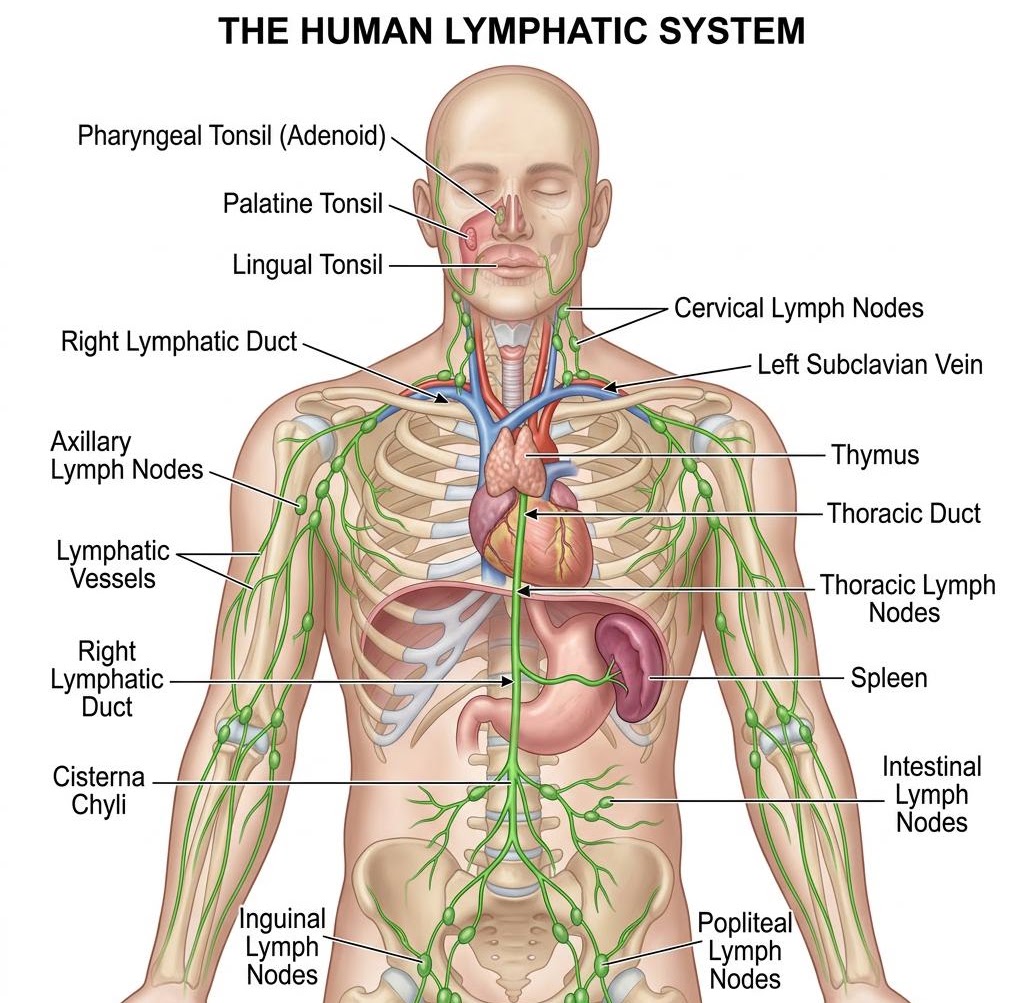
Clinical features and investigations: Persistent painless lymphadenopathy, fever, night sweats or weight loss; tissue biopsy and staging.
Management and nursing care: Support systemic treatment/radiotherapy, monitor infection, lysis and nutrition, provide psychosocial support.
Haemophilia
Definition and pathophysiology: Inherited deficiency of factor VIII (A) or IX (B).
Clinical features and investigations: Deep tissue bleeding and haemarthrosis; prolonged aPTT often, factor assays.
Management and nursing care: Provide prescribed factor replacement or other prophylaxis, protect joints, avoid unnecessary IM injections and aspirin/NSAIDs where contraindicated; urgent assessment after head injury.
Thrombocytopenia
Definition and pathophysiology: Reduced platelet count due to impaired production, destruction or consumption.
Clinical features and investigations: Petechiae, mucosal bleeding, bruising; CBC/smear and cause-specific tests.
Management and nursing care: Bleeding precautions, avoid trauma and unnecessary invasive procedures, treat cause; platelet transfusion depends on indication, not count alone.
4. Blood transfusion
Verify authorized order, consent, product identity, compatibility and patient identifiers at bedside using institutional checks. Baseline assessment, approved blood tubing and close early observation are essential. Fever, chills, dyspnoea, back pain, hypotension or rash may indicate reaction: stop transfusion immediately, maintain access with compatible fluid and new tubing per protocol, assess ABC, notify clinician/blood bank and follow investigation/reporting instructions. Do not restart without authorization. Monitor for overload, haemolysis, allergy and infection risk.
5. Important Examination Questions
Long Answer Questions
- 1. Describe major types of anaemia and nursing management
- 2. explain safe transfusion.
Short Answer Questions
- 1. Differentiate leukaemia and lymphoma
- 2. explain haemophilia
- 3. list signs of transfusion reaction.
Very Short Answer Questions (with answers)
- 1. Which factor is deficient in haemophilia A? — VIII.
- 2. What does MCV measure? — Average red-cell volume.
6. Quick Revision
- • Low ferritin supports iron deficiency.
- • Fever with neutropenia is an emergency.
- • Stop suspected transfusion reaction promptly.
7. Conclusion
Low ferritin supports iron deficiency. Fever with neutropenia is an emergency. Stop suspected transfusion reaction promptly.
Chapter reference images