Medical Surgical Nursing
Nursing Management of Patients with Disorders of the Cardiovascular System
Hypertension, coronary artery disease, angina, myocardial infarction, heart failure, rheumatic heart disease, valvular disorders, arrhythmias and peripheral vascular disorders.
Open quizzes and study tools Download PDF
CHAPTER 03 / MEDICAL-SURGICAL NURSING 03. Nursing Management of Patients with Disorders of the Cardiovascular System
1. Cardiovascular assessment
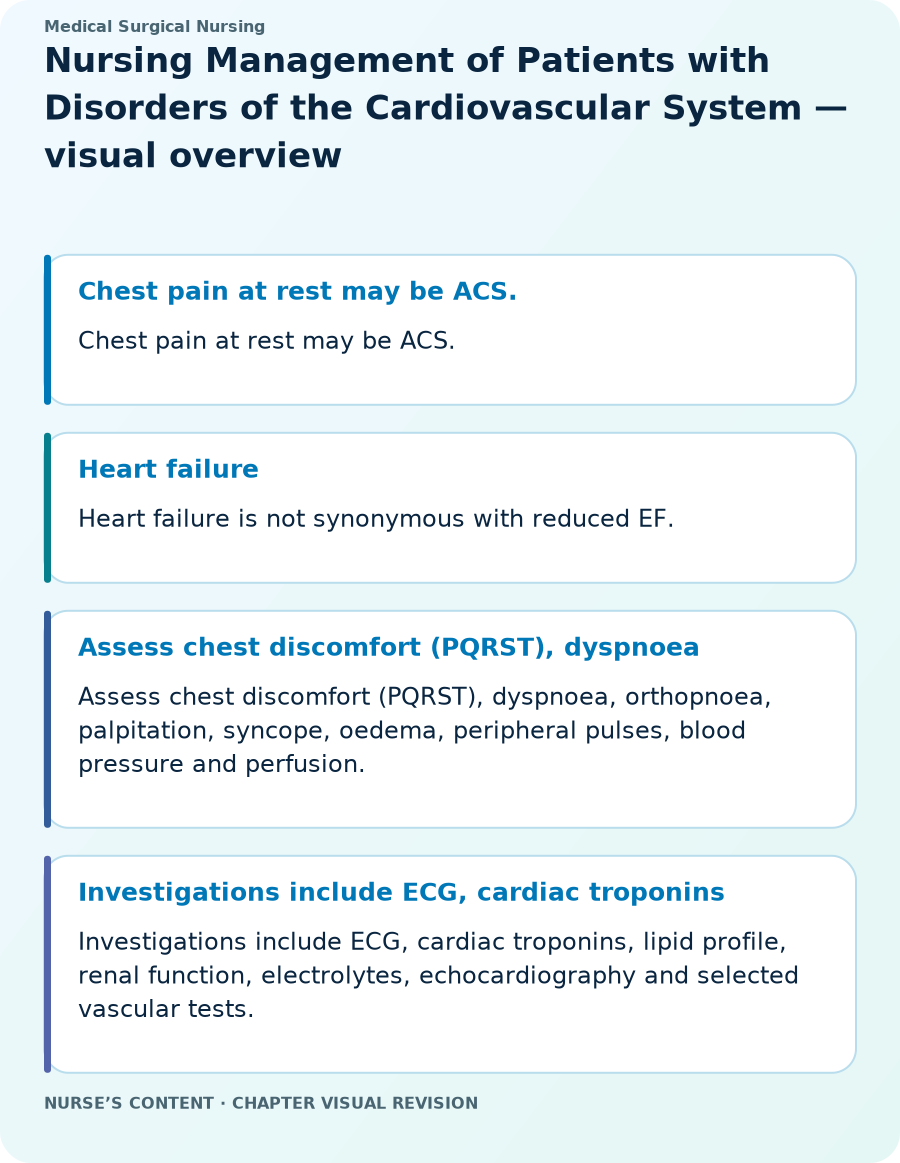
Assess chest discomfort (PQRST), dyspnoea, orthopnoea, palpitation, syncope, oedema, peripheral pulses, blood pressure and perfusion. Investigations include ECG, cardiac troponins, lipid profile, renal function, electrolytes, echocardiography and selected vascular tests. Acute chest pain, new neurological symptoms or shock requires immediate escalation.
2. Arterial and coronary disease
Hypertension
Definition and pathophysiology: Persistent elevation of arterial blood pressure; primary or secondary to renal, endocrine or other causes.
Clinical features and investigations: Often asymptomatic; use properly measured repeated BP and home/ambulatory readings when indicated; assess target organ damage.
Management and nursing care: Lifestyle changes and prescribed classes such as ACE inhibitors/ARBs, calcium-channel blockers or thiazide-like diuretics. Monitor adherence, renal function, electrolytes and orthostatic symptoms; severe BP with organ injury is emergency.
Coronary artery disease and stable angina
Definition and pathophysiology: Atherosclerotic narrowing limits coronary blood flow; stable exertional ischaemia improves with rest or prescribed antianginal treatment.
Clinical features and investigations: Pressure-like chest pain, possible radiation; ECG, risk assessment and selected stress/imaging studies.
Management and nursing care: Risk modification, statins/antiplatelets and antianginal therapy when indicated. New, prolonged or rest pain may be acute coronary syndrome.
Myocardial infarction (MI)
Definition and pathophysiology: Acute myocardial injury with evidence of ischaemia, often plaque rupture and thrombus.
Clinical features and investigations: Chest pressure, sweating, nausea, dyspnoea or atypical symptoms; urgent ECG and serial troponin, clinical assessment.
Management and nursing care: Activate ACS pathway; monitor rhythm and haemodynamics, provide prescribed antithrombotics/analgesia and prepare reperfusion when indicated. Oxygen for hypoxaemia, not routinely for normoxic patients. Monitor arrhythmia, shock and heart failure.
3. Heart failure and structural disease
Heart failure
Definition and pathophysiology: Clinical syndrome from impaired cardiac filling or pumping; may occur with reduced or preserved LVEF.
Clinical features and investigations: Dyspnoea, orthopnoea, fatigue, oedema, raised JVP or crackles; BNP/NT-proBNP, echo and renal/electrolyte tests.
Management and nursing care: Treat congestion and underlying cause; guideline-directed drugs according to phenotype. Daily weight, fluid balance, symptom education, monitor BP, electrolytes and renal function. Acute pulmonary oedema requires urgent support.
Valvular heart disease
Definition and pathophysiology: Stenosis obstructs forward flow; regurgitation allows backward flow through an incompetent valve.
Clinical features and investigations: Murmur, exertional dyspnoea, syncope, oedema; echocardiography determines lesion and severity.
Management and nursing care: Treat symptoms and complications; prepare valve repair/replacement when indicated. Teach anticoagulant safety when prescribed, especially mechanical valves.
Rheumatic heart disease
Definition and pathophysiology: Chronic valve injury following immune-mediated acute rheumatic fever after group A streptococcal infection.
Clinical features and investigations: Murmur, dyspnoea, heart failure; history, echo and other testing.
Management and nursing care: Primary prevention by appropriate strep treatment; secondary antibiotic prophylaxis in eligible patients; valve surveillance and pregnancy counselling.
4. Arrhythmias and vascular disorders
Arrhythmias
Definition and pathophysiology: Abnormal impulse formation or conduction; examples AF, SVT, bradyarrhythmia, VT and VF.
Clinical features and investigations: Palpitations, dizziness, syncope, shock or no symptoms; ECG and monitoring, electrolytes.
Management and nursing care: Assess stability first; unstable rhythms need urgent protocol-based management. AF may need rate/rhythm control and stroke prevention. Pulseless VT/VF requires CPR and defibrillation.
Peripheral arterial disease
Definition and pathophysiology: Atherosclerosis reduces limb perfusion.
Clinical features and investigations: Exertional claudication, cool skin, weak pulses, ulcers; ankle–brachial index and vascular studies.
Management and nursing care: Smoking cessation, walking programme in stable disease, lipid/risk management, foot care; acute pain, pallor, pulselessness or sensory/motor loss is emergency.
Venous disease and DVT
Definition and pathophysiology: Venous insufficiency causes pooling; DVT is clot in deep veins related to stasis, endothelial injury and hypercoagulability.
Clinical features and investigations: Oedema, skin changes; unilateral swelling/pain in DVT; ultrasound. Sudden dyspnoea may indicate PE.
Management and nursing care: Anticoagulation when prescribed, safe mobilization, compression only when suitable, skin care. Do not massage suspected DVT.
5. Nursing management
Monitor telemetry, BP, oxygenation, symptoms and urine output; check bleeding with anticoagulants, potassium and renal function with relevant medicines. Teach emergency symptom recognition, cardiac rehabilitation, medication adherence and follow-up. For decompensated failure measure daily weight consistently and report increasing breathlessness or rapid weight gain.
6. Important Examination Questions
Long Answer Questions
- 1. Discuss nursing management of myocardial infarction and heart failure.
Short Answer Questions
- 1. Explain hypertension assessment
- 2. compare angina and MI
- 3. list features of DVT and acute limb ischaemia.
Very Short Answer Questions (with answers)
- 1. What investigation assesses cardiac electrical activity? — ECG.
- 2. What does LVEF mean? — Left ventricular ejection fraction.
7. Quick Revision
- • Chest pain at rest may be ACS.
- • Heart failure is not synonymous with reduced EF.
- • DVT may cause PE.
8. Conclusion
Chest pain at rest may be ACS. Heart failure is not synonymous with reduced EF. DVT may cause PE.
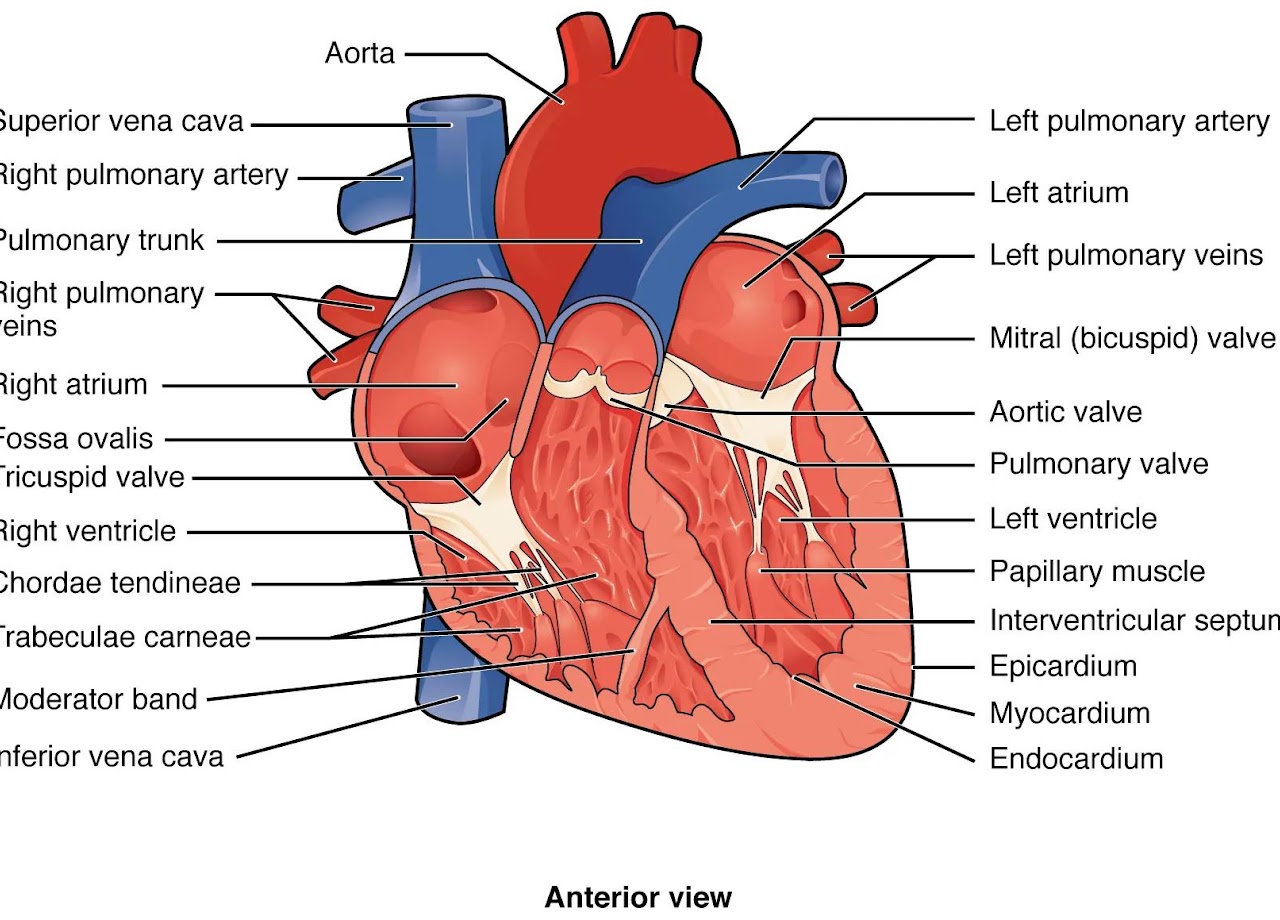
Chapter reference images