Community Health Nursing
School Health Services
Concepts, objectives and components of school health services, school health assessment, health education, nutritional services, immunisation, screening, first aid and prevention of communicable diseases in schools.
Open quizzes and study tools Download PDF
CHAPTER 15 / COMMUNITY HEALTH NURSING 15. School Health Services
1. Definition and objectives
School health services are organized promotive, preventive, screening, first aid and referral activities supporting students' physical, mental and social health. Objectives include identifying health problems early, promoting growth, preventing infections and injuries, supporting learning and reducing inequities.
2. Components of school health programme
| Component | Activities |
|---|---|
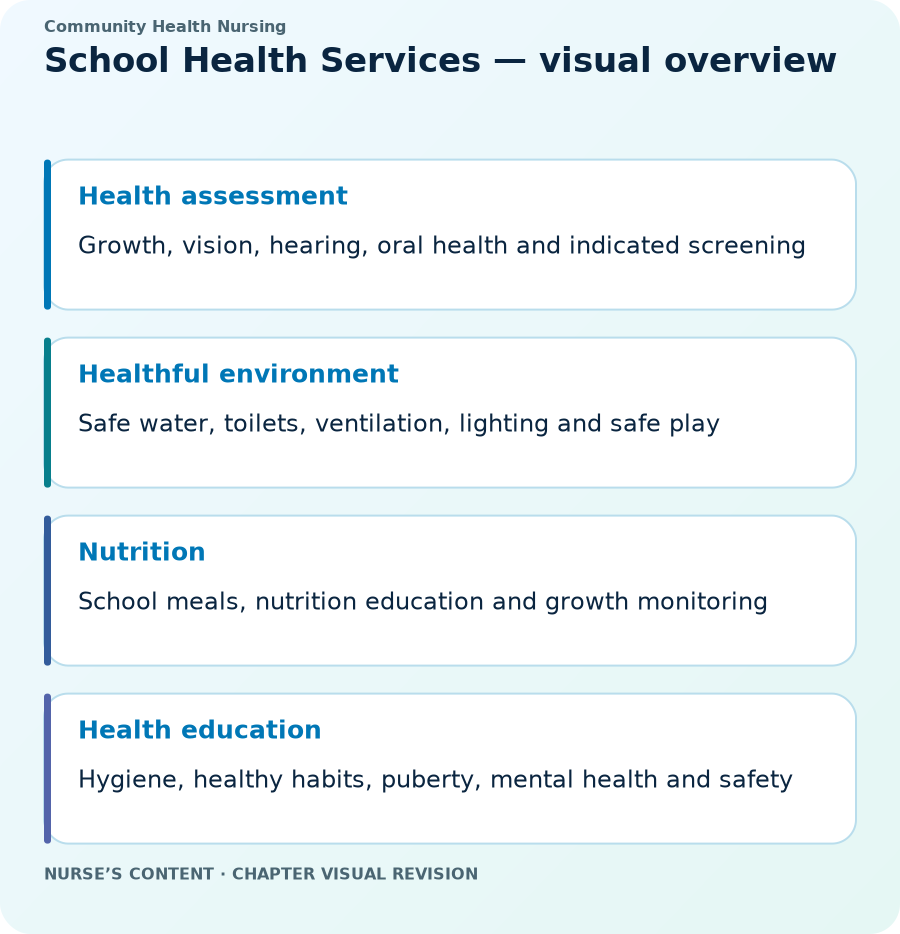
| Health assessment | Growth, vision, hearing, oral health and indicated screening |
| Healthful environment | Safe water, toilets, ventilation, lighting and safe play |
| Nutrition | School meals, nutrition education and growth monitoring |
| Health education | Hygiene, healthy habits, puberty, mental health and safety |
| Preventive services | Vaccination linkage, deworming where indicated |
| First aid and referral | Immediate care, parental notification and follow-up |
| Inclusive services | Support disability, chronic illness and psychosocial needs |
3. School health assessment
Collect age, history, growth, immunisation status, vision, hearing, dental status and symptoms. Use appropriate consent/assent, private settings and standardized age-specific assessment methods. Avoid public weighing, shaming or disclosure. Referral findings should be communicated confidentially to parents/guardians and relevant healthcare providers as appropriate. Ensure follow-up and accommodations.
4. Nutritional and preventive services
PM POSHAN supports school meals for eligible children; nutrition education promotes varied diets, handwashing and food safety. National Deworming Day provides eligible children with programme-based deworming. Link immunisation with UIP schedules, including age-based Td and eligible HPV services under the 2026 campaign. Preserve parental involvement and programme consent requirements.
5. School health initiatives
Ayushman Bharat School Health and Wellness Programme emphasizes health promotion through trained teachers and coordinated health services. RBSK screens children for defects at birth, diseases, deficiencies and developmental delays; RBSK 2.0 materials published in 2026 describe an expanded package. Referral to District Early Intervention Centres (DEIC) and appropriate specialist services supports follow-up. [10]
6. First aid and communicable disease control
Maintain stocked first aid supplies and emergency contacts; train staff in basic first aid and escalation. Assess airway, breathing, circulation and safety; arrange urgent care for severe breathing difficulty, anaphylaxis, major injury, seizures or altered consciousness. Hand hygiene, respiratory etiquette, safe water and environmental cleaning reduce infection. Exclusion from school should follow disease-specific public health guidance, not blanket stigma.
7. Role of school and community nurse
Plan health days, screen within competence, maintain private records, educate students and teachers, provide first aid, coordinate referrals, support chronic disease action plans and report suspect outbreaks. Recognize bullying, abuse or distress; follow safeguarding procedures and support confidential counselling.
8. Components of a comprehensive school health programme
School health is broader than screening. It includes a safe physical environment, preventive care, mental health, health literacy, nutrition, physical activity, menstrual hygiene and access to first aid and referral. Services should be inclusive of children with disabilities and respect privacy.
| Component | Examples |
|---|---|
| Health appraisal | Growth assessment, vision/hearing checks and referral. |
| Health education | Hygiene, nutrition, substance-use prevention, age-appropriate sexuality education and safety. |
| School environment | Safe drinking water, functional toilets, ventilation and accessible facilities. |
| Nutrition | School meal services and counselling with attention to food safety. |
| Mental health | Supportive school climate, bullying prevention and access to counselling. |
| Emergency care | First aid readiness, emergency contacts and referral plan. |
9. School screening and follow-up example
A student has difficulty seeing the board. Use approved visual-acuity assessment if trained; record the finding privately, inform the caregiver according to policy and arrange follow-up. Confirm whether assessment and corrective support were received. Do not announce results publicly or label the child as having a disability based on a screening test alone.
Infection prevention in schools
Teach handwashing, respiratory hygiene and safe food practices. Respond to clusters with the public health team. Exclusion from attendance should follow disease-specific guidance, not a blanket rule for every illness.
10. Important Examination Questions
Long Answer Questions
- 1. Explain objectives, components and nursing responsibilities in school health services.
- 2. Explain school health service components and the role of the school health nurse.
- 3. Prepare a school health screening and referral plan.
Short Answer Questions
- 1. RBSK four Ds
- 2. school nutrition
- 3. first aid
- 4. healthful school environment
- 5. School health record.
- 6. First-aid arrangements.
- 7. Nutrition and school hygiene.
- 8. Bullying prevention.
Very Short Answer Questions (with answers)
- 1. RBSK? Rashtriya Bal Swasthya Karyakram.
- 2. DEIC? District Early Intervention Centre.
- 3. PM POSHAN? School nutrition support programme.
- 4. What is RBSK? — Rashtriya Bal Swasthya Karyakram.
- 5. What follows an abnormal screening finding? — Appropriate confirmation or referral.
11. Quick Revision
- • School health combines prevention, education, safe environments and care.
- • Screening must be linked to follow-up.
- • Protect students' privacy and dignity.
- • Include physical, mental and social health.
Conclusion
School health integrates prevention, early identification, education and inclusive support to improve learning and well-being.
Chapter reference images