Community Health Nursing
Role and Responsibilities of Community Health Nurse
Roles in health promotion, disease prevention, early diagnosis, treatment support, rehabilitation, referral, health education, community participation, leadership and coordination.
Open quizzes and study tools Download PDF
CHAPTER 26 / COMMUNITY HEALTH NURSING 26. Role and Responsibilities of Community Health Nurse
1. Introduction
A community health nurse provides integrated preventive, promotive, basic curative, rehabilitative and supportive care at individual, family and population levels. Responsibilities depend on qualification, registration, authorized scope, facility role and state protocols. Community nursing combines clinical competence with health education, coordination and data-based planning.
2. Major professional roles
| Role | Responsibilities |
|---|---|
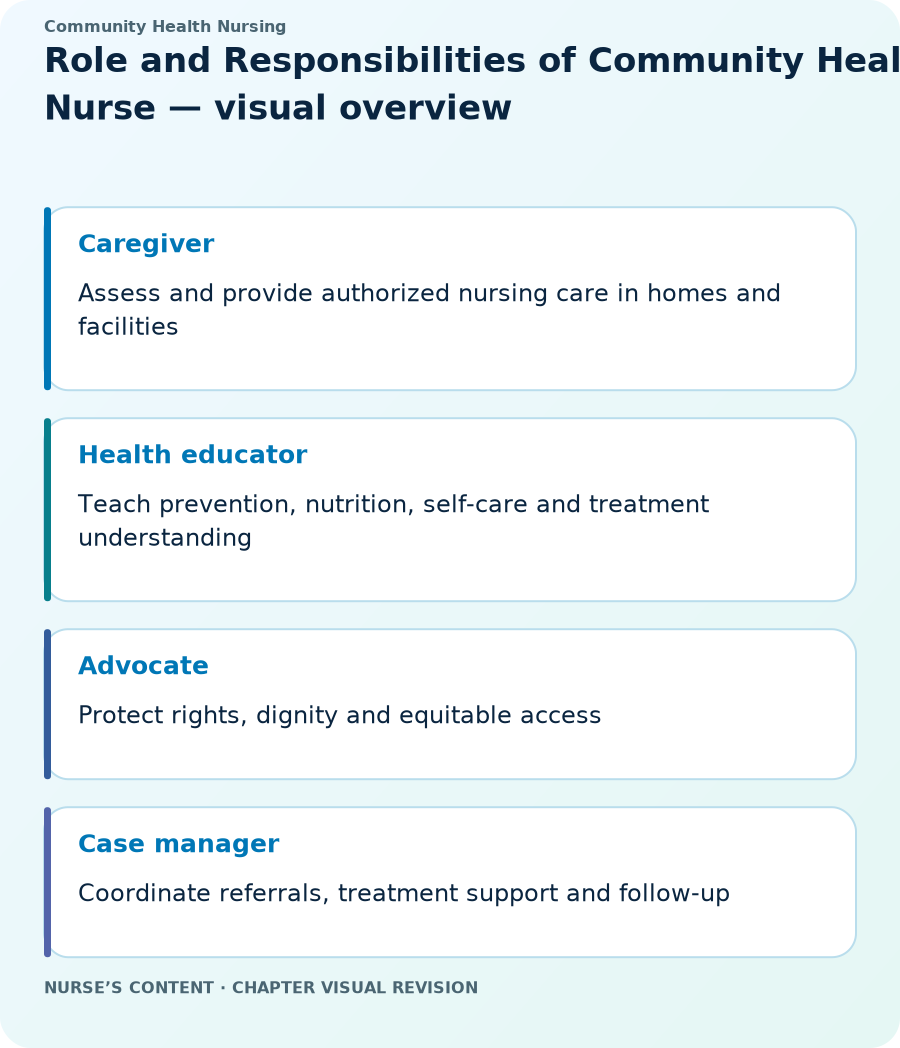
| Caregiver | Assess and provide authorized nursing care in homes and facilities |
| Health educator | Teach prevention, nutrition, self-care and treatment understanding |
| Advocate | Protect rights, dignity and equitable access |
| Case manager | Coordinate referrals, treatment support and follow-up |
| Disease surveillance worker | Recognize, document and report unusual cases and outbreaks |
| Leader/supervisor | Support team coordination, training and quality improvement |
| Collaborator | Work with ASHA, ANM, CHO, medical officers and other sectors |
| Research/data user | Assess needs, validate indicators and evaluate interventions |
3. Health promotion and prevention
Promote sanitation, healthy diet, exercise, tobacco cessation, mental well-being, reproductive health, immunisation and injury prevention. Organize outreach according to local needs. Address access barriers such as transport, work schedules, language, disability and discrimination. Link education with accessible services.
4. Early diagnosis and treatment support
Perform approved screening and basic assessments; identify danger signs; arrange diagnosis and timely referral. Explain prescribed treatment, monitor response and adverse effects, support adherence through shared planning and coordinate follow-up. A community nurse should not diagnose or prescribe beyond authorized competence. Document escalation and ensure referral completion where possible.
5. Maternal, child and family care
Register pregnancies, assess risk, support ANC/PNC, breastfeeding, growth monitoring, immunisation and family planning counselling. Identify newborn and maternal danger signs and arrange urgent referral. Provide family assessments and home visits with consent; coordinate childcare, nutrition and adolescent services.
6. Rehabilitation and long-term care
Support patients with chronic illness, disability, mental health conditions and ageing-related limitations. Assess functional needs and caregiver capacity, promote independence, coordinate assistive devices and rehabilitation, maintain safety and provide palliative support according to care plans.
7. Leadership, coordination and community participation
Prepare outreach microplans, delegate safely, maintain stocks, supervise support activities and communicate with local authorities. Encourage Village Health Sanitation and Nutrition Committees and community groups to identify priorities. Use supportive supervision and respectful conflict resolution. Conduct service audits and share aggregate findings with the community.
8. Ethics and professional accountability
Respect informed choices, confidentiality, non-discrimination and cultural preferences. Use standard precautions; maintain safe medication/vaccine practice; report safety incidents. Obtain appropriate consent, follow safeguarding and notifiable disease requirements, protect records and maintain professional boundaries. Continuing education keeps practice aligned with current guidance.
9. Practical community nursing workflow
Before outreach: assess population, plan supplies/staff and verify referral pathways. During: register, assess, deliver authorized care, educate and document. After: reconcile records, manage waste, follow referrals, contact missed beneficiaries appropriately and evaluate outcomes. Example: BP screening identifies an elevated reading; repeat appropriately, assess danger signs, arrange confirmation and track linkage to care.
10. Roles across the community nursing continuum
| Role | Examples of professional activities |
|---|---|
| Care provider | Assess needs, provide authorized clinical care and monitor response. |
| Educator | Use appropriate health teaching and verify understanding. |
| Advocate | Identify barriers, protect rights and facilitate access. |
| Coordinator | Link families, primary facilities, specialists and community services. |
| Leader and supervisor | Organize outreach, support team competence and improve service quality. |
| Surveillance contributor | Recognize unusual disease events, document and notify appropriately. |
| Rehabilitator | Promote safe independence, adaptive support and follow-up. |
11. A day in community nursing practice
Begin by reviewing scheduled visits, due lists, urgent follow-up and supplies. Prioritize acute clinical risks and time-critical care. During home or outreach contact, establish consent, assess needs, provide authorized interventions and health education, and coordinate referral where necessary. At the end of the session, reconcile records and supplies, communicate urgent concerns and plan follow-up. Evaluate whether the intended patient outcomes were achieved.
Professional accountability and quality improvement
Work within registration, training and authorized scope. Escalate clinical deterioration or unsafe conditions. Participate in review of service gaps and incidents, protect confidential information and respect informed decisions. Use evidence and community feedback to improve services. A community nurse is not expected to independently diagnose or treat every illness; effective referral and collaboration are essential professional responsibilities.
12. Important Examination Questions
Long Answer Questions
- 1. Explain roles and responsibilities of a community health nurse across prevention, treatment, rehabilitation and leadership.
- 2. Explain professional roles of the community health nurse with a practical daily workflow.
- 3. Discuss leadership, coordination, advocacy and quality improvement in community nursing.
Short Answer Questions
- 1. Nurse as advocate
- 2. referral responsibilities
- 3. community participation
- 4. surveillance
- 5. ethical practice
- 6. Nurse as educator.
- 7. Nurse as patient advocate.
- 8. Continuity of care.
- 9. Professional accountability.
Very Short Answer Questions (with answers)
- 1. Community care priority? Assessed population needs with patient safety.
- 2. Follow-up purpose? Continuity of care.
- 3. Evidence of service delivery? Accurate record.
- 4. What is advocacy? — Supporting rights, needs and equitable access.
- 5. What is the final step in nursing process? — Evaluation.
13. Quick Revision
- • Community nurses serve individuals, families and populations.
- • Prioritize urgent need, patient safety and equitable access.
- • Care requires coordination beyond the health sector.
- • Documentation and evaluation demonstrate continuity and accountability.
Conclusion
The community health nurse connects households and the health system, using clinical skills, prevention, coordination and accountability to improve population health.
Chapter reference images